

1 month ago
US Small Businesses Challenge Section 301 Tariffs
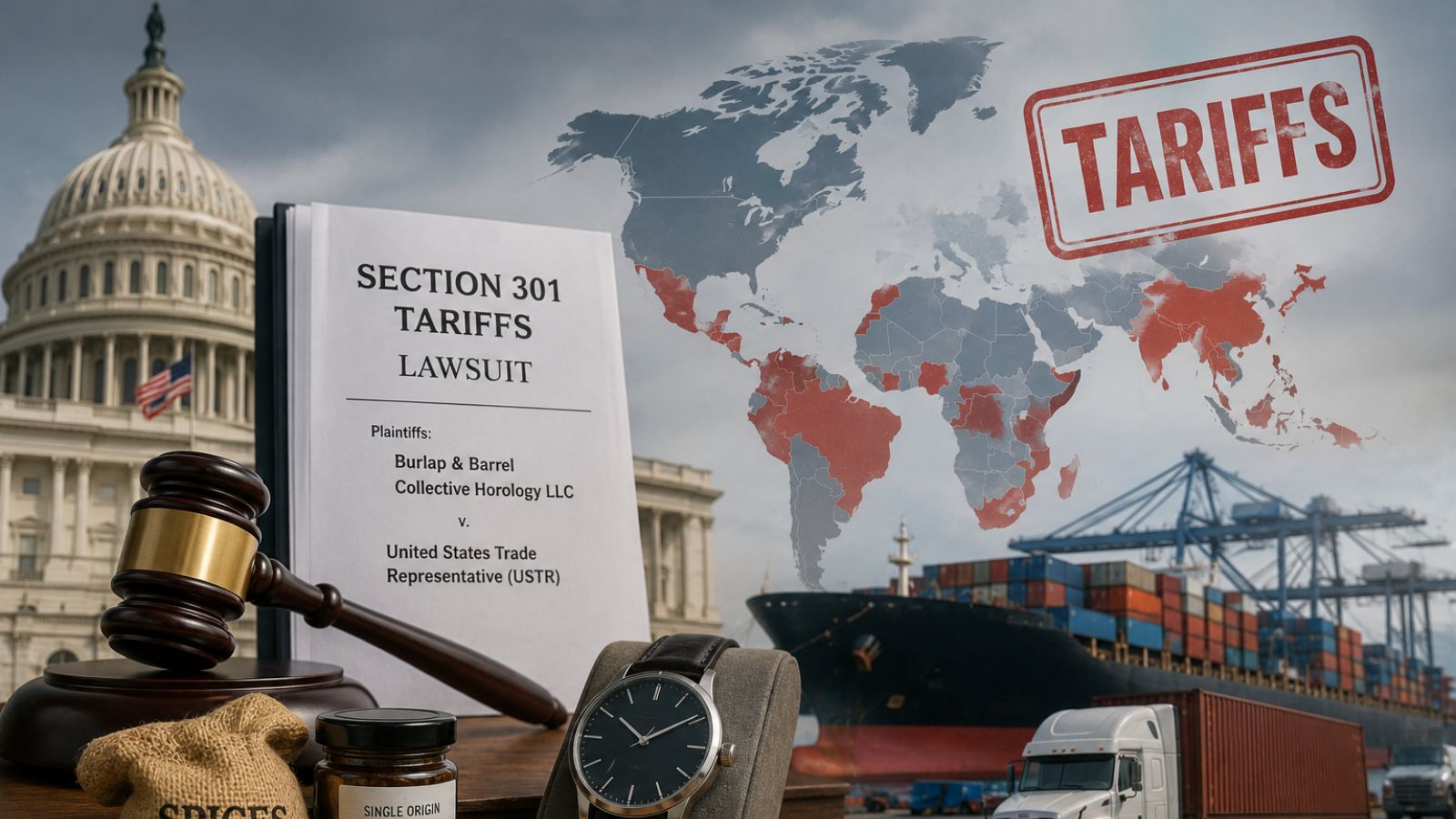
Two small businesses in the US, Burlap & Barrel and Collective Horology LLC, have filed a case against the US Trade Representative (USTR) for using Section 301 to impose tariffs on almost all imports from 60 countries, including India.
They argue that this broad application of tariffs is unconstitutional and exceeds the authority granted by Congress.
The tariffs have significantly impacted trade, with exports of non-excluded products falling by 11.2% from 2025 to 2026.
The USTR, however, maintains that Section 301 provides the necessary authority to address unfair trade practices.
The case highlights the ongoing debate over the use of trade tools like Section 301 and their impact on global trade.

Two US small businesses filed a case against USTR for imposing Section 301 tariffs on 60 countries.
The tariffs impact 99.4% of all imports into the United States.
India is willing to sign a US trade deal but awaits a competitive edge over ASEAN competitors.
Exports of non-excluded products fell by 11.2% from 2025 to 2026 due to tariffs.
Section 301 provides USTR with sweeping powers to impose duties and other restrictions.
- Who
- Burlap & Barrel, Collective Horology LLC, USTR
- What
- Challenge to Section 301 tariffs
- Where
- United States
- When
- After the imposition of fresh tariffs on 60 countries
- Why
- To contest the broad application of Section 301 tariffs impacting nearly all imports
Small Businesses
USTR
Authority of Section 301
Small Businesses
Section 301 is a targeted, country-specific and practice-specific remedial authority that does not authorize broad tariff regimes.
USTR
Section 301 provides sweeping powers to impose duties and other restrictions to address unfair trade practices.
Key facts
- Tariff Rate on India
- 10%
- Number of Countries Affected
- 60
- Percentage of Imports Affected
- 99.4%
- Duration of Section 122 Tariffs
- 150 days
- Increase in Excluded Product Exports (2025-26)
- 24.5%
- Decrease in Non-Excluded Product Exports (2025-26)
- 11.2%
Quotes
Hinrich Foundation report
Organization explaining Section 301 powers
“The courts, if asked to examine the use of Section 301, are likely to give the President wide deference as long as the required procedures are followed. Recall that the law provides maximum timelines, not any minimum. Past cases were often narrowly targeted. Future cases need not be so constrained.”
 indianexpress.com
“After consultations, USTR is meant to investigate to determine whether the action is unfair and harms US trade. This investigation can result in a determination of either mandatory or discretionary actions.”
indianexpress.com
Burlap & Barrel and Collective Horology LLC
Two US small businesses filing a lawsuit against the USTR
“The Section 122 tariffs were limited by statute to 150 days. The administration used that period to conduct the Section 301 investigations at issue here and then imposed the challenged Section 301 tariffs.”
indianexpress.com
Sources
Related news

Gujarat launches DNA-based sports talent hunt for 2030 Commonwealth Games

Joyalukkas Launches Primora Diamond Collection Worldwide

Cardiff Student Earns 14 A*s After Rigorous 4 AM Routine

Joyalukkas Launches Primora Diamond Collection Inspired by Hornbill Loyalty

Study Uncovers Brain Mechanism Behind Skill Learning Plateaus
Trump Says He Will Host Xi Jinping at September Summit

Book Examines India-ASEAN Ties, Opportunities and Persistent Engagement Gaps
India-Australia Maritime Security Plan Faces Test of Implementation

China’s Ironclad Friendship With Cambodia Yields to National Interests

Jaishankar Meets Putin as India-Russia Ties Deepen
