

2 hrs ago
Russia Extends Diesel Export Ban Amid Global Fuel Crunch

Russia is keeping limits on diesel shipments to other countries until the end of October.
The Russian government says this will help keep fuel available and prices stable at home.
It also says farmers need more fuel during the harvesting season.
Russia has previously used similar restrictions when fuel supplies were tight.
Attacks on Russian oil refineries have also disrupted some fuel production.
Diesel has become more expensive in the United States and United Kingdom.
President Donald Trump is considering restricting American fuel exports because of rising prices.
Experts say a United States export ban could make European diesel much more expensive.

Russia extended restrictions on diesel exports by domestic fuel producers through the end of October.
The government said the measure aims to stabilize domestic fuel supplies and meet higher harvesting-season demand.
Russia has cited domestic price pressures and shortages while Ukrainian drone strikes have disrupted refining capacity.
Diesel prices have risen in the United States and United Kingdom amid disruptions linked to conflicts involving Iran and Ukraine.
Oxford Economics and Goldman Sachs said European diesel prices could rise as much as 50% if the United States bans fuel exports.
- Who
- The Russian government, Donald Trump, European energy analysts, and fuel consumers in Russia, the United States, and Europe.
- What
- Russia extended its diesel export restrictions through the end of October amid tight global fuel supplies and rising prices.
- Where
- The restrictions affect Russian diesel exports, while reported price and supply concerns extend across the United States, United Kingdom, and Europe.
- When
- The extension was announced on Wednesday and applies through the end of October.
- Why
- Russia cited domestic fuel-market stability and higher demand during the harvesting season; broader supply pressure is linked to refining disruptions and conflicts involving Iran and Ukraine.
Russian and U.S. policy rationale
Global fuel-market concerns
Reason for export restrictions
Russian and U.S. policy rationale
The Russian government says limiting diesel exports will stabilize its domestic fuel market and meet increased harvesting-season demand. Donald Trump is considering a U.S. export ban to respond to rising domestic fuel prices.
Global fuel-market concerns
Tighter exports could reduce supplies available to international buyers during an already unsettled global energy market.
Causes of rising prices
Russian and U.S. policy rationale
Donald Trump attributed U.S. fuel-price increases to the Russia-Ukraine conflict and said Russia and Ukraine had agreed to stop attacking each other's energy infrastructure.
Global fuel-market concerns
Neither Russia nor Ukraine confirmed such an agreement, and the article says energy-facility strikes continued. The RAC attributed the latest United Kingdom diesel-price surge to the war involving Iran.
Key facts
- Russia's restriction
- Diesel export restrictions by domestic fuel producers were extended through the end of October.
- Stated purpose
- The Russian government said the measure supports domestic fuel-market stability and addresses higher harvesting-season demand.
- Exemptions
- Earlier restrictions exempted shipments to some countries, including former Soviet republics and Mongolia, under intergovernmental agreements.
- Russia's export position
- Russia is typically the world's second-largest diesel exporter after the United States.
- United States diesel price
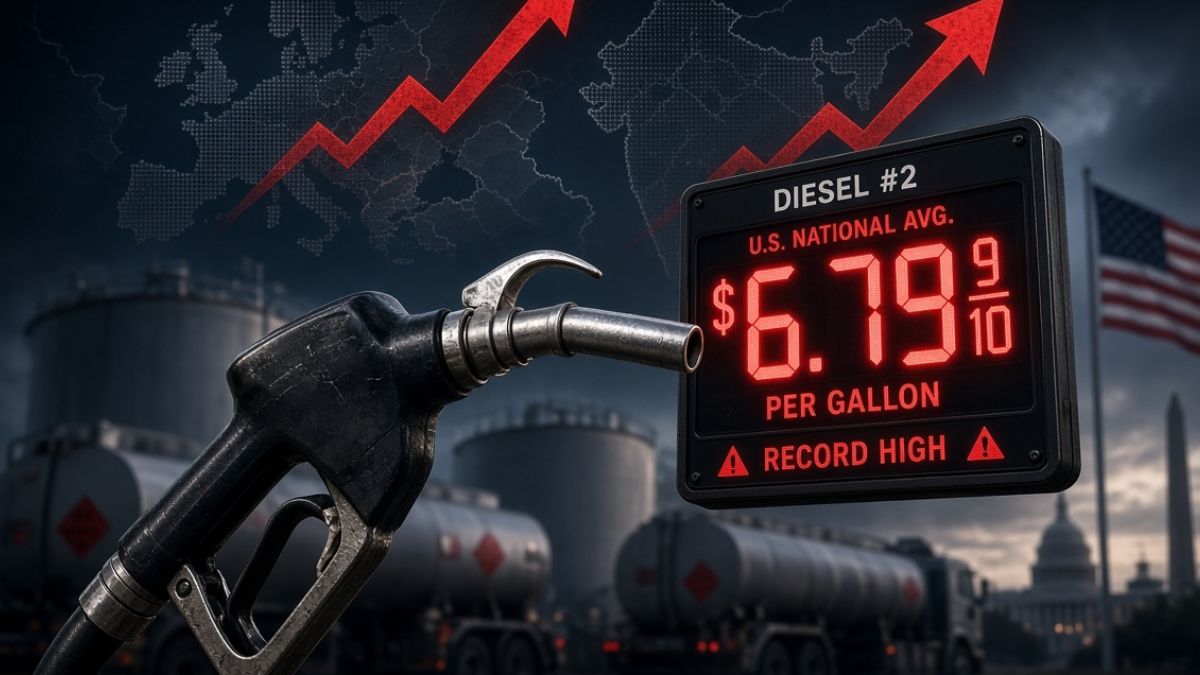
- Diesel prices have risen above $6.50 per gallon.
- European fuel premium
- The European diesel premium over crude oil was reported at about $82 per barrel, compared with roughly $28 at the end of February.
- Potential European impact
- Oxford Economics and Goldman Sachs estimated European diesel prices could rise by as much as 50% if the United States bans fuel exports.
Quotes

Russian government
Russia’s government, which announced the diesel export restriction extension
“The decision has been taken to support stability of the domestic fuel market, also taking into account higher demand for motor fuels during the harvesting season.”
 livemint.com
Sources
Related news
Trump Backs Possible Diesel Export Ban as Prices Hit Records
Trump Backs Diesel Export Ban Amid Global Fuel Supply Squeeze

Trump Says Ukraine’s Refinery Strikes Are Hurting Global Fuel Markets

White House Denies Report of 90-Day U.S. Diesel Export Ban
Trump’s Proposed Diesel Export Ban Raises Global Fuel Concerns

India's Diesel Exports Rise as Russia Supply Falters
India-Mongolia Direct Flights Cut New Delhi-Ulaanbaatar Travel Time

Ganesh Thirumuru Edges Jadhav in Asian Games Archery

India’s eFootball Protest Ignored as Mongolia Reporting Dispute Emerges

Paritosh Reaches Puyo Puyo Champions Quarterfinals at Asian Games
