2 days ago
Chhattisgarh HC Protects Married Daughters’ Compassionate Job Rights
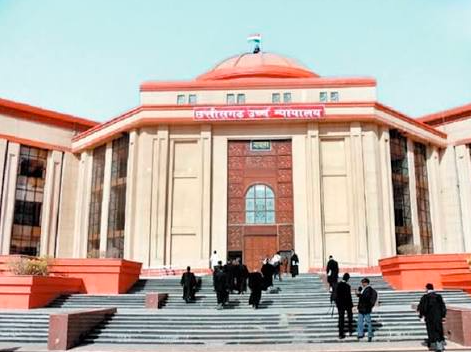
Two women asked for jobs at the bank where their fathers had worked before they died.
The bank rejected their requests because the women were married.
The Chhattisgarh High Court said marriage alone is not a fair reason to reject them.
The court noted that married sons had received similar appointments.
It said the bank’s rules focus on whether a person was dependent on the deceased employee.
The bank had not properly checked whether the two women were still dependent on their fathers.
The court said sons and daughters must be judged by the same standard.
It ordered the bank to offer the women suitable jobs within 90 days.

The Chhattisgarh High Court ordered Chhattisgarh Rajya Gramin Bank to appoint two married daughters of deceased employees.
The court ruled that marriage alone cannot disqualify daughters when the bank’s scheme does not distinguish between married sons and daughters.
It held that rejecting the women’s applications solely because they were married violated Articles 14 and 15 of the Constitution.
The bank’s scheme makes actual dependency, rather than marital status, the determining criterion for compassionate appointments.
The bank must appoint the women to suitable posts matching their qualifications within 90 days of receiving the order.
- Who
- The Chhattisgarh High Court, Sheena David, Ankita Mishra, and Chhattisgarh Rajya Gramin Bank.
- What
- The court ordered the bank to appoint two married daughters of deceased employees under its compassionate-appointment scheme.
- Where
- The case was decided by the Chhattisgarh High Court and involved appellants from Bilaspur and Raipur.
- When
- The division bench issued its order on July 30; the report was published on August 31.
- Why
- The court found that rejecting the women solely because they were married was discriminatory and inconsistent with the bank’s dependency-based policy.
Court’s Equality Standard
Authorities’ Marital-Dependency Argument
Effect of marriage on dependency
Court’s Equality Standard
Marriage alone cannot disqualify a daughter; dependency must be assessed based on the individual circumstances of sons and daughters.
Authorities’ Marital-Dependency Argument
The respondents argued that a married son ordinarily continues to maintain the deceased employee’s family, while a married daughter is presumed to join her matrimonial family.
Meaning of the bank’s scheme
Court’s Equality Standard
The scheme refers to a “wholly dependent son” and a “wholly dependent daughter” without distinguishing between married and unmarried daughters.
Authorities’ Marital-Dependency Argument
The authorities rejected the women’s applications after treating marriage as ending their dependency instead of separately examining their circumstances.
Constitutional equality
Court’s Equality Standard
Because the bank had granted compassionate appointments to several married sons, applying a different standard to married daughters was discriminatory and violated Articles 14 and 15.
Authorities’ Marital-Dependency Argument
The respondents relied on a social distinction between married sons and married daughters, an argument the court rejected as unable to withstand constitutional scrutiny.
Key facts
- Court
- Chhattisgarh High Court
- Appellants
- Sheena David, 33, of Bilaspur, and Ankita Mishra, 32, of Raipur
- Employer
- Chhattisgarh Rajya Gramin Bank
- Constitutional provisions
- Articles 14 and 15
- Fathers’ positions
- Noel Shailendra Kumar Johns was a branch manager; Mandan Kumar Panda was an office assistant
- Fathers’ deaths
- They died in harness in 2015 and 2016
- Policy timeline
- The bank introduced its policy in 2019 and extended it retrospectively through an October 21, 2023 e-circular to qualifying deaths on or after February 11, 2014
- Appointment deadline
- Within 90 days of the bank receiving the court’s order
Quotes
Chhattisgarh High Court division bench
The division bench comprising Chief Justice Ramesh Sinha and Justice Ravindra Kumar Agrawal.
“If marriage does not by itself disqualify a son from being treated as a dependent family member, the same standard must necessarily apply while considering the case of a daughter.”
 deccanchronicle.com
 theprint.in
 rediff.com
“Thus, the scheme itself makes dependency, and not marital status, the determinative criterion.”
deccanchronicle.com
theprint.in
rediff.com
Sources


Related news

Jharkhand High Court Grants Job to Married Daughter
Patna High Court Reconsiders Family Pension Claim of Second Wife

Madras High Court Allows Puducherry Reservation Through Native Mothers

Supreme Court stays HC order quashing Karur stampede victims' jobs

Telangana High Court Questions Marriage Aid Schemes’ Legal Basis
IBPS RRB Recruitment 2026 Registration Opens With Exam Schedule

IBPS Begins RRB XV Registration for 13,441 Vacancies

Finance Ministry Flags Severe Attrition Across Regional Rural Banks

IBPS RRB 2026 Registration Begins September 1; Exam Dates Released