

1 month ago
Ancient One-Eyed Ancestor May Have Shaped Human Eye Evolution
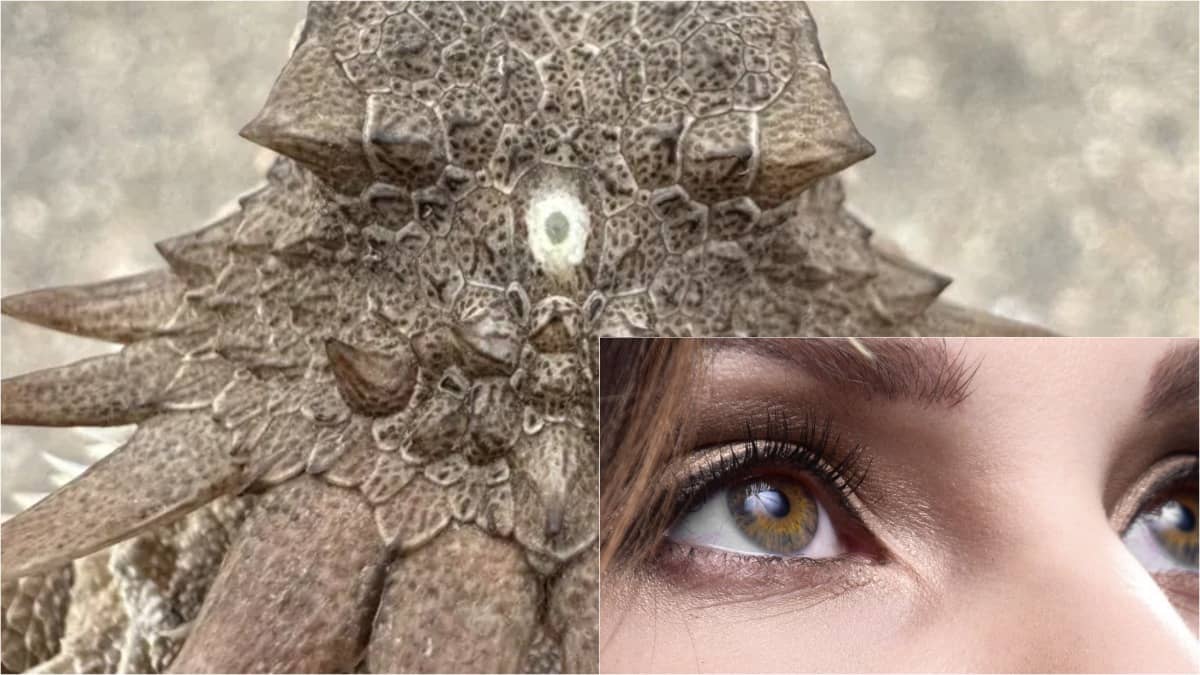
Scientists have discovered that humans and other vertebrates might have evolved from a tiny, one-eyed ancestor that lived about 600 million years ago.
This ancestor had a single eye on top of its head and was mostly stationary, filtering food from the water.
Over time, this ancestor lost its paired eyes but kept the central eye.
Later, as its descendants became more active, parts of this central eye were repurposed to form the paired eyes we have today.
Amazingly, a part of this ancient eye still exists in our brains as the pineal gland, which helps regulate our sleep.
This finding changes how we understand the evolution of eyes in vertebrates.

A one-eyed ancestor with a single eye on top of its head lived 600 million years ago.
This ancestor lost its paired eyes but retained a central eye, which later evolved into the paired eyes of vertebrates.
The pineal gland in modern vertebrates is a remnant of this ancient eye.
The study suggests that vertebrate eyes evolved differently from those of insects and squid.
The retina in vertebrates developed from brain tissue, unlike in other animals.
- Who
- Researchers from Lund University and the University of Sussex
- What
- A study proposing that human eyes evolved from a one-eyed ancestor
- Where
- The ancestor lived in the ocean
- When
- The ancestor lived nearly 600 million years ago
- Why
- To understand the evolution of vertebrate eyes and their unique structure
Traditional Eye Evolution Theory
New One-Eyed Ancestor Theory
Origin of Vertebrate Eyes
Traditional Eye Evolution Theory
Vertebrate eyes evolved directly from paired light-sensitive cells similar to those in insects and squid.
New One-Eyed Ancestor Theory
Vertebrate eyes evolved from a single median eye in a one-eyed ancestor, which later repurposed parts of this eye to form paired eyes.
Role of the Pineal Gland
Traditional Eye Evolution Theory
The pineal gland is a separate structure unrelated to the evolution of the eyes.
New One-Eyed Ancestor Theory
The pineal gland is a remnant of the ancient median eye, retaining its function in light detection and sleep regulation.
Key facts
- Ancestor's Lifestyle
- Stationary, filtering plankton from seawater
- Ancestor's Eye
- Single median eye on top of the head
- Pineal Gland Function
- Regulates sleep and synchronizes with daylight
- Evolutionary Timeline
- 600 million years ago
- Research Institutions
- Lund University and University of Sussex
- Key Researcher
- Dan-E Nilsson
Quotes
Dan‑E Nilsson
Professor emeritus in sensory biology at Lund University
“Now we finally understand why the eyes of vertebrates differ so radically from the eyes of all other animal groups, such as insects and squid. The film of our eyes – the retina – developed from the brain, whereas the eyes of insects and squid originate in the skin on the sides of the head.”
 republicworld.com
“The results are a surprise. They turn our understanding of the evolution of the eye and the brain upside down.”
republicworld.com
Sources
Related news

Will Pucovski Sues Brighton Grammar Over Concussion Handling

Argentine Father-Son Duo Admits FIFA Bribery, Agrees to Pay $50 Million

Professor, Five Students Arrested in IGKV Paper Leak

Supreme Court Issues Notice On Paper Leak Property Confiscation PIL

Noel Tata Emerges as Key Power Broker in Tata Group

Pakistan Head Coach Aaqib Javed's Daughter Marries in UK
