6 days ago
Yayoi Kusama Turned Trauma Into Globally Iconic Art

Yayoi Kusama was a Japanese artist famous for colorful dots, pumpkins, and rooms filled with mirrors.
She began seeing hallucinations when she was a child.
These experiences, along with a difficult childhood and wartime trauma, influenced her artwork.
Kusama believed making art helped her manage pain, fear, and anxiety.
She moved to New York in 1957 and explored new kinds of modern art.
Although she was not fully recognized at first, she continued working for many years.
In 1966, she created an artwork made of reflective balls that criticized the art market.
Later, museums around the world showed her work, and her art sold for millions of dollars.
She continued painting until her final days and died at 97.

Yayoi Kusama died recently at age 97 after a lifetime devoted to art.
Her childhood trauma and hallucinations helped inspire her repeated dots and self-obliteration themes.
She moved from Japan to New York in 1957 after corresponding with Georgia O’Keeffe.
Her 1966 Narcissus Garden intervention challenged the commercialisation of the art world.
Museum retrospectives and auction records later established Kusama as a commercially successful artist.
- Who
- Japanese artist Yayoi Kusama.
- What
- She died at age 97 after a career spanning visual art, performance, fiction, and poetry.
- Where
- Kusama was born in Matsumoto, Japan, worked in New York and Tokyo, and exhibited internationally.
- When
- She died recently; the article does not provide a specific date.
- Why
- Her art was shaped by hallucinations, childhood and wartime trauma, anxiety, and her effort to cope through continual creation.
Critical Recognition
Commercial Success
Early treatment of Kusama’s work
Critical Recognition
Kusama was a radical female migrant artist who did not receive the critical recognition the article says she deserved in 1960s New York.
Commercial Success
Her work later gained major institutional recognition through retrospectives at the Museum of Modern Art in 1998 and Tate Modern in 2012.
Art and commercialization
Critical Recognition
Her 1966 Narcissus Garden criticized the self-serving commercialisation of the art world by offering reflective balls for sale outside the Venice Biennale.
Commercial Success
The later surge in auction prices and international exhibitions made Kusama one of the most commercially successful living artists.
Meaning of repetitive motifs
Critical Recognition
The dots, mirrors, and self-obliteration themes emerged from hallucinations, trauma, anxiety, and a deeply personal practice.
Commercial Success
For global audiences, the same motifs became widely recognizable symbols associated with her psychedelic dots, pumpkin sculptures, and immersive Infinity/Mirror Rooms.
Key facts
- Born
- 1929 in Matsumoto, Nagano prefecture, Japan
- Age at death
- 97
- Move to the United States
- 1957
- Mental health institution
- Kusama entered a Tokyo mental health institution in 1977 and worked at a nearby studio during the day.
- Narcissus Garden
- Her 1966 Venice intervention used 1,500 reflective balls, initially offered for approximately $2 each.
- Major auction sale
- Untitled (Nets) sold for $10.5 million at Phillips New York in 2022.
- Another auction sale
- A Flower sold for $10 million at Christie’s Hong Kong in 2023.
Quotes
Yayoi Kusama's studio
The artist’s studio, issuing a statement after her death
“Throughout an extraordinary lifetime devoted entirely to artistic creation, Kusama pursued an internationally acclaimed career as a pioneering avant-garde artist whose creative practice encompassed visual art, performance, fiction, and poetry.”
 livemint.com
“I fight pain, anxiety, and fear every day, and the only method I have found that relieves my illness is to keep creating art.”
livemint.com
Sources
Related news
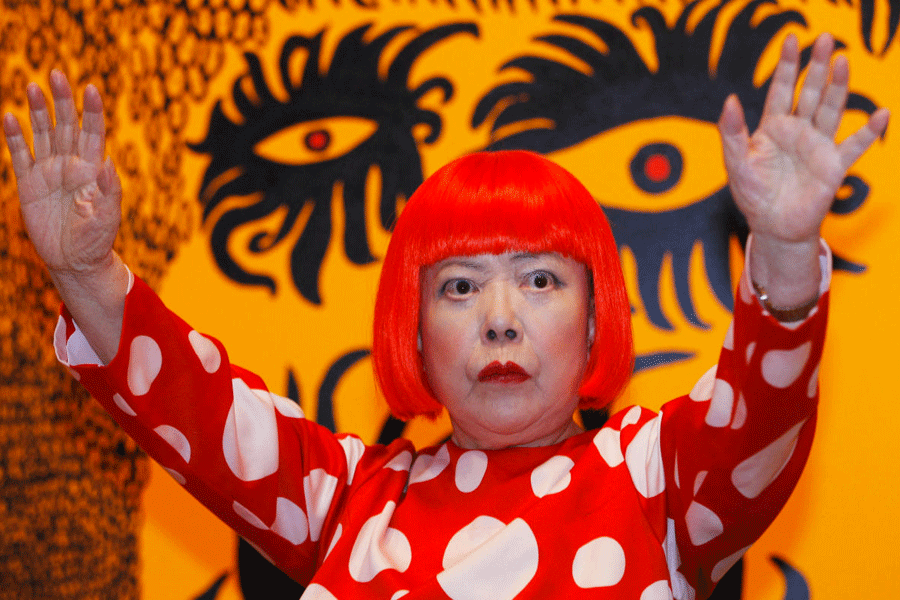
Yayoi Kusama, Polka-Dot Art Pioneer, Dies at 97
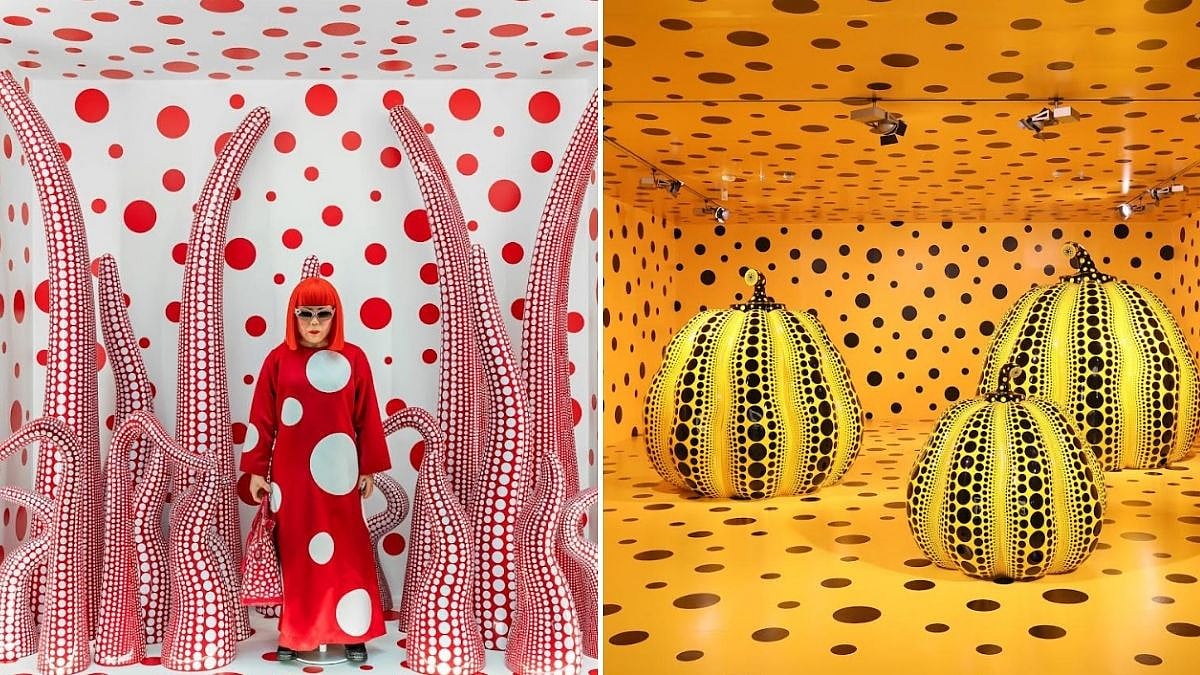
Yayoi Kusama, Artist Who Covered The World In Dots, Dies

Yayoi Kusama Turned Hallucinations Into Immersive Contemporary Art
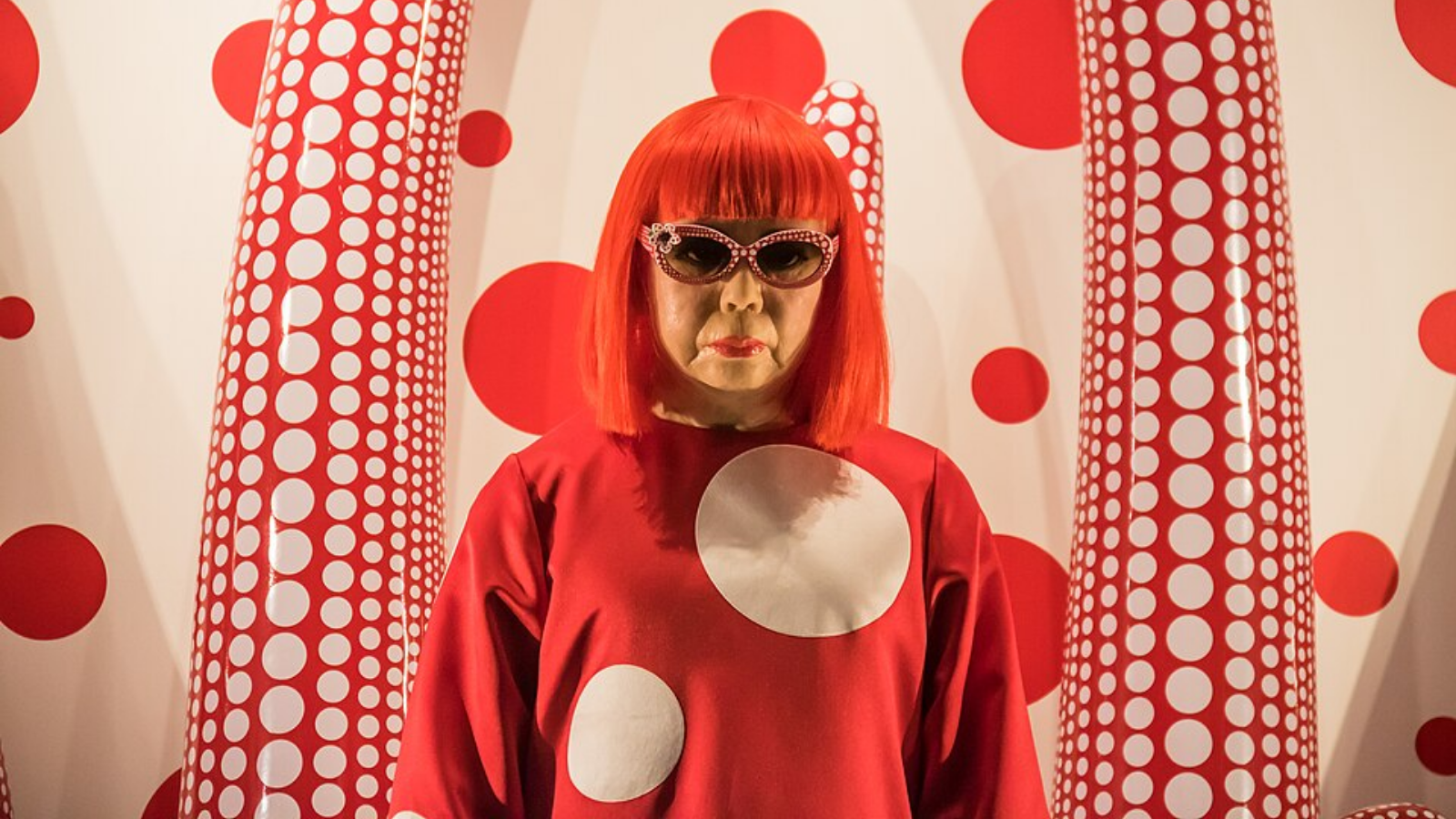
Yayoi Kusama’s Self-Obliteration Meets the Age of Selfies

Yayoi Kusama: How Hallucinations Became Avant-Garde Art

Yayoi Kusama Dies at 97 After Extraordinary Artistic Career

Indian Sugar Prices Fall Further as Mills Struggle to Sell

New Hangout Sitcoms Turn Friendship FOMO Into Streaming Appeal

Uber Cuts 3,300 Jobs in Overhaul Focused on Robotaxis

Suriya Celebrates Karthi’s Journey From US to Paruthiveeran Stardom

Gold Futures Fall Seventh Day Amid US-Iran Tensions