

1 hr ago
Punjab’s Domestic Fruit Orchard Model Offers Food and Income
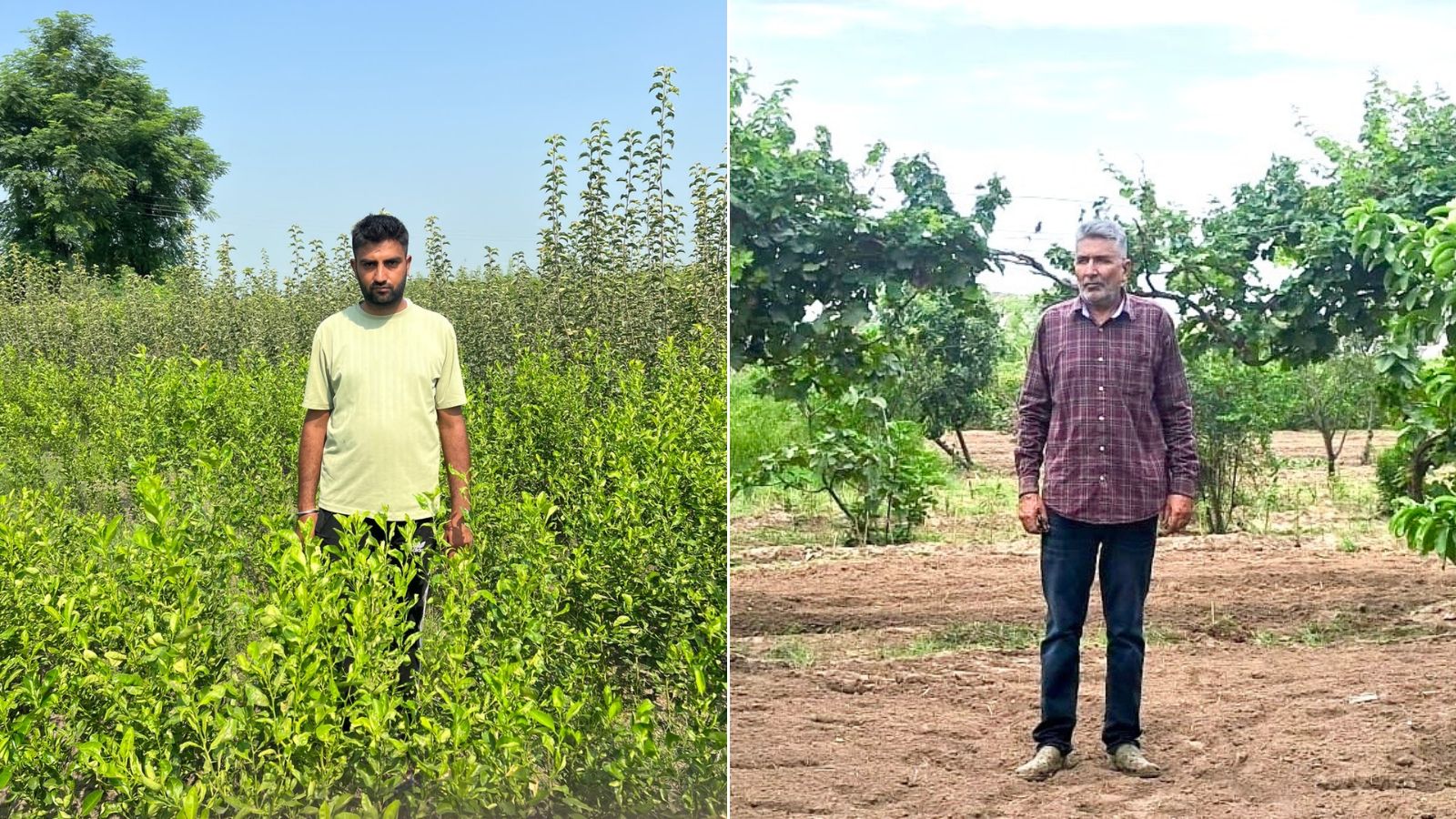
A gharelu bagichi is a carefully planned fruit garden near a home.
It is not just a few random trees.
Farmers choose plants of different sizes and varieties so that some fruit is ready in each season.
This can give families fresh fruit for many months.
It can also help farmers earn money by producing and selling young plants in a nursery.
Gurpreet Singh runs such a nursery in Punjab with guidance from Jagdev Singh.
Their model can fit on a small farm plot, in a city garden or even in pots.
They say it can help families eat more fruit and reduce reliance on only wheat and rice.

The ‘gharelu bagichi’ model plans small orchards to provide families with fruit across multiple seasons.
Farmer and nursery grower Gurpreet Singh developed the model in Moga with guidance from Jagdev Singh.
The approach combines different tree sizes, rootstocks, grafted plants and fruit varieties with staggered harvest periods.
Gurpreet’s nursery produces thousands of fruit plants and lakhs of vegetable seedlings each year.
Gurpreet estimates nursery farming can earn Rs 3–5 lakh per acre per cycle, compared with Rs 90,000–1 lakh annually from wheat-paddy farming.
- Who
- Marginal farmer and nursery grower Gurpreet Singh, guided by Jagdev Singh, an engineer and orchard adviser.
- What
- They are promoting the ‘gharelu bagichi’, or domestic fruit orchard, model alongside nursery farming.
- Where
- The model is being promoted in Punjab, including Moga district and elsewhere.
- When
- Jagdev Singh has developed the concept since 2005; Gurpreet began learning nursery production and grafting around 2014–15.
- Why
- The model aims to provide families with successive fruit harvests while diversifying farm income beyond the wheat-paddy cycle.
Diversification and household nutrition
Practical farming constraints
Economic potential
Diversification and household nutrition
The model’s promoters say nursery farming and diversified orchards can generate more income than conventional wheat-paddy cultivation.
Practical farming constraints
Nursery farming requires daily supervision for watering, grafting, grading, disease management and preparing plants for sale.
Land requirements
Diversification and household nutrition
The model can be used on one kanal, in smaller urban spaces or in containers, according to Jagdev Singh.
Practical farming constraints
The article notes that orchard planning depends on land size and direction, tree growth patterns, rootstocks and maturity periods, requiring careful technical decisions.
Food access
Diversification and household nutrition
Supporters say successive fruit harvests can improve household access to fresh fruit and address malnutrition concerns.
Practical farming constraints
The article does not provide independent measurements of nutritional outcomes or confirm the income estimates.
Key facts
- Model
- ‘Gharelu bagichi’ means a planned domestic fruit orchard.
- Smallest suggested size
- One kanal, or one-eighth of an acre.
- Harvest approach
- Different fruit varieties are combined to produce successive harvests over several months.
- Gurpreet’s nursery
- He operates a 2.5-acre nursery and produces thousands of fruit plants and lakhs of vegetable seedlings annually.
- Nursery income estimate
- Rs 3–5 lakh per acre in one cycle, depending on varieties.
- Wheat-paddy comparison
- Gurpreet estimates annual profit at Rs 90,000–1 lakh per acre.
- Research and guidance
- Recommendations draw on field observations, Punjab Agricultural University information and Horticulture Department guidance.
Quotes
Gurpreet Singh
Punjab marginal farmer and nursery grower implementing the model
“The Gharelu Bagichi brings fruit security for the family and diversification of farm income.”
 indianexpress.com
“The principle is simple: plan the land first, then select the plants.”
indianexpress.com
Sources
Related news

Retired Delhi Commissioner Grows 1,000 Plants at Home
Fazilka Farmer Turns Debt Into Sheep And Agroforestry Success

Jharkhand Women Farmers Triple Mango Income Through Global Markets

Karnataka Veterinarian Builds Gene Bank for Rare Mangoes

Dragon Fruit Cultivation Raises Incomes for Farmers in Jangaon

New Town Plant Lover Turns Limited Space Into Lush Garden

Punjab Farmers Block Rail Tracks Over Unresolved Twelve-Point Demands

Punjab Farmers’ Rail Blockade Disrupts 20 Train Services
Punjab Conversion Claims Prompt Debate Over Faith, Drugs, Discrimination
Punjab Groundwater Shows Modest Improvement, But Deep Levels Worsen
