8 hrs ago
Personal Loans: Five Costly Mistakes to Avoid Before Signing
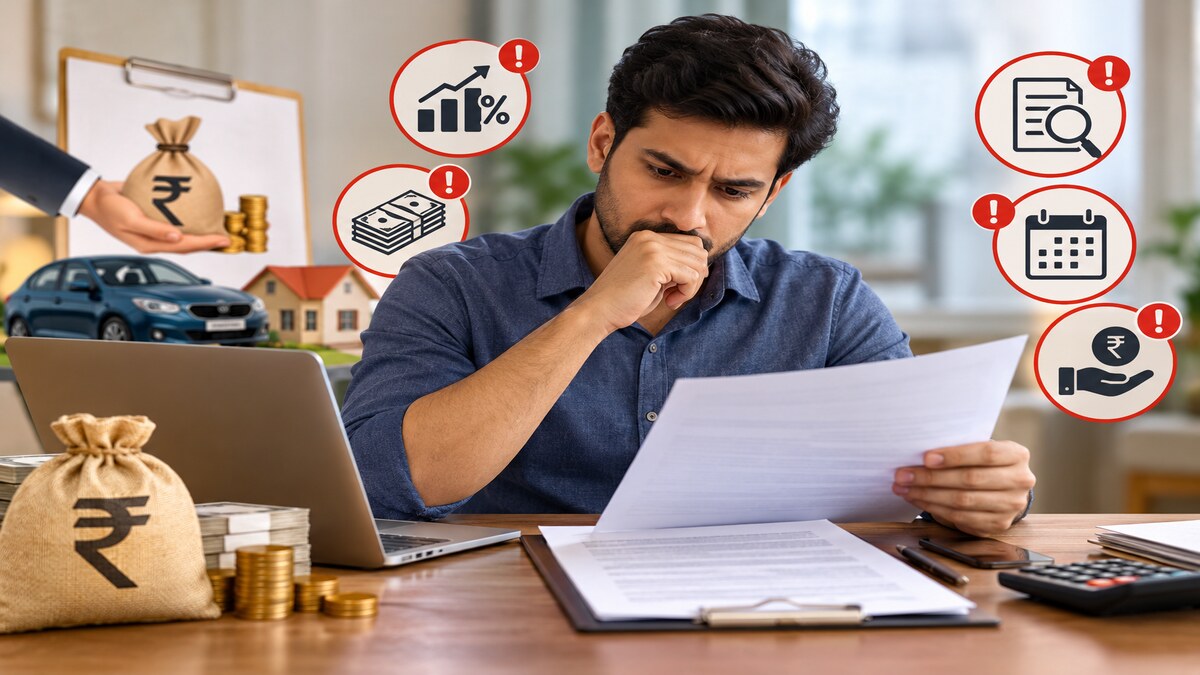
A personal loan can help when you need money, but it can cost more than you expect.
Before signing, compare offers from different lenders.
Check all fees and charges, not just the interest rate.
Borrow only an amount you can comfortably repay.
Taking new loans to pay old loan bills can make debt harder to manage.
Missing monthly payments may hurt your credit score.
Paying a loan off early is not always the best choice, so check the charges and keep enough emergency savings.
The RBI raised its repo rate in October 2026, but the effect on a loan depends on how its interest rate is set.
New borrowers should check the full repayment terms, and existing borrowers should review their schedules.

Compare offers across lenders instead of focusing only on the interest rate; fees and repayment terms affect total cost.
Review processing fees, late-payment penalties, and part-prepayment or foreclosure charges before signing.
Avoid stacking loans to pay existing EMIs, which can increase debt and make monthly obligations harder to meet.
Choose a loan amount and tenure that fit your repayment capacity, and avoid missing EMIs that could harm your credit score.
After the RBI raised its repo rate by 25 basis points to 5.50% on October 7, 2026, new loan pricing may change; effects on existing loans depend on their terms and rate structure.
- Who
- People considering or repaying personal loans, and their lenders.
- What
- Guidance on avoiding personal-loan costs and understanding how an RBI repo-rate increase may affect loan rates.
- Where
- India.
- When
- The RBI repo-rate increase was announced on October 7, 2026; the article provides general borrowing guidance.
- Why
- To help borrowers understand total loan costs, assess affordability, and determine whether rate changes apply to their loans.
Reasons to repay early
Reasons to preserve liquidity
Part-prepayment or foreclosure
Reasons to repay early
Paying early may reduce the outstanding principal or overall interest cost, depending on the terms and repayment schedule.
Reasons to preserve liquidity
Early repayment may involve charges and could use emergency savings; borrowers should weigh it against cash-flow needs and other commitments.
Response to floating-rate increases
Reasons to repay early
The article says borrowers who can afford higher EMIs should consider them, because extending the tenure can increase total interest paid.
Reasons to preserve liquidity
Borrowers need to consider their income, monthly cash flow, and liquidity; the impact depends on the loan’s benchmark and terms.
Key facts
- Repo-rate change
- The RBI raised the repo rate by 25 basis points, from 5.25% to 5.50%, on October 7, 2026.
- New personal loans
- The article says lenders are likely to increase rates for new personal loans, though terms depend on lender pricing and loan details.
- Existing fixed-rate loans
- Most existing personal-loan borrowers are expected to remain unaffected because most bank and NBFC personal loans are fixed-rate, according to Santosh Agarwal.
- Floating-rate loans
- Borrowers with floating-rate loans may face higher EMIs or an extended tenure, depending on the loan terms.
- Key costs to check
- Review processing fees, late-payment penalties, and part-prepayment or foreclosure charges.
- Early repayment
- Assess charges, effects on the principal and repayment schedule, and whether paying early would use up emergency reserves.
- Borrowing safeguards
- Compare lender offers, borrow within repayment capacity, and avoid taking new loans to repay existing EMIs.
Quotes
Santosh Agarwal
CEO of Paisabazaar
“With the increase in the repo rate, lenders are likely to increase interest rates for all new personal loans. Personal loans by most Banks and NBFCs are offered at a fixed rate; hence, most existing personal loan borrowers will remain unaffected.”
 financialexpress.com
Sources
Related news

Hidden Loan Fees Can Raise Costs Beyond Interest Rates

Use EMI Estimates to Prevent Personal Loan Over-Borrowing
Comparing Personal Loans for Weddings, Travel and Home Renovations

How to Plan Personal Loan EMI Payments Better

Credit Card EMI or Personal Loan: Which Costs Less?

Personal Loans or Buy Now, Pay Later: What Bangalore Consumers Should Consider

IRDAI Weighs Insurance Commission Caps Amid Intermediary Selloff

Nomura Cuts PB Fintech Target After Proposed Insurance Commission Caps

Insurance Brokers Warn IRDAI Reforms Could Slash Revenue

How Young Workers Can Build Credit Without Unnecessary Debt