

10 hrs ago
Why Children Need AI Literacy, Not Blanket Technology Bans
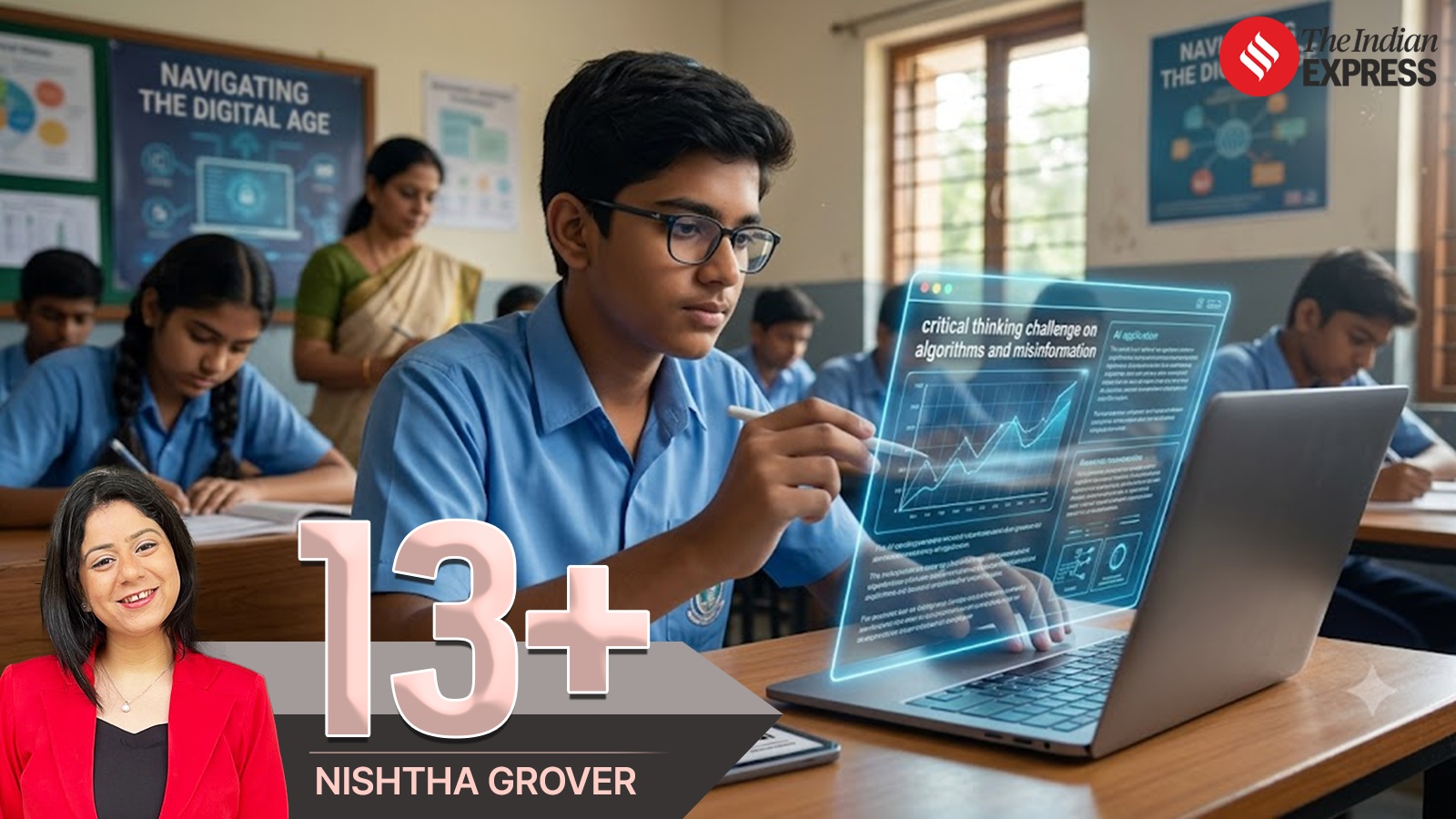
Different technologies can affect children in different ways.
Social media may encourage constant scrolling, comparison and worry about popularity.
That is why the article supports limits on social media for younger children and protections for sleep.
AI can sometimes help students understand difficult ideas or find mistakes in answers.
But children still need to practice thinking, writing and solving problems themselves.
Schools should teach children when AI is useful and when it is doing too much of the thinking.
Parents and teachers must help children build healthy habits instead of relying only on laws or bans.
The goal is for children to use technology without letting it control them.

Seventy-eight per cent of surveyed Indians support banning social media for children under 14.
Fifty-seven per cent support banning smartphones in schools, while 61 per cent oppose banning AI tools such as ChatGPT.
The article argues that technology’s effects depend on how it affects attention, sleep, relationships, emotional regulation and identity.
AI can support learning when guided by teachers, but excessive reliance may weaken children’s ability to think independently and tolerate uncertainty.
The article calls for age-appropriate restrictions, digital and emotional literacy, stronger protections and continued parental involvement.
- Who
- Children, parents, teachers and schools are the main groups discussed; the survey covers Indians.
- What
- The article examines whether children’s technology use should be restricted through bans or guided through age-appropriate boundaries and AI literacy.
- Where
- India is the primary country discussed, with the survey covering 31 countries.
- When
- The discussion refers to the Ipsos Education Monitor 2026.
- Why
- The article argues that children need protection from technologies that exploit immature attention systems while also needing preparation for a future in which AI is widely used.
Protective Restrictions
Guided Technology Use
Social media and smartphones
Protective Restrictions
Age-based limits on social media and restrictions on smartphones can protect children from constant engagement, social comparison, notifications and sleep disruption.
Guided Technology Use
Restrictions should be age-appropriate and paired with parental guidance and digital literacy, because removing an app alone does not create emotional security or connection.
AI in schools
Protective Restrictions
Banning AI could prevent children from outsourcing difficult cognitive tasks and becoming less comfortable with uncertainty, revision and intellectual struggle.
Guided Technology Use
AI should not be banned outright because teacher-guided uses can help students understand difficult concepts, generate questions and practice critical thinking.
Technology and mental health
Protective Restrictions
Social media and other technologies can amplify vulnerability, intensify comparison and expose young people to harmful content.
Guided Technology Use
Mental-health problems do not come from apps alone; family relationships, academic pressure, loneliness, peer dynamics, socioeconomic circumstances, sleep, temperament and psychological support also matter.
Key facts
- Social media restriction
- 78% of Indians surveyed support banning social media for children under 14.
- Smartphone restriction
- 57% support banning smartphones in schools.
- AI in schools
- 26% favor banning AI, including ChatGPT, from schools, while 61% oppose a ban.
- Mental-health concerns
- 30% identify depression and anxiety or broader mental-health challenges as significant concerns for young people in India.
- Technology-related effects
- 26% cite the effects of social media and technology, including AI, as a concern.
- Future outlook
- 72% of surveyed Indians believe young people in the country have a bright future, the highest figure among the 31 countries surveyed.
Sources
Related news
New York City Restricts Student AI Through Eighth Grade

OpenAI Urges Responsible AI Use While Preserving Student Learning

New York Delays Student AI While UAE Teaches It
India’s AI Use Surges, but Building Skills Lags

IIIT Hyderabad Launches Centre to Rethink Learning in AI Era

Teaching in the AI age: Why human connection matters
Maharashtra Teachers Invited to Essay Competition on Conscious AI Use

Students Perform Aarti of AI Tools on Teachers’ Day

Seattle Times, Newsday Sue OpenAI, Microsoft Over Copyright
