

4 days ago
India Needs AI and Skilled Workers to Build Manufacturing Power
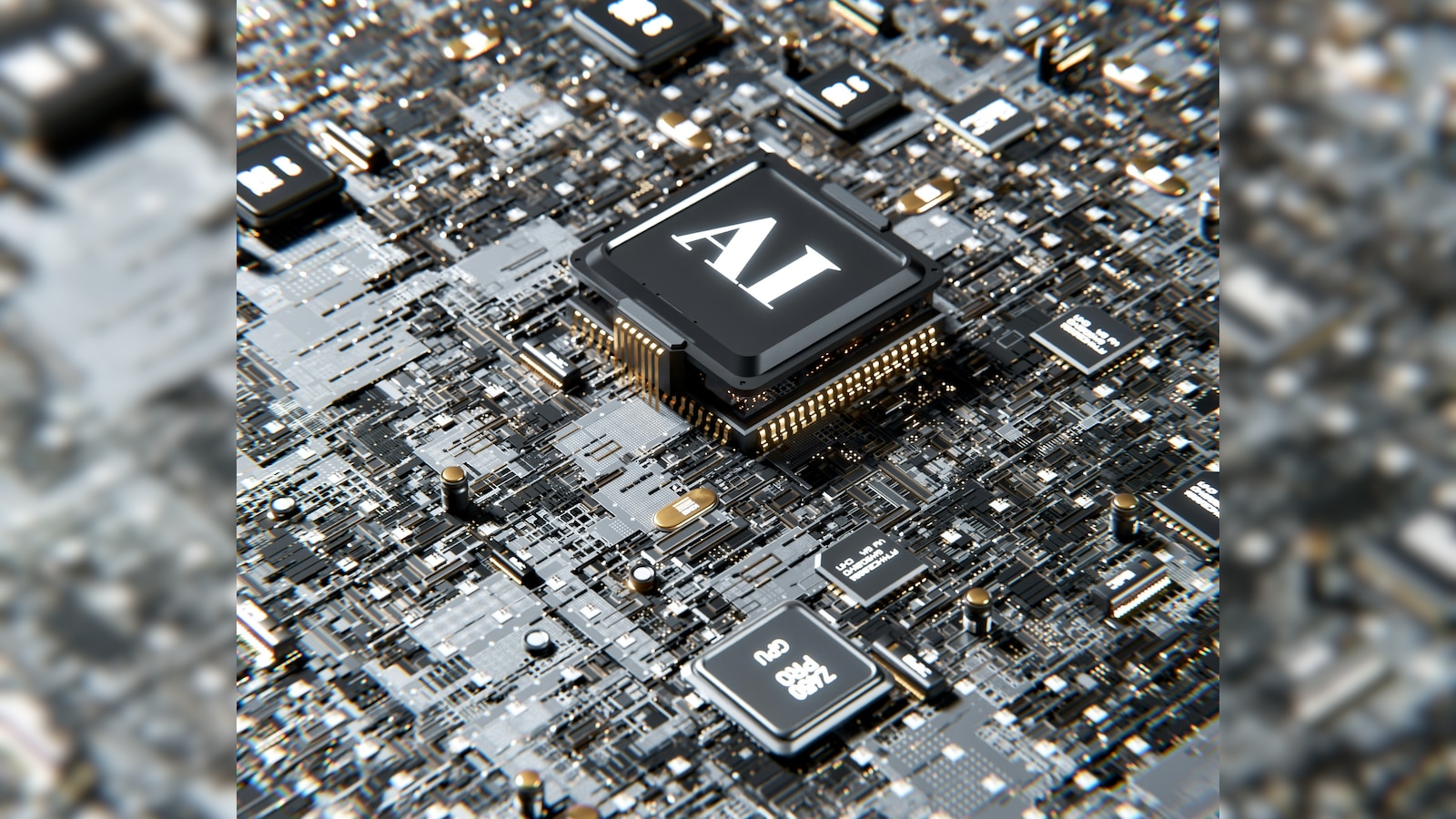
India wants to become a much bigger manufacturing country.
Some people ask whether factories should use more AI or employ more skilled workers.
The article says India needs both.
AI can watch machines, find patterns and predict problems very quickly.
Skilled people must still understand why a problem happened and decide what to do.
Engineers can also use digital copies of factories to test ideas before building them.
This combination could help India make advanced products such as aircraft and machines.
To achieve it, schools and training institutes must teach both traditional engineering and modern digital skills.

India’s manufacturing strategy should combine artificial intelligence with deep engineering and technical expertise.
AI can analyze factory data, predict failures, identify quality problems and simulate production outcomes.
Skilled technicians remain necessary to diagnose physical faults and make safety, quality and production decisions.
India must build industrial ecosystems, digital factories, advanced training and frontier AI capabilities together.
The proposed goal is AI-native manufacturing that designs and exports complex products rather than merely assembling them.
- Who
- India’s policymakers, engineers, technicians, manufacturers and AI researchers are central to the proposed strategy; the article also cites Manish Kumar and the Indian Air Force Vice Chief.
- What
- The article argues that India should combine AI, automation and digital manufacturing with highly skilled human workers.
- Where
- India, including its factories, training institutes, universities and technology centres.
- When
- The discussion follows the recent release of India’s quarterly GDP growth figures and a recent national conference on advanced military technologies.
- Why
- India needs larger-scale manufacturing to compete with China in global supply chains and move beyond assembling products designed elsewhere.
AI-Led Automation
Human-Led Expertise
Role of AI
AI-Led Automation
AI can monitor factories continuously, analyze large datasets, predict failures, optimize designs and coordinate autonomous systems.
Human-Led Expertise
AI cannot by itself understand every physical fault or make all safety, quality and production decisions.
Future factory
AI-Led Automation
Factories should use robotics, digital twins, virtual testing and autonomous systems to improve speed and efficiency.
Human-Led Expertise
Automation without capable engineers can reproduce poorly designed processes and automate inefficiency.
Workforce needs
AI-Led Automation
Advanced technology can reduce dependence on people for routine inspections, calculations and adjustments.
Human-Led Expertise
More sophisticated machines require more specialized technicians who understand materials, structures, software and manufacturing systems.
Key facts
- Core argument
- AI should multiply human industrial capability rather than replace skilled workers.
- Manufacturing gap
- India is described as strong in digital technology but weaker in the industrial foundations needed to manufacture complex products at scale.
- AI factory uses
- AI can support quality control, predictive maintenance, data analysis, anomaly detection and production simulation.
- Human responsibilities
- Technicians and engineers must diagnose physical problems, assess risks and decide whether production should stop.
- Digital factories
- Virtual twins can model production flows, layouts, safety conditions and machine failures before physical construction.
- Required workforce
- Future workers will need mechanical or electrical expertise alongside knowledge of sensors, robotics, data, digital twins and AI-assisted diagnostics.
- Policy priority
- India should connect vocational training, engineering education, industrial software and frontier AI research.
Quotes
Manish Kumar
Global technology leader and CEO of SOLIDWORKS at Dassault Systèmes
“AI is the multiplier. You are the value.”
 NDTV
NDTV
Sources
Related news
India Seeks Ownership as Artificial Intelligence Reshapes Global Power
India’s AI Strategy Must Move Beyond the Application Layer

India Poised to Build AI-Native Semiconductor Ecosystem Advantage

Cloud and AI Could Propel India's Economic Growth

Manufacturing and Transport Drive India's Global Capability Centre Boom
India’s Engineers Shift Toward Deep Tech for Viksit Bharat 2047
IRFC Signs Rs 4,200 Crore DVC Loan for Renewable Projects
Delhi High Court Restores UPSC Candidate’s Disability Protections

Maa Ramudu Andarivadu Set for September 4 Release

ICICI Prudential Launches BSE 500 Momentum Value Fund
