

27 mins ago
Why Workplace Digitisation Can Reduce Efficiency Despite New Technology

Using more computer tools does not always make work faster.
Workers may have to jump between many different apps during the day.
This constant switching makes it harder to concentrate.
Information can also become stuck in separate systems that do not communicate well.
Employees may then enter the same details more than once.
Learning complicated new software can slow people down at first.
Companies must also pay for training, subscriptions, updates, and security.
If a server stops working, employees may be unable to work at all.
Digital tools help most when companies choose and connect them carefully.

Employees may switch between digital applications up to 1,200 times daily, losing nearly four hours of productivity each week.
Separate communication, project-management, and accounting systems can create data silos and duplicated work.
Asana found that workers spend 58 per cent of their day on “work about work,” including searching for information and chasing updates.
New software can bring training, maintenance, subscription, cybersecurity, and infrastructure costs.
Server outages and complex interfaces can erase the speed and productivity gains expected from digitisation.
- Who
- Companies and their employees, including workers using multiple workplace applications.
- What
- The article explains how adopting digital tools can create inefficiency, duplicated work, hidden costs, and new bottlenecks.
- Where
- Workplaces worldwide.
- When
- Why
- Companies are adopting digital tools to improve speed and productivity, but poor planning, disconnected systems, and technical problems can undermine those goals.
Key facts
- App switching
- Employees may toggle between applications up to 1,200 times per day.
- Productivity loss
- The reported “toggle tax” costs workers nearly four hours per week.
- Work about work
- Asana found that workers spend 58 per cent of their day on activities such as searching for information and chasing updates.
- Data silos
- Separate communication, project-management, and accounting platforms can require employees to duplicate information.
- Financial costs
- Digital tools can add training, maintenance, subscription, and cybersecurity expenses.
- Operational risk
- A server outage can bring work to a complete halt.
Sources
Related news
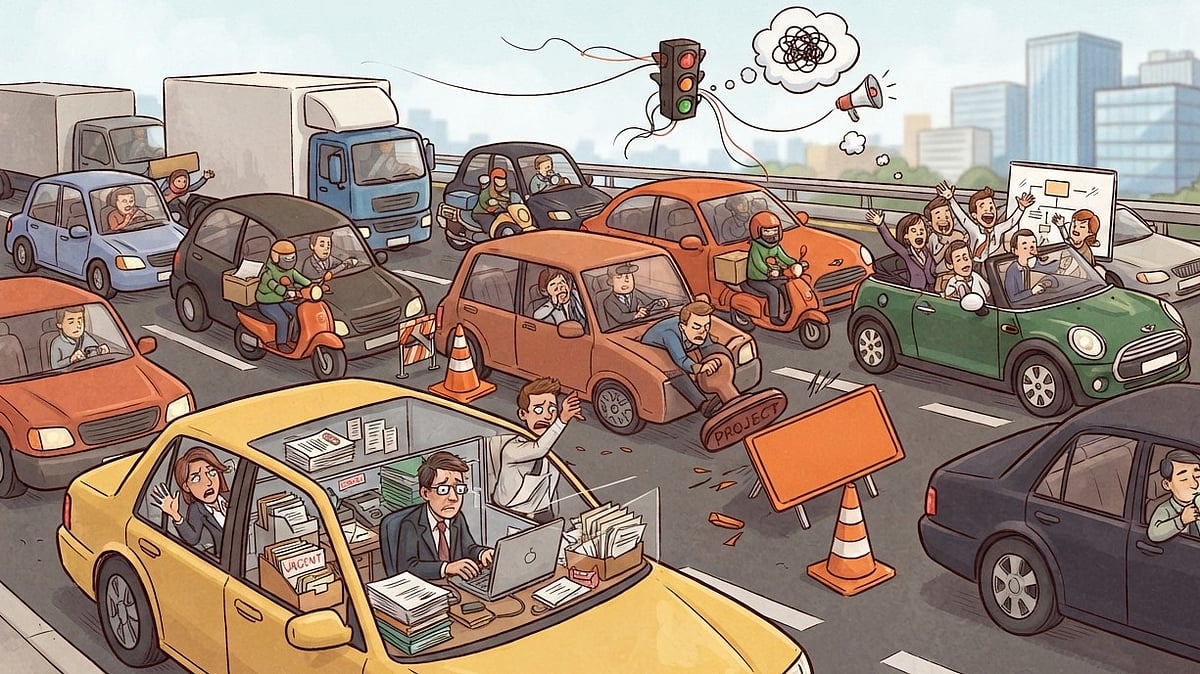
Traffic Jams Offer Five Lessons for Managing Workplace Chaos

India’s Opportunity Is Redesigning Work Around Human-AI Collaboration
Bengaluru Traffic Leaves Office Empty, Entrepreneur Warns Productivity Suffers

Modern Convenience Leaves People Running Out of Time

AI Surge Leaves Healthcare Developers Waiting on QA

Indian Businesses Embrace Integrated Attendance And Payroll Systems

Gen Z Workplace Trends Redefine Careers, Effort And Boundaries

Why Chronic Stress May Keep the Body in Survival Mode

India Faces Rising Kidney Disease Crisis

AI as a Therapist: Personal Experiences and Expert Views
