1 hr ago
Blind Man Sues British Museum Over Bayeux Accessibility Dispute
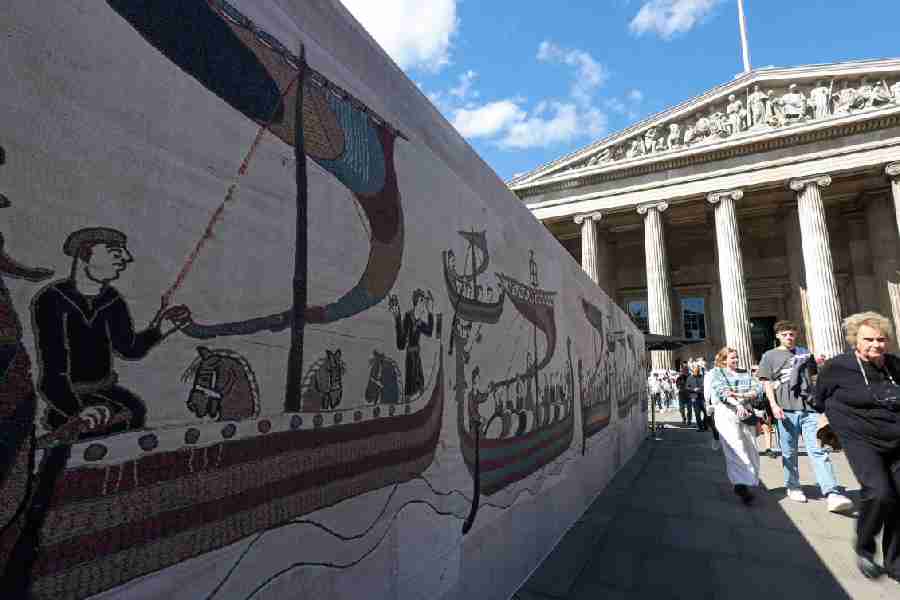
Dr Yusuf Ali Osman, who is blind, wants to visit the Bayeux Tapestry exhibition at the British Museum.
He says the museum is not offering audio-described tours for blind visitors.
Audio description would explain what is being shown through spoken words.
Osman says this means blind visitors do not have the same opportunity as sighted visitors.
His lawyers say this may break the Equality Act.
The museum reportedly said the tapestry must be protected from too much light.
Because of this, it is limiting visitors and prioritizing self-guided visits.
Osman is asking for money and for a court to require changes.
The British Museum had not commented when the report was published.

Dr Yusuf Ali Osman is suing the British Museum over the absence of audio-described tours for its Bayeux Tapestry exhibition.
Osman’s lawyers say the museum told him it would not provide live audio-described tours because light-exposure limits restrict visitor numbers.
Osman alleges that the decision breaches the Equality Act by disadvantaging blind visitors compared with sighted visitors.
He is seeking damages and a court order requiring the British Museum to change its policies.
The 70-metre exhibition has proved highly popular, with initial tickets selling out and generating nearly £2.5 million.
- Who
- Dr Yusuf Ali Osman is bringing the case against the British Museum, represented by lawyer Kate Egerton of Leigh Day.
- What
- Osman alleges that the lack of audio-described tours for the Bayeux Tapestry exhibition discriminates against blind visitors.
- Where
- The dispute concerns the Bayeux Tapestry exhibition at the British Museum.
- When
- Why
- Osman says the absence of audio description denies blind visitors the same opportunity as sighted visitors and breaches the Equality Act.
Osman’s Position
Museum’s Reported Position
Audio-described access
Osman’s Position
Osman argues that blind visitors should receive an audio-described way to experience the exhibition on the same basis as sighted visitors.
Museum’s Reported Position
The museum reportedly said it would not provide live audio-described tours, citing restrictions on the tapestry’s light exposure and the need to prioritize self-guided visits.
Equality Act obligations
Osman’s Position
Osman’s lawyers say service providers must anticipate disabled people’s needs and take reasonable steps to avoid substantial disadvantage.
Museum’s Reported Position
The British Museum had not provided a response to the request for comment, so its formal legal position was not stated in the report.
Key facts
- Claimant
- Dr Yusuf Ali Osman
- Defendant
- The British Museum
- Exhibition
- The Bayeux Tapestry
- Tapestry length
- 70 metres
- Visitor experience
- Ticket-holders are allowed 40 minutes to view the tapestry from an elevated platform.
- Ticket demand
- The first batch of tickets sold out.
- Reported ticket revenue
- Nearly £2.5 million ($3.32 million).
Quotes
Dr Yusuf Ali Osman
Blind visitor bringing legal action against the British Museum
“I understand that there are important restrictions around how the tapestry is displayed, but it is disappointing to find that blind visitors are not being offered an audio described way of experiencing it.”
 telegraphindia.com
“I want to be able to visit the Bayeux Tapestry and experience it for myself.”
telegraphindia.com
Kate Egerton
Lawyer at Leigh Day representing Osman
“The Equality Act places obligations on service providers to anticipate the needs of disabled people and take reasonable steps to avoid substantial disadvantage.”
telegraphindia.com
Sources
Related news

Bayeux Tapestry Exhibition Draws Sold-Out Crowds Across Britain
Bayeux Tapestry Returns to Britain, Bringing Medieval History to Life

Air India Ordered to Pay Rs 5 Lakh Over De-boarding
Gujarat NGO Withdraws ₹10,000 Crore Delhi BBC Defamation Suit

Eiffel Tower Staff Strike Over Women Sidelined During BAPS Visit

The Mummy 4 Begins Filming With Original Cast Returns

UK and France Target Mega Dinghies as Channel Crossings Continue