1 hr ago
India’s Cities Lead Global Growth, While Quality Of Life Lags
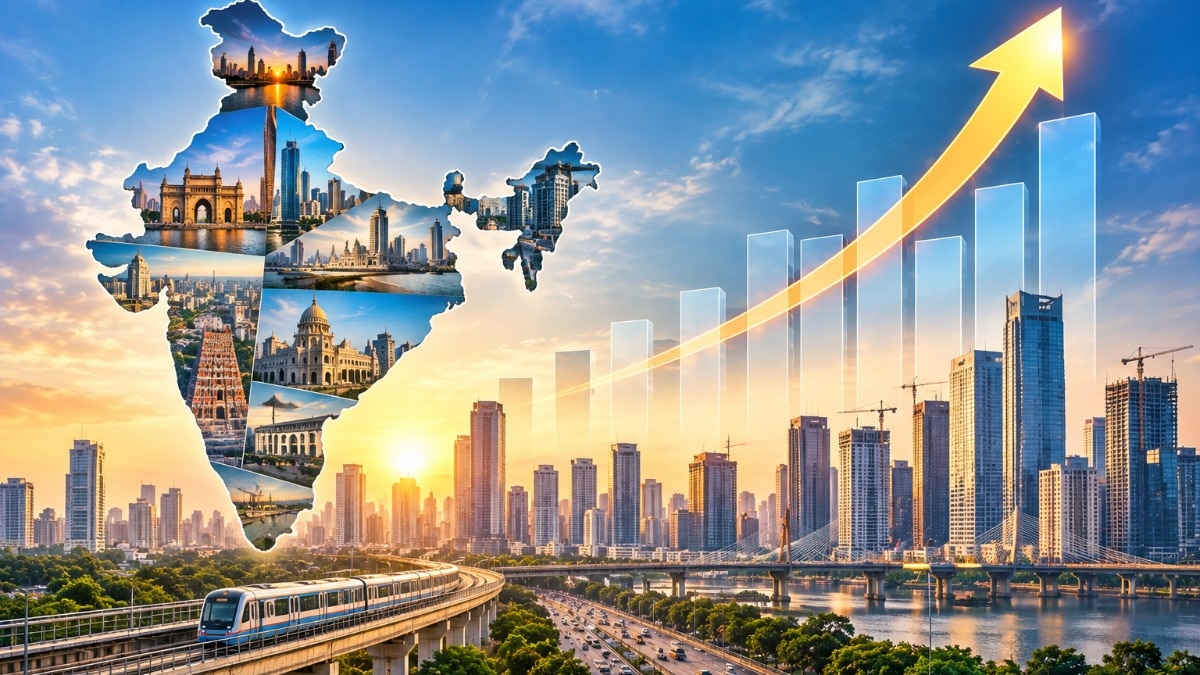
Oxford Economics studied cities around the world and found that Indian cities are growing very quickly.
Fifty-five Indian cities were among the world’s top 100 growth leaders.
Delhi was India’s highest-ranked city and could become a much larger economic center by 2050.
Bengaluru is expected to grow especially fast because it has many skilled graduates and technology companies.
Mumbai remains an important financial and business center.
Smaller cities such as Amravati, Surat and Tiruchirappalli also performed strongly.
However, economic growth does not always mean people have better lives.
Indian cities generally scored poorly for quality of life, especially because of pollution and unequal incomes.
The report says India’s challenge is to make urban growth healthier and more fair.

Fifty-five Indian cities ranked among the world’s top 100 urban growth leaders, according to Oxford Economics.
Delhi was India’s highest-ranked city overall at 268th globally and could become the world’s 14th-largest city economy by 2050.
Bengaluru rose 20 places to 311th and is forecast to achieve 9.2% average annual real GDP growth from 2026 to 2030.
Mumbai ranked 330th globally and was India’s leading city for corporate headquarters, ranking 23rd worldwide in that category.
Indian cities showed strong growth prospects, but weak quality of life, air pollution and income inequality continued to limit their rankings.
- Who
- Oxford Economics assessed Indian cities, including Delhi, Bengaluru, Mumbai and several smaller urban centers.
- What
- The report found that 55 Indian cities ranked among the world’s top 100 urban growth leaders, while highlighting quality-of-life weaknesses.
- Where
- The cities are across India and were compared with cities worldwide.
- When
- The rankings are from this year’s index; forecasts cover 2026–2030 and extend to 2050.
- Why
- Growth is being driven by GDP prospects, expanding labor pools, corporate networks and university ecosystems, but pollution, inequality and other quality-of-life problems weigh on rankings.
Economic Opportunity
Urban Development Risks
Growth prospects
Economic Opportunity
Indian cities are benefiting from strong GDP trajectories, skilled labor pools, corporate networks and university ecosystems. Delhi, Bengaluru and Mumbai have particularly significant long-term potential.
Urban Development Risks
Economic expansion alone may not improve living conditions unless cities address weak quality-of-life outcomes and make development more equitable.
Broad-based urban growth
Economic Opportunity
Strong rankings by Amravati, Surat, Tiruchirappalli and other smaller cities suggest India’s growth is spreading beyond its established metropolitan centers.
Urban Development Risks
The report says the median Indian city ranked only 850th for quality of life, while pollution, income inequality and educational attainment remain constraints.
Key facts
- Indian cities in global growth top 100
- 55
- Delhi’s overall global ranking
- 268th
- Delhi’s projected economy by 2050
- More than US$2 trillion, potentially the world’s 14th-largest city economy
- Bengaluru forecast GDP growth
- 9.2% average annual real growth from 2026 to 2030
- Mumbai’s corporate headquarters ranking
- 23rd worldwide
- Median Indian city quality-of-life ranking
- 850th out of 1,000 cities
- Delhi air quality
- Second-worst air quality score in the index
Quotes
Elizabeth Martindale
Senior Economist, City Services at Oxford Economics
“Air quality, income inequality, and educational attainment are what separate India’s cities from their Asian peers.”
 businesstoday.in
“No other country comes close to India on the sheer breadth of urban growth captured in this year’s Index.”
businesstoday.in
Sources
Related news
Oxford Index Highlights Delhi, Bengaluru Among Rising Global Cities

Pune Leads India’s City Vitality Rankings as Kolkata Gains Momentum

India Economy Could Reach $5.1 Trillion by FY29
India’s Path to a $55 Trillion Economy by 2047

Mumbai Real Estate Leaders Set Ambitious 2030 Growth Roadmap

India's Economic Growth Targets Viksit Bharat Dream

Kammela Saibaba Receives Pan-India Award for Social Activism

India Fresher Hiring Shifts Toward Specialised Skills Across Sectors

NESCAFÉ and Spotify Launch Hustle Anthem for Young India

Engineering Talent Glut Deepens as Entry-Level Jobs Lag