1 week ago
India’s Capex Push Must Build Capability, Not Just Assets
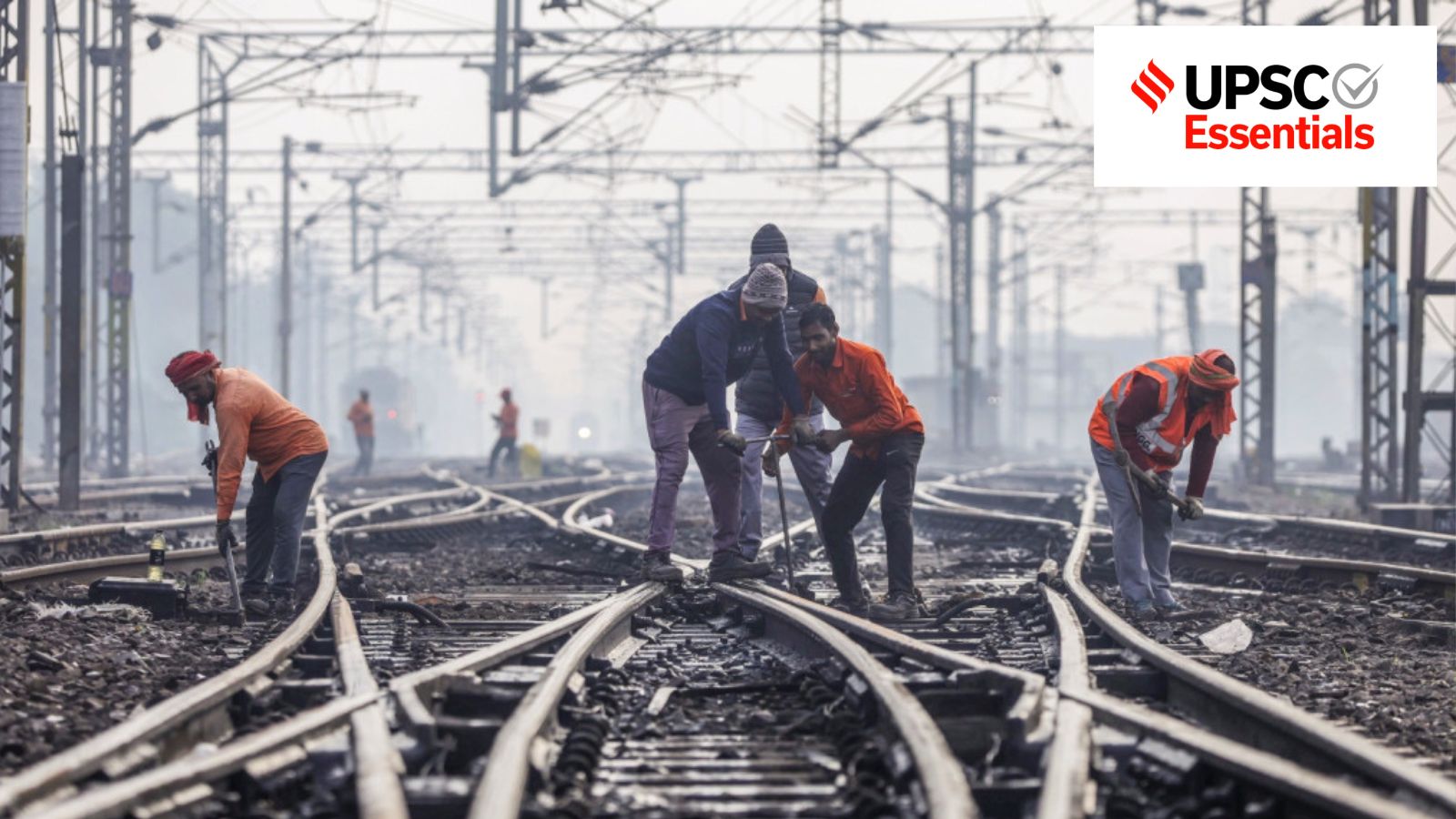
The Indian government is spending more money on buildings, roads, railways and other long-term projects.
This spending is called capital expenditure, or capex.
Good public projects can make it easier and cheaper for private companies to start factories and businesses.
For example, better roads and ports can help companies move goods more quickly.
These projects create jobs while they are being built and can improve productivity after they are finished.
However, spending money does not automatically guarantee useful results.
Projects can be delayed, underused or made more expensive by problems such as land disputes and weak coordination.
India also needs skilled workers, researchers and strong technology capabilities.
The article says capex should be judged by whether it makes the economy more productive, not simply by how much money is allocated.

Central government capital expenditure rose 66% year-on-year to Rs 89,255 crore in June, supporting the 2026-27 capex target of Rs 12.22 lakh crore.
Effective capital expenditure is estimated at Rs 17.15 lakh crore because it includes grants to states and other agencies for creating capital assets.
Public investment can attract private capital by improving electricity, roads, railways, ports and digital connectivity.
Private corporate capital expenditure is estimated at about Rs 11.44 lakh crore in 2025-26, but the private investment cycle remains uneven.
The article argues that future capex must build technological capability through research, skills, semiconductors, artificial intelligence and digital infrastructure.
- Who
- The Union Government, private companies and public agencies are central to the investment strategy discussed.
- What
- India is expanding public capital expenditure to improve infrastructure and encourage private investment and technological development.
- Where
- Across India, including infrastructure, manufacturing, digital and technology sectors.
- When
- The discussion focuses on the 2026-27 budget cycle, with comparisons covering 2017-18 through 2025-26 and spending reported for June.
- Why
- To raise productivity, reduce costs, expand productive capacity and encourage a sustained private investment cycle.
Key facts
- 2026-27 capex target
- Rs 12.22 lakh crore
- 2026-27 effective capex
- Rs 17.15 lakh crore, including grants to states and other agencies for capital assets
- June capital expenditure
- Rs 89,255 crore, up 66% year-on-year
- Private corporate capex
- Estimated at about Rs 11.44 lakh crore in 2025-26
- Capacity utilisation
- 74.8% in the second quarter of 2025-26, compared with a pre-pandemic average of 72.9%
- Gross fixed capital formation
- About 32.3% of GDP in 2025-26
- Fiscal constraints
- Interest payments are budgeted at about Rs 14.04 lakh crore and the fiscal deficit at Rs 16.96 lakh crore, or 4.3% of GDP, for 2026-27
Sources
Related news

Centre sustains capex push in Q1 despite global headwinds

Private sector firms urged to invest more in R&D: Official

Sitharaman: Public capital must catalyze, not replace, private investment
Indian States Accelerate Infrastructure Push to Drive Manufacturing

Modi’s Make in India Gains Face Rahul Gandhi’s Criticism

Jefferies Favors Kaynes as India Advances Electronics Component Manufacturing
Indian Chief Ministers Turn Marketers to Win Manufacturing

Government Schemes Propel India’s Manufacturing Growth and Supply-Chain Rise