7 hrs ago
Indian Markets Slide as Global Risks Meet Domestic Resilience
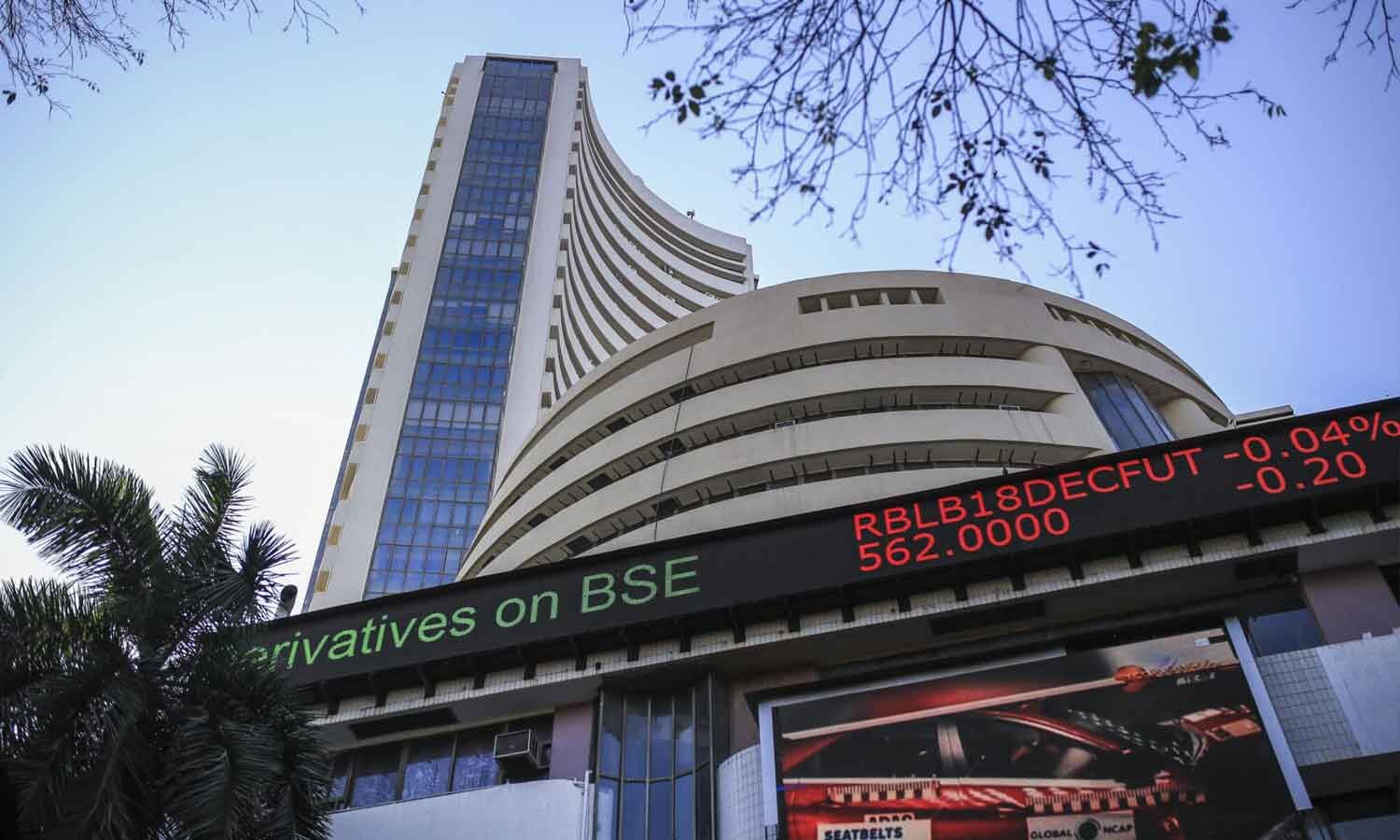
Indian share markets fell for the fourth week in a row.
Investors were worried about high interest rates around the world, rising oil prices and tensions in West Asia.
Foreign investors continued selling Indian shares, but Indian institutions bought heavily and limited the fall.
The rupee became stronger against the US dollar.
India’s economy grew strongly in the first quarter of FY27, although analysts expect growth to slow later in the year.
Small-company shares performed better than major indexes and reached a record high.
A new closing auction system for some stocks has caused sudden price movements near the end of trading.
Regulators introduced the system to reduce possible market manipulation, but some traders say it has reduced liquidity and increased risks.
Markets may remain uncertain until investors receive more information about US jobs, inflation and interest rates.

The Sensex fell 749.08 points and the Nifty declined 277.95 points, marking a fourth consecutive weekly loss.
Foreign institutional investors sold Rs 5,611.94 crore of equities, while domestic institutional investors invested Rs 23,156.38 crore.
The rupee rose 89 paise to Rs 94.49 per US dollar, while Q1 FY27 real GDP growth reached 7.8 percent.
A new 20-minute closing auction for derivatives-linked stocks has increased volatility and raised concerns among options traders.
Global bond yields, West Asia tensions, crude prices, US economic data and Federal Reserve policy are expected to keep markets volatile.
- Who
- Indian investors, foreign institutional investors, domestic institutional investors, market regulators, exchanges and global investors.
- What
- Indian equity markets declined for a fourth consecutive week amid global risks, while domestic economic data and institutional buying limited the losses.
- Where
- Indian markets, including the Sensex, Nifty, National Stock Exchange of India and BSE Limited.
- When
- During the reported week; the closing auction mechanism was introduced on August 3.
- Why
- Markets were pressured by elevated global bond yields, West Asia tensions, higher crude prices, foreign fund selling and uncertainty over US monetary policy.
Regulatory rationale
Market concerns
Closing auction mechanism
Regulatory rationale
The Securities and Exchange Board of India and exchanges introduced the 20-minute closing auction partly to prevent traders from manipulating closing prices through timed transactions.
Market concerns
Market participants say the auction has reduced liquidity because market-makers may avoid trading when they cannot see the full range of bids and offers, causing sudden and volatile price movements.
Restrictions on derivatives trading
Regulatory rationale
The Securities and Exchange Board of India has tightened derivatives rules to discourage inexperienced traders after a study found that nine in ten traders lost money.
Market concerns
Critics argue the crackdown may have gone too far and could push traders toward margin loans or other ways of seeking high returns, potentially increasing risks elsewhere.
Market outlook
Regulatory rationale
Strong GDP growth, government revenues, domestic institutional buying and investment activity support a cautiously positive outlook.
Market concerns
Global bond yields, crude prices, foreign selling, US monetary policy and weakening technical indicators could prolong volatility and keep the broader market under pressure.
Key facts
- Sensex weekly close
- 76,515.43, down 749.08 points or 0.96 percent
- Nifty weekly close
- 23,897.70, down 277.95 points or 1.14 percent
- Foreign institutional flows
- Investors sold equities worth Rs 5,611.94 crore
- Domestic institutional flows
- Investors bought equities worth Rs 23,156.38 crore
- Rupee movement
- The rupee gained 89 paise to close at Rs 94.49 per US dollar
- Q1 FY27 real GDP
- Growth was reported at 7.8 percent, with GVA growth at 8.2 percent
- India VIX
- The volatility index ended the week at 11.34 percent
Quotes

Kevin Warsh
US Federal Reserve governor mentioned in the article’s discussion of monetary-policy guidance
“An explicit reaction function “works better in theory than in practice, better in the lab than in the field”.”
 thehansindia.com
Sources
Related news
Indian Markets Extend Losing Streak as Global Risks Persist

Indian Markets End Lower Amid Global Uncertainty and Crude Pressures

Indian Markets Consolidate Amid Crude, Geopolitical Uncertainty

GIFT Nifty Signals Muted Start as Key Index Levels Emerge

Sensex, Nifty Post Weekly Losses on Crude Surge, Iran Tensions

Sensex, Nifty Edge Lower Amid Crude and Global Concerns

Indian stocks slip as crude, Iran tensions fuel rate fears

Four Volume Shockers Surge Despite Broader Market Weakness

Pranav Constructions IPO Opens Amid Positive Broker Reviews

Purple Style Labs Shares Debut Nearly 7% Below IPO Price

Steamhouse India Sets IPO Price Band at ₹77–81