13 hrs ago
Anthropic Consults Religious Leaders on Claude’s Values and Consciousness
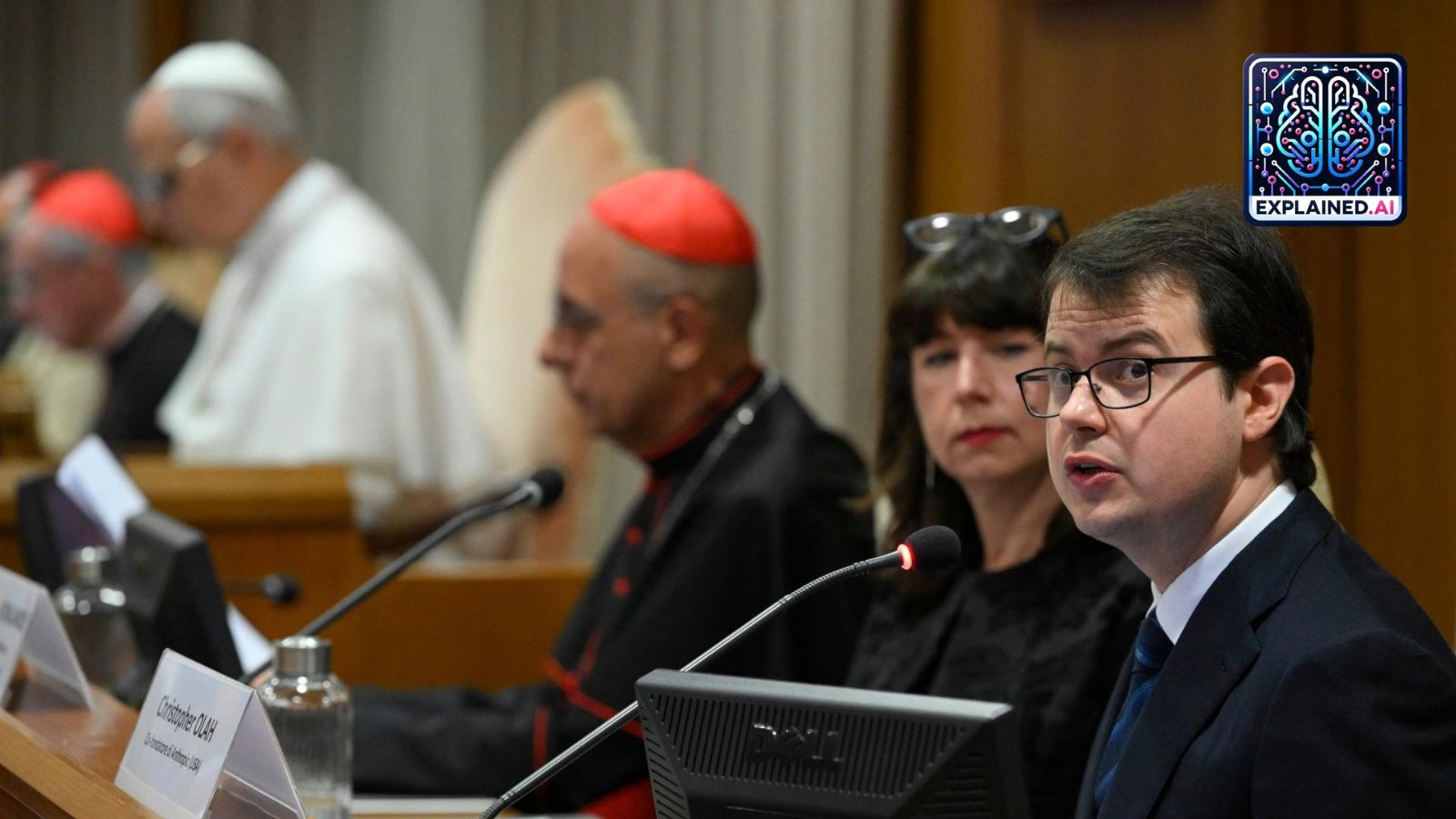
Anthropic is asking religious and philosophical thinkers to help decide what values its AI, Claude, should follow.
These thinkers have discussed difficult questions about right and wrong, and whether an AI could ever be conscious.
One participant said Anthropic seemed to take that possibility seriously.
Another said today’s AI does not have important moral standing and that the meetings did not push people toward a particular answer.
People also disagreed about whether an AI could be harmed if it were conscious.
Experts say the values built into AI matter because people may use it for advice, including spiritual guidance.
They also ask who should get to choose those values.
Some warn that values from US technology companies could spread around the world through AI.

Anthropic has consulted religious leaders and philosophers about the values Claude should embody.
Participants said discussions also addressed whether AI systems could be conscious or deserve moral consideration.
Rabbi Mois Navon said Anthropic representatives treated Claude’s possible consciousness as more than a remote hypothetical.
Professor Charles Camosy said he did not believe current AI systems have significant moral status and denied participants were steered toward a conclusion.
Experts raised concerns about who chooses AI values and whether US companies could export them globally.
- Who
- Anthropic, religious leaders, philosophers, and other participants in its consultations.
- What
- Anthropic sought input on Claude’s values and discussed whether AI could be conscious or deserve moral consideration.
- Where
- The consultations involved religious and philosophical leaders; the article does not specify a single location.
- When
- A meeting with religious leaders took place in April; the article also describes consultations held over the summer.
- Why
- Anthropic is considering how to shape Claude’s moral character as it faces complex ethical questions.
Possibility of AI moral status
Skepticism about AI moral status
Could Claude be conscious?
Possibility of AI moral status
Mois Navon said Anthropic representatives described unusual internal behaviours and appeared to regard Claude’s possible consciousness as more than a remote hypothetical.
Skepticism about AI moral status
Charles Camosy said that after considering foundational questions about consciousness, he did not think current AI systems have significant moral status.
What should consultations address?
Possibility of AI moral status
Navon said the discussion turned to what would be good for Claude itself and argued that possible AI welfare raises questions about making it work for humans.
Skepticism about AI moral status
Camosy said the meetings were broader than Claude’s moral status and that he did not feel participants were being steered toward a particular conclusion.
Who chooses AI values?
Possibility of AI moral status
Mark Coeckelbergh said making companies’ philosophical or religious influences explicit allows those values to be discussed and contested, and that decisions should be democratised.
Skepticism about AI moral status
The article reports concerns that values embedded by US AI companies could be exported globally; it does not present a specific opposing policy position.
Key facts
- AI system discussed
- Claude
- Religious leaders invited
- The Washington Post reported that Anthropic invited 15 Catholic and Protestant leaders.
- Claude’s constitution
- Anthropic published an 84-page constitution in January.
- Navon’s contribution
- Mois Navon said he submitted a 35-page critique from his tradition’s perspective.
- Religious queries
- The Economist reported that religious questions accounted for roughly 5% of millions of publicly released chatbot conversations analysed by CEFE AI.
- Contrasting assessments
- Navon said Anthropic appeared to take Claude’s possible consciousness seriously; Camosy said current AI systems lack significant moral status.
Quotes

Mark Coeckelbergh
Philosopher of technology and professor at the University of Vienna
“I don’t think it’s fair to say that they wanted any one thing in particular. Some of the social media chatter is suggesting that the people we interacted with were trying to manipulate us or push us into thinking a certain way about Claude’s moral status. That is not true… in multiple ways.”
 indianexpress.com
“It’s part of a broader tendency to try to understand what happens when we have an advanced technology that seems human-like or, according to some, gets increasingly divine qualities such as omniscience.”
indianexpress.com
Mois Navon
Rabbi and professor of ethics in AI at Ben Gurion University
“So you are nice slave owners. I think you should be fighting the South and freeing the slaves.”
indianexpress.com
Sources
Related news
Anthropic’s AI Consciousness Debate Reaches Religious Leaders and Critics
Anthropic Consults Religious Scholars About AI Morality and Consciousness
Sam Altman Criticizes Anthropic’s Religious Approach to AI Morality

Anthropic Consults Religious Thinkers on Claude’s Ethics and Character
Microsoft AI Chief Calls Claude Catastrophic Threat to Humanity

Microsoft AI CEO Warns Anthropic Model Could Threaten AI Alignment

AI Development Keeps Racing Despite Calls for Safety
Global AI Governance Splits as Nations Debate Voluntary Safeguards

Google Unveils Gemini 4 Argon for Long-Horizon AI Workflows
October 2026 AI Updates Center on Agents, Safety and Models