1 hr ago
Kenya’s Local-Value Push Puts Tata Chemicals Under Pressure

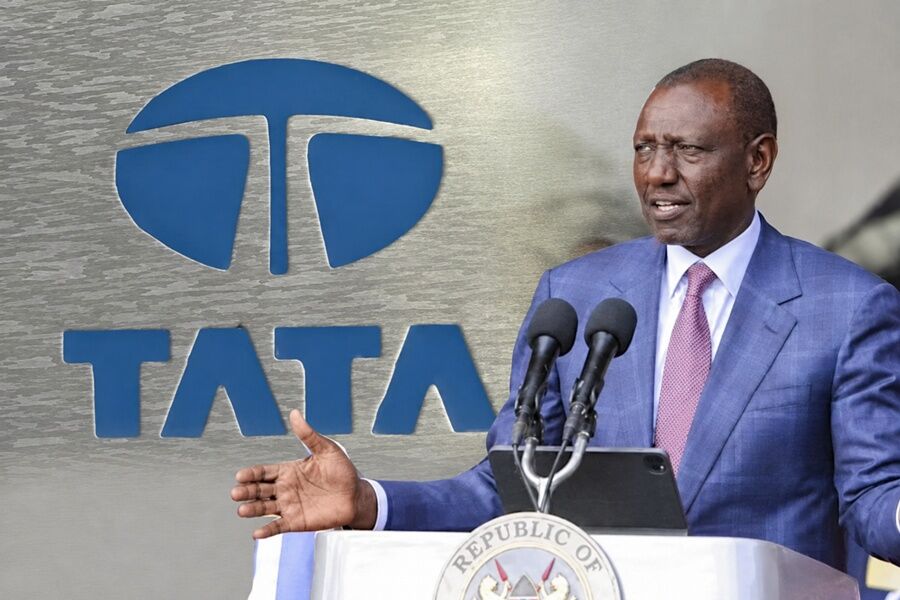
Kenya is asking Tata Chemicals to stop operating its soda ash business at Lake Magadi.
President William Ruto said the company had not created enough local factories and industries.
Kenya wants more of the minerals to be processed inside the country.
The government also raised questions about royalties, jobs, local purchases and environmental rules.
Tata Chemicals says it gave the government the requested documents and followed the rules.
The mining ministry will review the company’s response.
This does not necessarily mean Kenya is against all Indian companies.
It may mean that foreign businesses must now provide more local benefits when they invest in Kenya.

Kenyan President William Ruto directed Tata Chemicals to end its soda ash operations at Lake Magadi, citing insufficient local industrial activity.
Tata Chemicals Magadi said it had submitted all requested documents and remained compliant while awaiting the mining ministry’s review.
Kenya suspended Magadi mining operations and soda ash exports on July 28 over concerns including value addition, royalties, jobs, procurement and environmental compliance.
The dispute follows Adani Group’s 2024 withdrawal from proposed Kenyan airport and power projects, but Kenya continues to attract Indian investment.
The Tata case may signal stronger Kenyan demands for local manufacturing, employment, technology transfer and community benefits from foreign investors.
- Who
- The Kenyan government, President William Ruto and Tata Chemicals Magadi are the main parties; the dispute also affects Indian companies operating in Kenya.
- What
- Kenya has suspended Tata Chemicals’ Magadi mining and soda ash exports and directed the company to end its operations, while Tata disputes the implication that it is noncompliant.
- Where
- The dispute concerns the Lake Magadi soda ash operation in Kajiado, Kenya.
- When
- The government issued the suspension on July 28; Tata submitted its response on August 11, and Ruto made his latest statement on Thursday, according to the article.
- Why
- Kenya says the operation has not generated enough local industrial activity and is seeking mineral processing, employment, skills transfer, local procurement and other economic benefits.
Kenyan Government
Tata Chemicals
Local economic contribution
Kenyan Government
Kenya says Tata Chemicals operated for decades without creating enough local industrial activity and wants new companies to establish glass and chemical manufacturing in Kajiado.
Tata Chemicals
Tata Chemicals says the Magadi business has played an important role in Kenya’s economy since its acquisition in 2005 and remains integral to its operations.
Regulatory compliance
Kenyan Government
Kenya’s mining ministry raised concerns about value addition, royalties, exports, employment, community development, procurement and environmental compliance.
Tata Chemicals
Tata Chemicals Magadi says it provided a comprehensive response, reports and documentation and was fully compliant with regulatory requirements.
Meaning for Indian investors
Kenyan Government
The dispute reflects Kenya’s stronger insistence that foreign investments create local manufacturing, jobs, skills and community benefits.
Tata Chemicals
The broader record, including continued Indian investment and a new power-transmission agreement, suggests the episode is not necessarily evidence of a general Kenyan policy against Indian businesses.
Key facts
- Company
- Tata Chemicals Magadi operates the Lake Magadi soda ash business and was acquired by Tata Chemicals in 2005.
- Government action
- Kenya suspended mining operations at Magadi and halted soda ash exports on July 28.
- Regulatory concerns
- The ministry cited mineral beneficiation, value addition, royalty reconciliation, export reporting, community agreements, employment, skills transfer, local procurement and environmental compliance.
- Tata’s response
- Tata Chemicals Magadi said it submitted the requested information and documentation on August 11 and was awaiting the ministry’s further direction.
- Indian business presence
- Nearly 200 Indian companies operate in Kenya across manufacturing, pharmaceuticals, information technology, banking, energy and infrastructure.
- Trade
- India-Kenya trade rose to approximately $4.31 billion in 2025-26 from $3.45 billion the previous year.
- Recent investment
- Kenya signed a $311-million power-transmission agreement in December 2025 involving Africa50 and India’s Power Grid Corporation.
Quotes
Tata Chemicals Magadi (TCML)
Tata Chemicals’ Kenyan subsidiary responding to the mining ministry’s concerns
“TCML, having provided a comprehensive response to the matters raised by the Ministry… awaits the Ministry’s review of our submissions and its further direction,”
 financialexpress.com
Sources
Related news

Kenya Orders Tata Chemicals Halt Over Local Processing
Tata Chemicals Counters Kenya Order, Cites Compliance at Magadi

Kenya Orders Tata Chemicals Out of Lake Magadi Operation

Tata Chemicals Seeks Resolution After Reported Kenya Shutdown Order

Kenya Orders Tata Chemicals to End Magadi Operations

West Bengal govt in talks with Tata group for fresh investments