1 hr ago
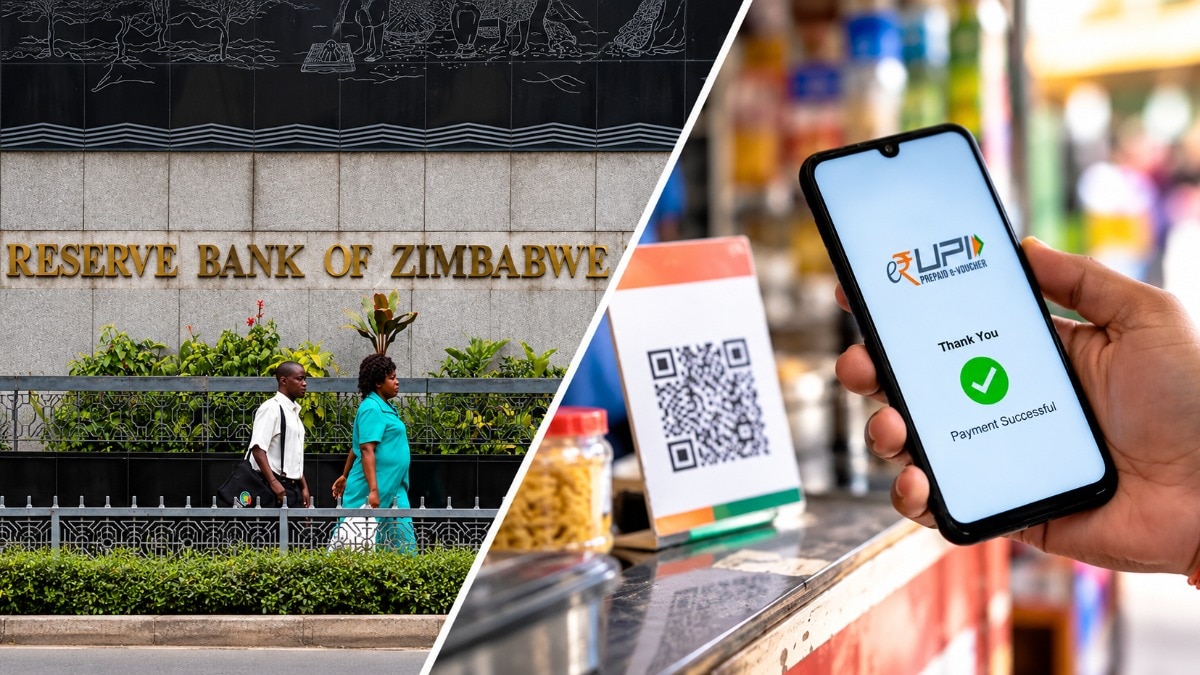
Zimbabwe in Talks to License India’s UPI Payments Technology

Zimbabwe is talking with an Indian payments organization about using technology called UPI.
It could help banks, mobile-money services and fintech companies move money quickly on one shared system.
Zimbabwe’s central bank governor said it might make payments cheaper and faster.
It could also give people another way to pay for small purchases besides cards.
The talks may also lead to easier payments between countries and remittance services.
Zimbabwe already handles many digital transactions, but the report says it does not have a low-cost shared system.
Other African countries have also shown interest in working with the Indian organization.

Zimbabwe is discussing licensing UPI technology from NPCI International Payments Ltd for a shared domestic real-time payments rail.
Reserve Bank of Zimbabwe Governor John Mushayavanhu said the system could reduce costs, speed transfers and offer an alternative to cards for small payments.
The report said negotiations could conclude by October 31; it did not specify the year.
Zimbabwe processed 238 million electronic transactions in the fourth quarter of 2025, with mobile money accounting for about 87% of volume.
The report said cross-border payments and remittance links could follow, while Ghana, Uganda, Rwanda and Mozambique have also signalled interest in working with NPCI.
- Who
- Zimbabwe and NPCI International Payments Ltd (NIPL); Reserve Bank of Zimbabwe Governor John Mushayavanhu discussed the potential benefits.
- What
- Talks are under way about licensing UPI technology for a shared domestic real-time payments rail in Zimbabwe.
- Where
- Zimbabwe; the technology is from India’s National Payments Corporation of India.
- When
- The report said negotiations could conclude by October 31, without specifying the year.
- Why
- The proposed system could cut payment costs, speed transfers and provide a shared alternative to card payments for small transactions.
Potential benefits
Costs and implementation concerns
Payment access and efficiency
Potential benefits
Mushayavanhu said a shared real-time rail could cut costs, speed transfers and provide an account-to-account alternative to cards for small domestic payments.
Costs and implementation concerns
The report says Zimbabwe lacks a low-cost common rail and describes high transfer costs, but it provides no response from critics or details of implementation risks.
Cross-border transfers
Potential benefits
Mushayavanhu and the report said cross-border use and remittance links could follow.
Costs and implementation concerns
The report cited high regional transfer costs, including on SADC routes, but gave no opposing assessment of whether the proposed system would reduce them.
Key facts
- Technology under discussion
- Unified Payments Interface (UPI) technology
- Licensing counterpart
- NPCI International Payments Ltd (NIPL), the overseas arm of India’s National Payments Corporation of India
- Potential negotiation deadline
- October 31; the report did not specify the year
- Zimbabwe electronic transactions
- 238 million in Q4 2025
- Mobile-money share
- About 87% of Zimbabwe’s electronic transaction volume in Q4 2025
- Active mobile-financial-services users
- Nearly 11 million in Zimbabwe
- Zimbabwe diaspora inflows
- $2.45 billion in 2025, compared with $2.15 billion in 2024
- Other countries reported as interested
- Ghana, Uganda, Rwanda and Mozambique
Quotes
India Narrative report
The report describing Zimbabwe’s diaspora remittances.
“Diaspora inflows reached $2.45 billion in 2025, up from $2.15 billion in 2024, about $6.7 million a day. Britain and South Africa each supplied a little over a quarter of the early-2025 flow. Those dollars are household income and foreign exchange, second only to mining.”
 thehansindia.com
“The World Bank estimated sub-Saharan Africa’s average cost of sending $200 near 8 per cent in 2025, against a global average of about 6.5 per cent and a Sustainable Development Goal target of 3 per cent.”
thehansindia.com
Sources
Related news
Zimbabwe in Talks to Adopt India's UPI Payments System

UPI Expands Across 13 Countries for Indian Travellers
Mindgate, J.P. Morgan Expand Next-Generation UPI Infrastructure Collaboration

Wizz Financial Brings UPI Payments to International Visitors

UPI Expansion Raises Questions Over Global MDR Charges

BRICS Pursues Layered Cross-Border Payments Without Common Currency

CSM Technologies Wins $174,000 Beira Corridor Digital Monitoring Contract
Asia Africa Agri Alliance Promotes India-Africa Farm Trade and Investment

India and Mozambique Explore Sustainable Oilseed Trade Corridor

Brazil, Auqib Nabi and Asian Games Cricket Lead India Searches