1 day ago
US H-1B Wage Proposal Could Reshape Opportunities For Indian Professionals
The H-1B visa lets US companies hire skilled workers from other countries.
Many Indian professionals use this program, especially in technology jobs.
The US government wants companies to pay H-1B workers higher minimum salaries.
The biggest increase would affect workers starting at entry-level jobs.
The government says this could help protect American workers’ pay and job opportunities.
Companies say higher costs could make them more careful about hiring foreign workers.
Some companies might hire locally, automate work, or move work outside the United States.
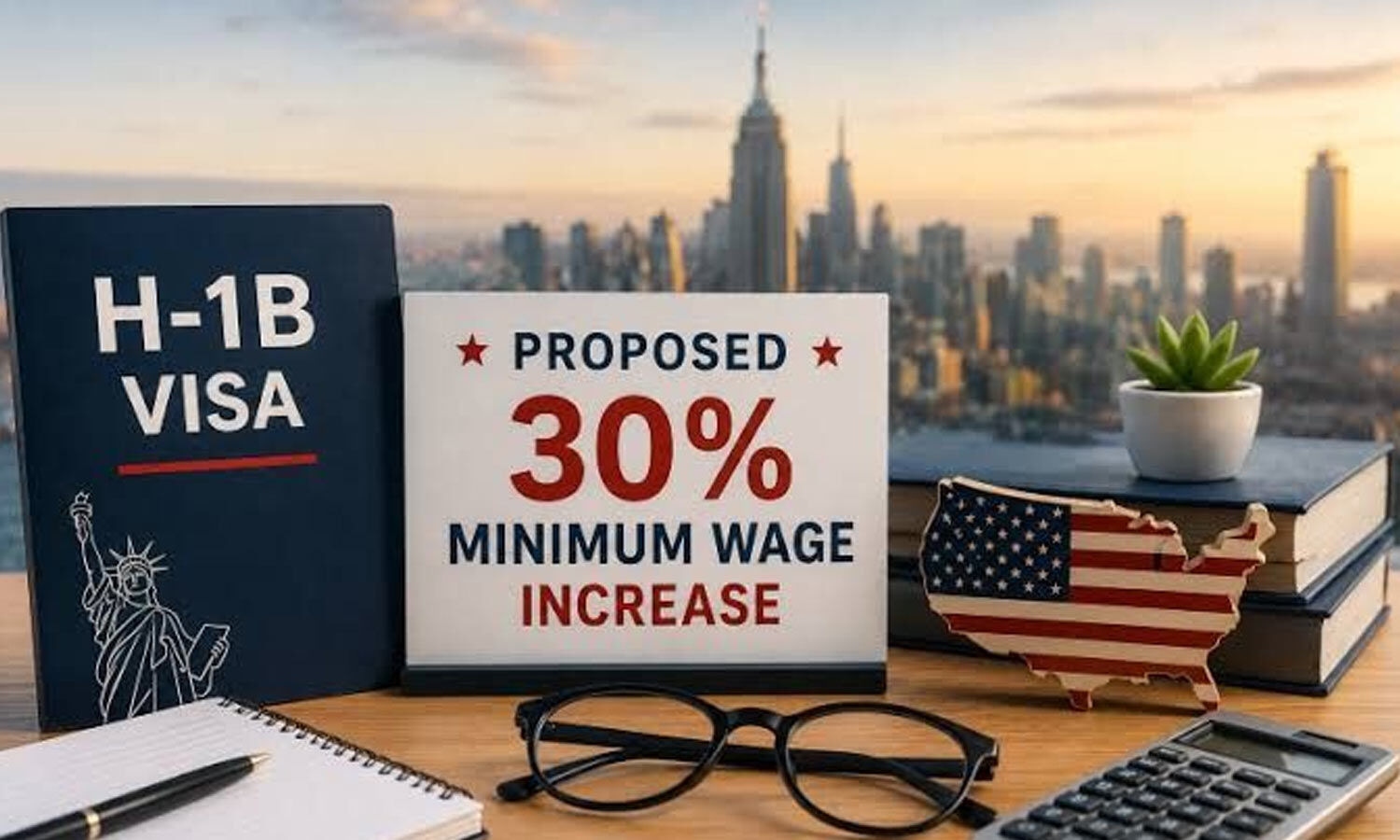
The proposal does not mean every H-1B worker would automatically receive a 30% raise.
The final effect would depend on the worker’s job, experience, and location.

The US Labor Department proposed raising H-1B prevailing-wage benchmarks by about 21% to 33%.
The largest proposed increase, 33.4%, would affect Level I entry-level positions.
The department says the changes would protect American workers from wage suppression and unfair competition.
Indian professionals could earn more, but employers may reduce entry-level sponsorship or shift work elsewhere.
The proposal follows a weighted H-1B selection system and a separate proposed $103,265 petition fee.
- Who
- The US Department of Labor, American employers, H-1B workers, and US workers, with Indian professionals identified as major program beneficiaries.
- What
- The Labor Department proposed substantially increasing the prevailing-wage levels required for H-1B workers.
- Where
- The changes concern the United States H-1B visa program and wages based on occupations and geographic areas.
- When
- The proposal was reported on September 1, 2026; the article does not specify when the wage rule was formally issued.
- Why
- The Labor Department says the current system does not adequately align H-1B wages with those of comparable American workers and may allow lower-wage hiring.
Worker Protection And Higher Pay
Employer Costs And Hiring Concerns
Purpose of the wage increase
Worker Protection And Higher Pay
The Labor Department says higher wage floors would reduce incentives to hire foreign workers at lower wages and protect US workers’ wages and job opportunities.
Employer Costs And Hiring Concerns
Employers and business and technology sectors warn that substantially higher wage requirements could increase costs and create hiring challenges.
Effect on Indian professionals
Worker Protection And Higher Pay
Indian professionals who secure H-1B jobs could potentially receive higher salaries.
Employer Costs And Hiring Concerns
Higher wage floors could make employers less willing to sponsor lower-paid or entry-level Indian workers.
Business response
Worker Protection And Higher Pay
The proposal could encourage employers to pay specialized workers more competitively.
Employer Costs And Hiring Concerns
Companies may recruit locally, automate some roles, or move certain work outside the United States.
Key facts
- Proposed wage increase
- About 21% to 33%, depending on the H-1B wage level.
- Level I increase
- Approximately 33.4%, moving the benchmark from the 17th to the 34th wage percentile.
- Level II increase
- Approximately 24.5%.
- Level III increase
- Approximately 20.8%.
- Level IV increase
- Approximately 21.7%.
- H-1B annual cap
- 65,000 visas, plus 20,000 additional slots for qualifying US advanced-degree holders.
- Separate proposed petition fee
- $103,265 for cap-subject H-1B petitions, subject to public comment.
Sources
Related news
US proposes 30% H-1B wage increase amid mixed responses
Trump Administration Proposes $103,265 H-1B Fee, Indians Face Impact
US Proposes $103,265 H-1B Fee, Threatening Indian Hiring
Nasscom Warns Proposed H-1B Fee Could Limit Skilled Talent
DHS Proposes $103,265 Additional Fee for Cap-Subject H-1B Visas

Warsh Weighs Rate Cut as Inflation Keeps Pressure High

US Jobs Expected to Rebound as Rate Hike Debate Intensifies

Gold Prices Fall After Warsh Signals Possible Rate Hikes

BLS Faces Scrutiny in Spanish Schengen Visa Fraud Probe