1 hr ago
India Challenges UK Visa Rules as Regional Political Disputes Intensify
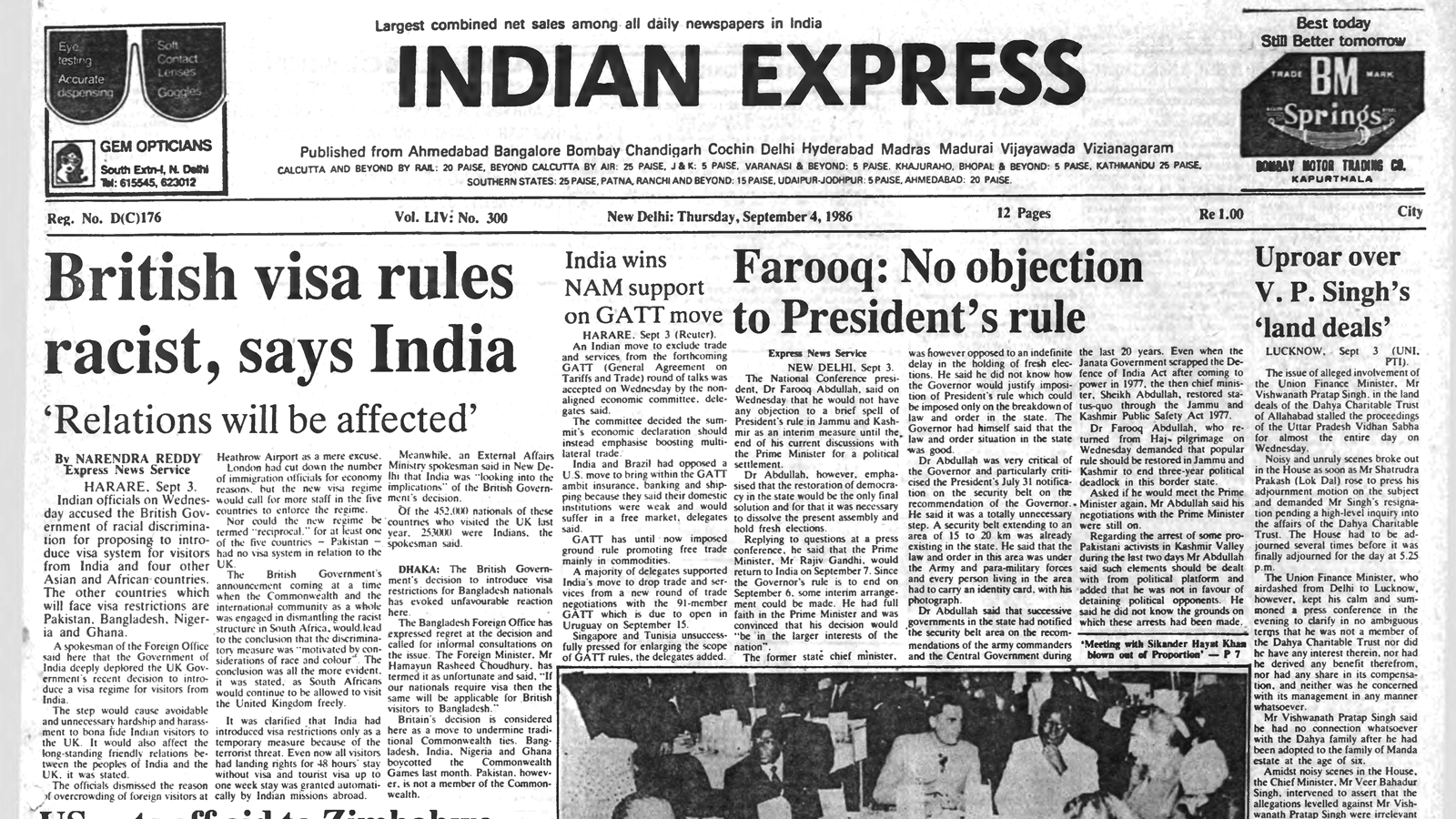
Several important political stories were reported on September 4, 1986.
India criticized Britain for planning new visa rules for visitors from five Asian and African countries.
Indian officials said the rules were racially discriminatory.
In Uttar Pradesh, lawmakers argued about claims involving Finance Minister V P Singh and land deals linked to a charitable trust.
The Assembly became so disruptive that it was adjourned several times.
Singh said he was not a member of the trust and had no interest in it.
Farooq Abdullah said temporary rule by the President could be acceptable in Jammu and Kashmir.
He also said the area should eventually return to democracy through fresh elections.
The United States separately said it would provide no new aid to Zimbabwe.

Indian officials called proposed UK visa restrictions on visitors from India and four other countries racist.
Pakistan, Bangladesh, Nigeria and Ghana were also listed for proposed UK visa restrictions.
Uttar Pradesh Assembly proceedings were repeatedly disrupted over allegations linking V P Singh to Dahya Charitable Trust land deals.
V P Singh denied membership or financial interest in the trust and called a press conference to respond.
Farooq Abdullah accepted possible temporary President’s Rule in Jammu and Kashmir, while the US halted new aid to Zimbabwe.
- Who
- Indian officials, the British government, V P Singh, Shatrudra Prakash, Farooq Abdullah and the United States were among the principal actors.
- What
- The roundup covered proposed UK visa restrictions, a dispute over V P Singh and land deals, debate over President’s Rule, and the suspension of new US aid to Zimbabwe.
- Where
- The developments involved the United Kingdom, India, Uttar Pradesh, Jammu and Kashmir, the United States and Zimbabwe.
- When
- September 4, 1986.
- Why
- India objected to the proposed visa rules as discriminatory; the Uttar Pradesh dispute concerned alleged trust-related land dealings; Abdullah linked temporary President’s Rule to political negotiations; and the United States cited Zimbabwe’s conduct toward it.
Critics and Demands
Government Positions and Responses
UK visa proposal
Critics and Demands
Indian officials said applying the proposed restrictions to India and other Asian and African countries was racial discrimination.
Government Positions and Responses
The British government proposed introducing a visa system for visitors from the five named countries.
Dahya Charitable Trust allegations
Critics and Demands
Shatrudra Prakash and opposition lawmakers pressed for V P Singh’s resignation and a high-level inquiry into the trust’s affairs.
Government Positions and Responses
V P Singh denied being a trust member or having any interest in it, and publicly rejected the allegations.
President’s Rule in Jammu and Kashmir
Critics and Demands
Farooq Abdullah said temporary President’s Rule could be used as an interim measure during discussions with the Prime Minister.
Government Positions and Responses
Abdullah also maintained that restoring democracy, dissolving the current Assembly and holding fresh elections was the only final solution.
Key facts
- Visa restrictions
- The United Kingdom proposed visa requirements for visitors from India, Pakistan, Bangladesh, Nigeria and Ghana.
- India’s response
- Indian officials accused the British government of racial discrimination.
- Uttar Pradesh Assembly
- Proceedings were disrupted for almost the entire day over allegations involving the Dahya Charitable Trust.
- V P Singh’s response
- The Union Finance Minister said he was neither a member of the trust nor interested in it.
- Jammu and Kashmir
- Farooq Abdullah said he could accept a brief period of President’s Rule as an interim measure.
- Proposed political solution
- Abdullah said democracy should ultimately be restored through dissolution of the existing Assembly and fresh elections.
- Zimbabwe aid
- The United States announced that it would provide no new aid to Zimbabwe.
Sources
Related news
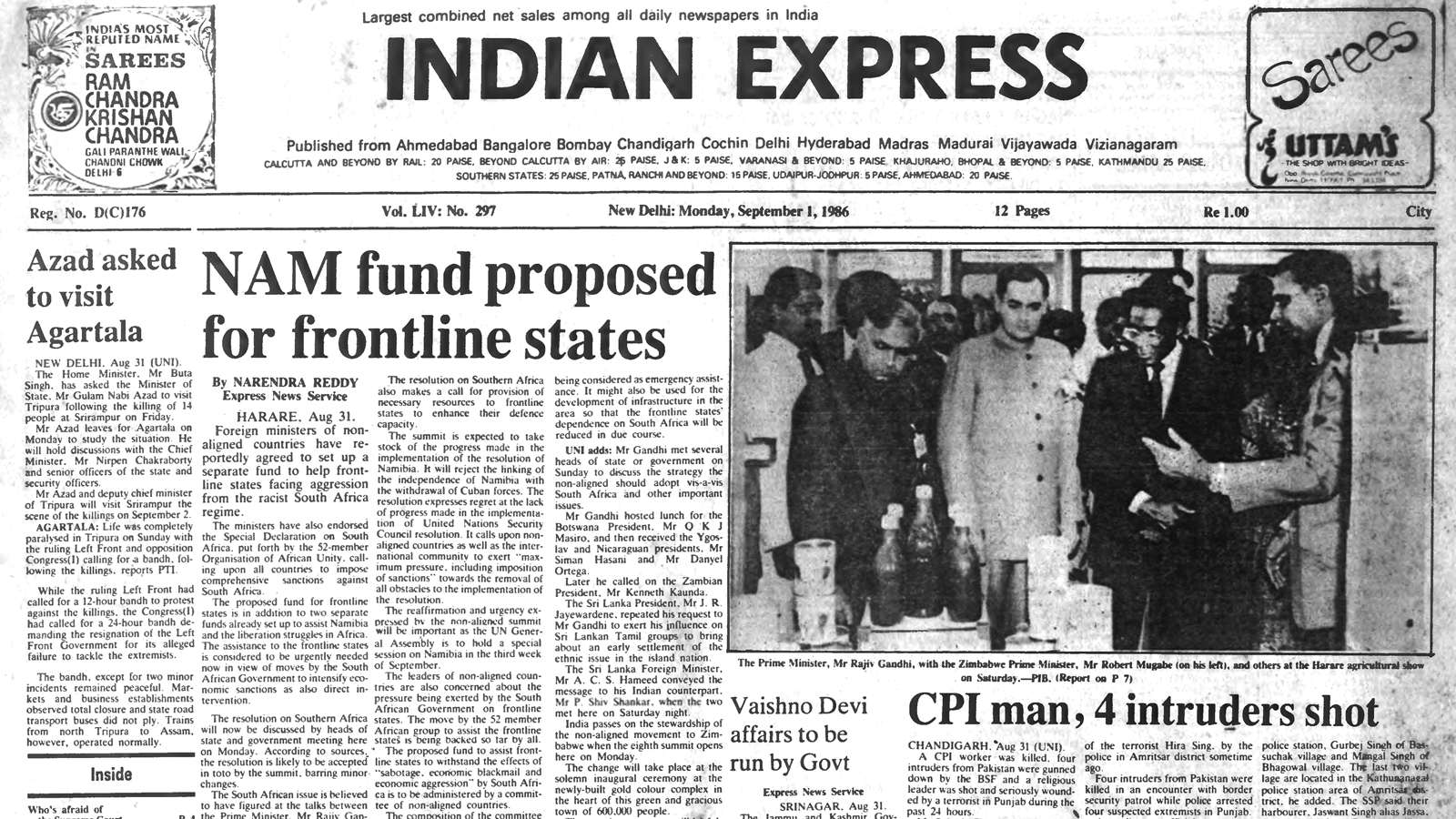
South Africa Fund, India-Pakistan Talks, Tripura Inquiry, Cricket Changes
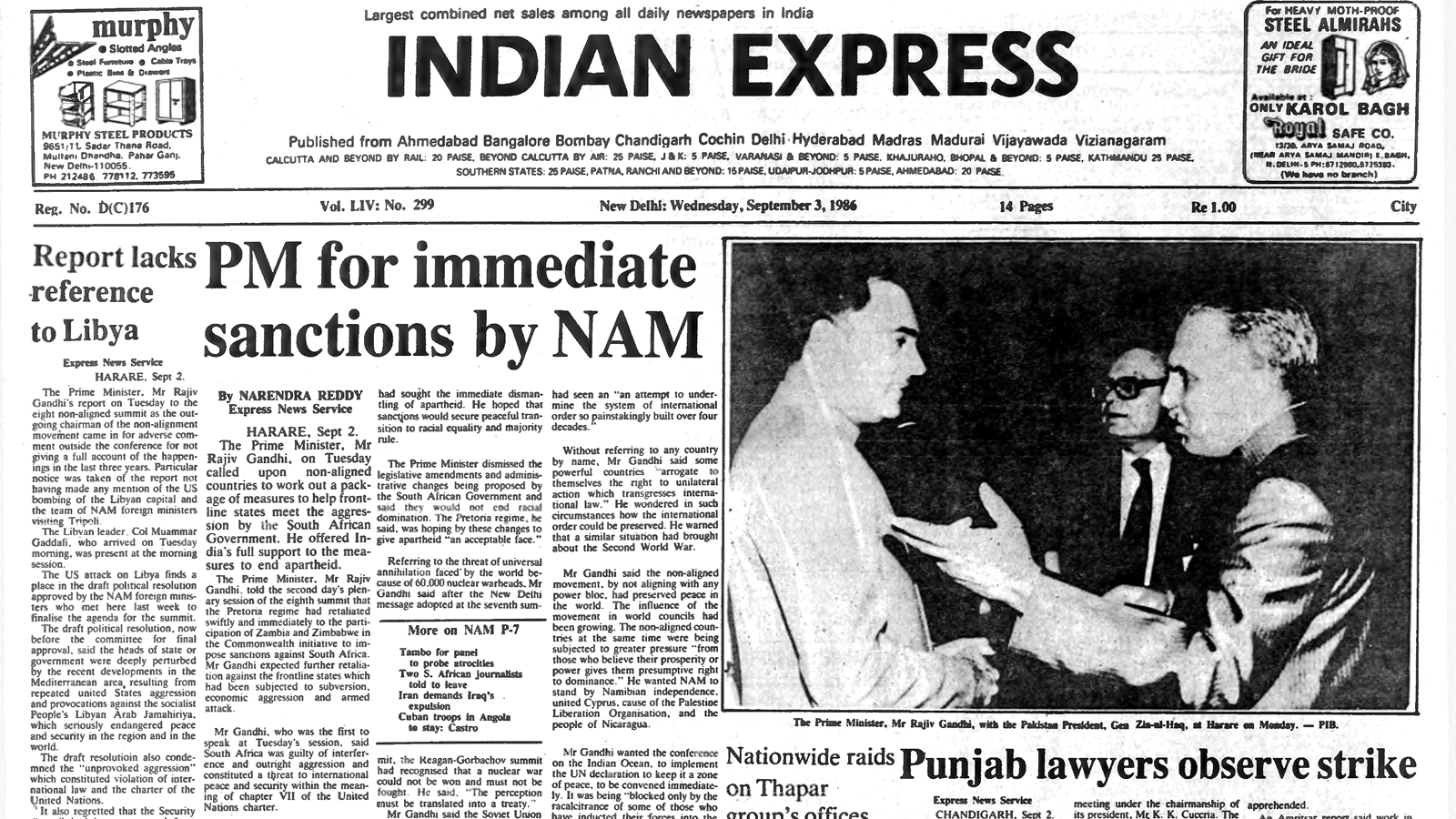
Rajiv Gandhi Urges Sanctions Amid Transport Reversal, Black Sea Toll
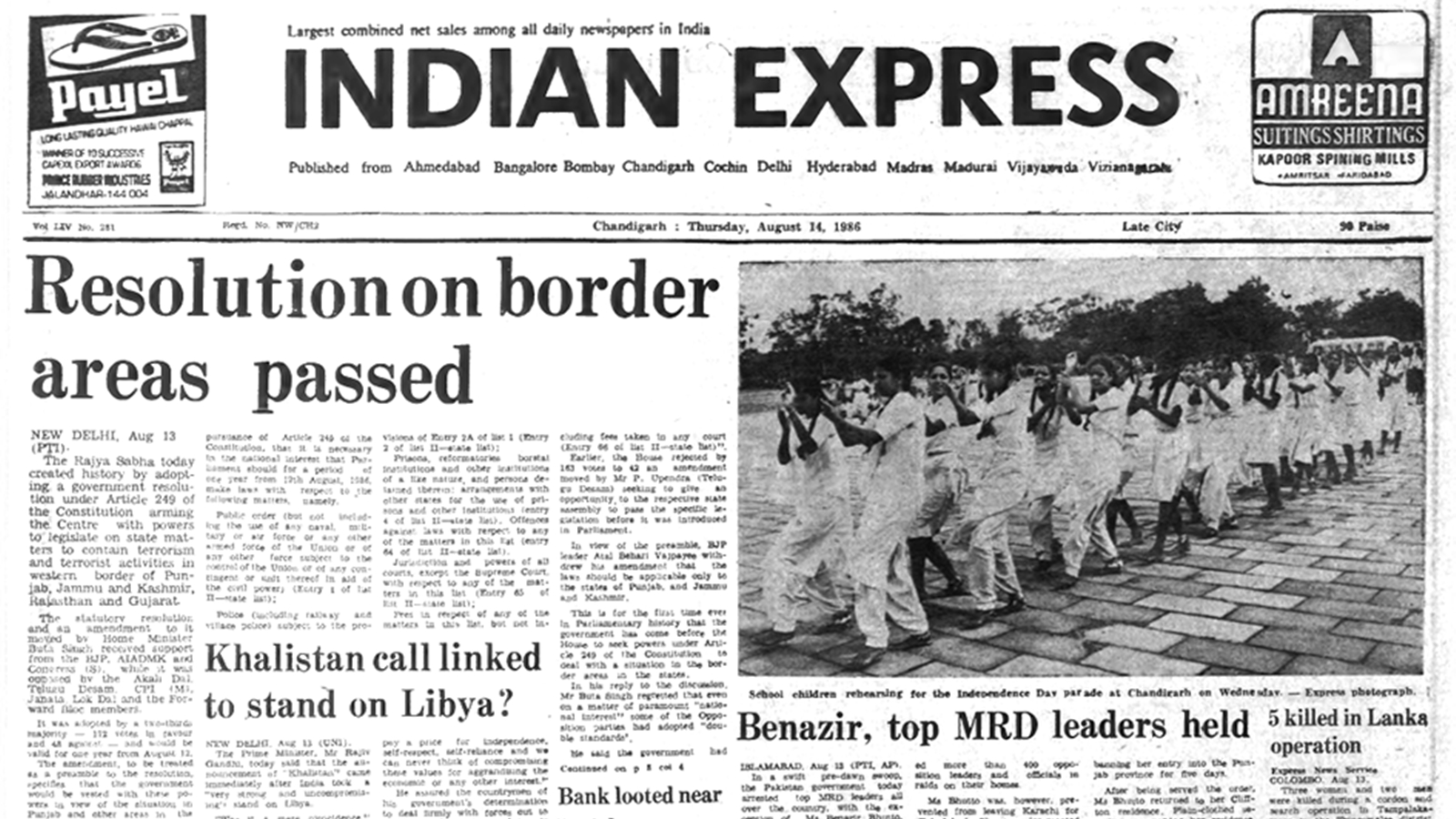
Rajya Sabha Adopts Border Areas Resolution Under Article 249

US Panel Urges Visa Revocation, Sanctions During Bhagwat Visit
Kishan Reddy Accuses Congress of Politicising Revanth’s US Visit Clearance

Kishan Reddy Rejects Revanth’s Charge Over US Trip
Questions Mount Over Bangladesh Police Rangpur Family Murder Probe

India’s U-20 Asian Cup Qualification Hinges on Bangladesh Match
Centre Approves Four-Lane Highway Through Strategic Siliguri Corridor
Suvendu Adhikari Threatens School Aid Cuts Over Vande Mataram