10 months ago
India's Mental Health Crisis: A Journey Through Distress
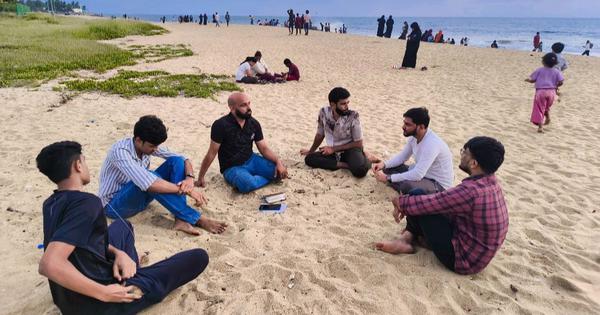
Many Indians are struggling with mental health issues due to economic struggles, lack of social support, online misinformation, violence, and fear.
Despite this, mental health is not a priority in Indian policies.
People want to talk about their feelings, but they need to be heard and supported.

Nearly 197 million Indians live with mental disorders, including 45 million with depression.
Economic precarity, social solitude, digital misinformation, gendered violence, and political fear are key contributors to mental distress.
Activists, students, and citizens across India are struggling with mental health issues, either personally or through loved ones.
Mental health is shaped by political, economic, and cultural forces but remains absent from public policy.
A politics of care is needed to treat mental health as a collective responsibility rather than a private struggle.
- Who
- Indians across various regions, communities, and backgrounds
- What
- Struggling with mental health issues and distress
- Where
- Across India, from Delhi to Kerala
- When
- Currently, with the issue being quiet and central to Indian life
- Why
- Due to economic precarity, social solitude, digital misinformation, gendered violence, and political fear
Individual perspective
Structural perspective
Causes of mental distress
Individual perspective
Personal struggles and individual weaknesses
Structural perspective
Economic, social, political, and cultural forces
Key facts
- Mental disorders in India
- Nearly 197 million people, including 45 million with depression
- Duration of the journey
- 26 days
- Distance traveled
- 3,200 km
- People spoken to
- Over 1,000
- Primary causes of mental distress
- Economic precarity, social solitude, digital misinformation, gendered violence, political fear
Quotes
An activist
An activist met in Jaipur on October 11 during a meeting with the People’s Union for Civil Liberties.
“We fight for justice but who talks about our mental health? The constant surveillance and intimidation consume us.”
 scroll.in
“People have stopped trusting even conversation.”
scroll.in
A professor
A professor at the Right to Information Festival in Beawar, Rajasthan, on October 12.
“We treat mental health as an individual issue when it’s actually structural.”
scroll.in
“We discuss grades and placements, never loneliness.”
scroll.in
A participant
A participant at the School for Democracy in Udaipur.
“We work with people but no longer talk to them. Social media connects us, yet empties us.”
scroll.in
A small business owner
A small business owner met near Udaipur.
“Earlier, people suffered because of karma, now they suffer because of politicians.”
scroll.in
A local man
A local man in Anand, Gujarat, met on October 18.
“People used to feel pressured, but now they take their lives. Five from my circle have done so. One man recently jumped in front of a train, leaving behind his wife and daughter. It began with demonetisation – markets collapsed. Then Covid came and everything shut down. People lost jobs, borrowed money for starting a business, and worked longer hours just to survive. Earlier, we worked to live well. Now we work just to live.”
scroll.in
An elderly man
A resident at an old-age home in Mumbai.
“Visitors make us feel seen.”
scroll.in
Caregivers
Caregivers at an old-age home in Mumbai.
“We give, but we don’t receive.”
scroll.in
A consultant
A consultant in Beawar.
“There isn’t a single Muslim in my village, yet people hate them because of what they see online. Hatred is manufactured and internalised.”
scroll.in
A teacher
A teacher in Udaipur.
“People aren’t naturally radical – they are conditioned to be.”
scroll.in
A reporter
A reporter in Karnataka.
“We scroll for updates and end up absorbing hate.”
scroll.in
Overworked caregivers
Overworked caregivers in an orphanage in Mumbai on October 25.
“We are told care is love, but love without rest becomes punishment.”
scroll.in
A woman
A woman speaking about toxic relationships and marital pressure.
“We’re taught to adjust even when it hurts.”
scroll.in
Sources
Related news

Neha Kirpal Turns Four Decades of Caregiving Into Mental Health Advocacy

Women Share Mental Health Journeys After Years Of Silence

Engineering Training Promotes Holistic Health and Population Stability

Margotsav 2025 Celebrates Inclusion and Joy