1 year ago
Non-Venomous Snakes: Survival Strategies in the Reptile World
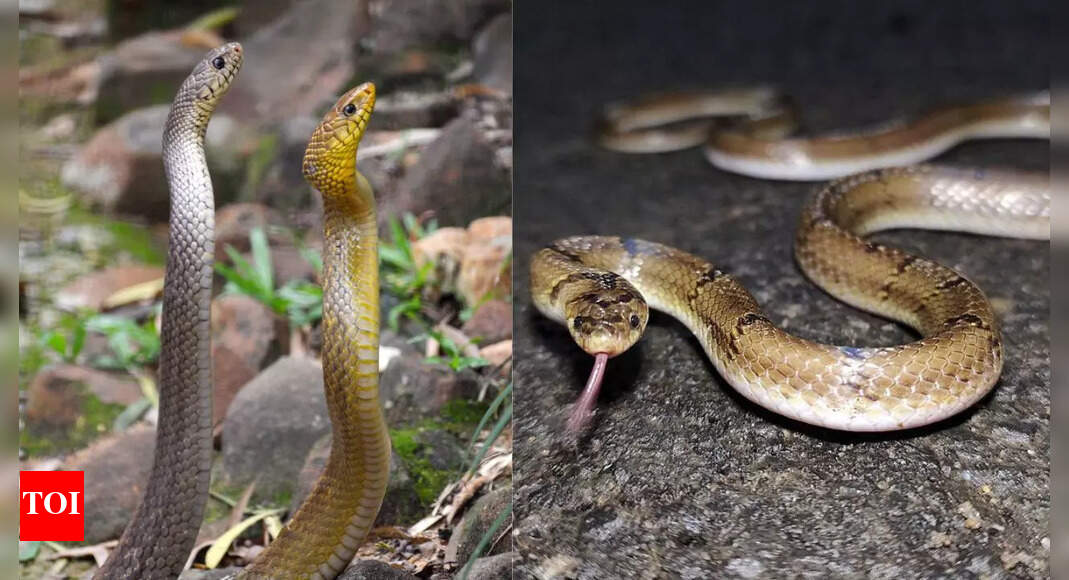
Some snakes don't use poison to catch food; instead, they use other skills like strength and camouflage.
These non-venomous snakes are found all over the world and help keep the environment balanced by eating pests.
Examples include the green snake, which is good at climbing, and the milk snake, with its colorful bands.
Others, like the Indian rock python, squeeze their prey, while some, such as the Brahminy worm snake, are tiny and live underground.
These snakes have unique ways of surviving without venom, showing how adaptable they are.

Non-venomous snakes use various methods like constriction and camouflage to hunt.
They are found in diverse habitats around the world and play important ecological roles.
Examples include the Rough Green Snake, Milk Snake, and Indian Rock Python.
Some species are mistaken for venomous snakes because of their appearance.
These snakes demonstrate incredible adaptability in the animal kingdom.
- Who
- Rough green snakes, milk snakes, common garter snakes, Western ribbon snakes, Brahminy worm snakes, Indian rock pythons, common sand boas, file snakes, Indian rat snakes and Russell's kukri snakes.
- What
- Non-venomous snakes use constriction, speed, or camouflage to hunt.
- Where
- Non-venomous snakes are found worldwide in diverse habitats.
- When
- Information not available in the articles.
- Why
- Non-venomous snakes control pest populations and maintain ecological balance.
Key facts
- Hunting Methods
- Constriction, speed, camouflage
- Habitat
- Worldwide
- Diet
- Insects, rodents, amphibians, fish, eggs
- General Threat Level
- Harmless to humans
- Ecological Role
- Balance of ecosystems, pest control