7 months ago
Moroccan cave fossils reveal possible human evolution link
Scientists found very old bones in a cave in Morocco.
These bones are about 773,000 years old and help us understand how humans evolved.
The bones are from a time when different groups of early humans were starting to split into different types, like the ones that would later become Neanderthals and modern humans.
The bones are similar to those found in Spain, suggesting that early humans moved between Africa and Europe.
The researchers used special techniques to figure out how old the bones are, and they think these bones might belong to a common ancestor of modern humans and other early human groups.
However, there is still a lot we don't know about this ancestor, and the bones show signs of being eaten by large animals like hyenas.

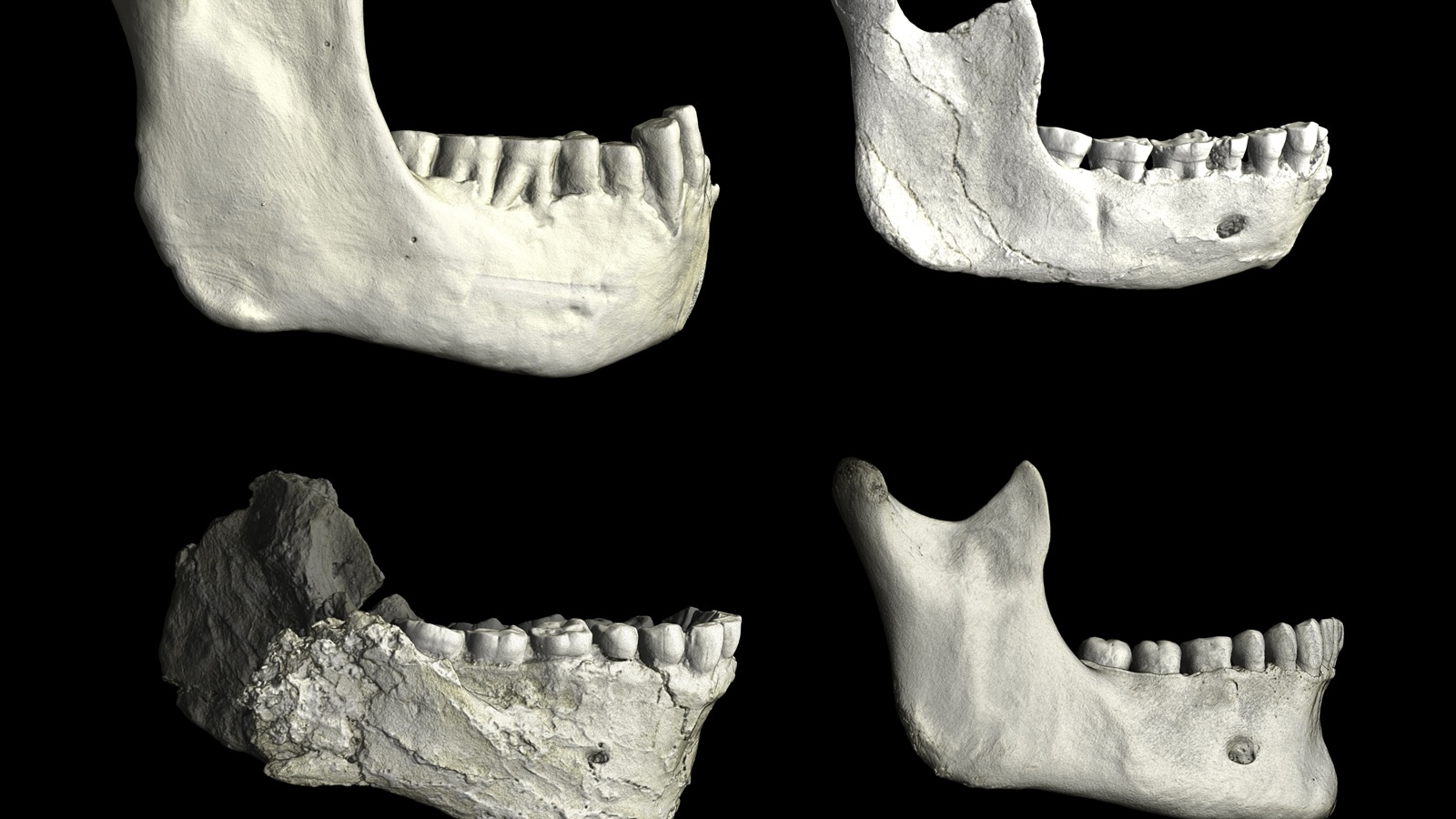
Fossils discovered in Grotte à Hominidés, Morocco, are approximately 773,000 years old.
The fossils include jawbones and teeth of hominins, distinct from other known species like Homo sapiens.
The findings suggest a connection between African and Eurasian hominin lineages, supporting a deep African origin for Homo sapiens.
Researchers used high-resolution magnetostratigraphy to accurately date the fossils, aligning them with a major flip in Earth's magnetic field.
The fossils exhibit a mix of primitive and modern traits, similar to Homo antecessor found in Spain, indicating possible travel between Africa and Europe during the Middle Pleistocene epoch.
- Who
- Researchers led by Jean-Jacques Hublin
- What
- Discovered 773,000-year-old hominin fossils in a Moroccan cave
- Where
- Grotte à Hominidés, Casablanca, Morocco
- When
- Fossils date back to the Middle Pleistocene epoch
- Why
- To understand early human evolution and the divergence of African and Eurasian hominin lineages
Key facts
- Fossil Age
- 773,000 years old
- Location
- Grotte à Hominidés, Casablanca, Morocco
- Journal
- Nature
- Lead Author
- Jean-Jacques Hublin
- Species Similarity
- Homo antecessor
- Evolutionary Period
- Middle Pleistocene epoch
- Dating Technique
- High-resolution magnetostratigraphy
- Potential Ancestor
- Last common ancestor of Homo sapiens, Neanderthals, and Denisovans
Quotes

Jean-Jacques Hublin
Anthropologist at the Max Planck Institute for Evolutionary Anthropology in Germany and the lead author of the new paper.
“Human evolution is largely a history of extinctions. It is difficult to say whether the small Grotte à Hominidés population left any descendants, but it provides a good picture of what the last common ancestor may have been like.”
 indianexpress.com
“The occurrence at the Grotte à Hominidés of a hominin femur bearing gnawing marks from a large carnivore — probably a hyena, after death — demonstrates that hominins were also, at times, consumed as prey.”
indianexpress.com