

7 months ago
430,000-Year-Old Wooden Tools Found in Greece
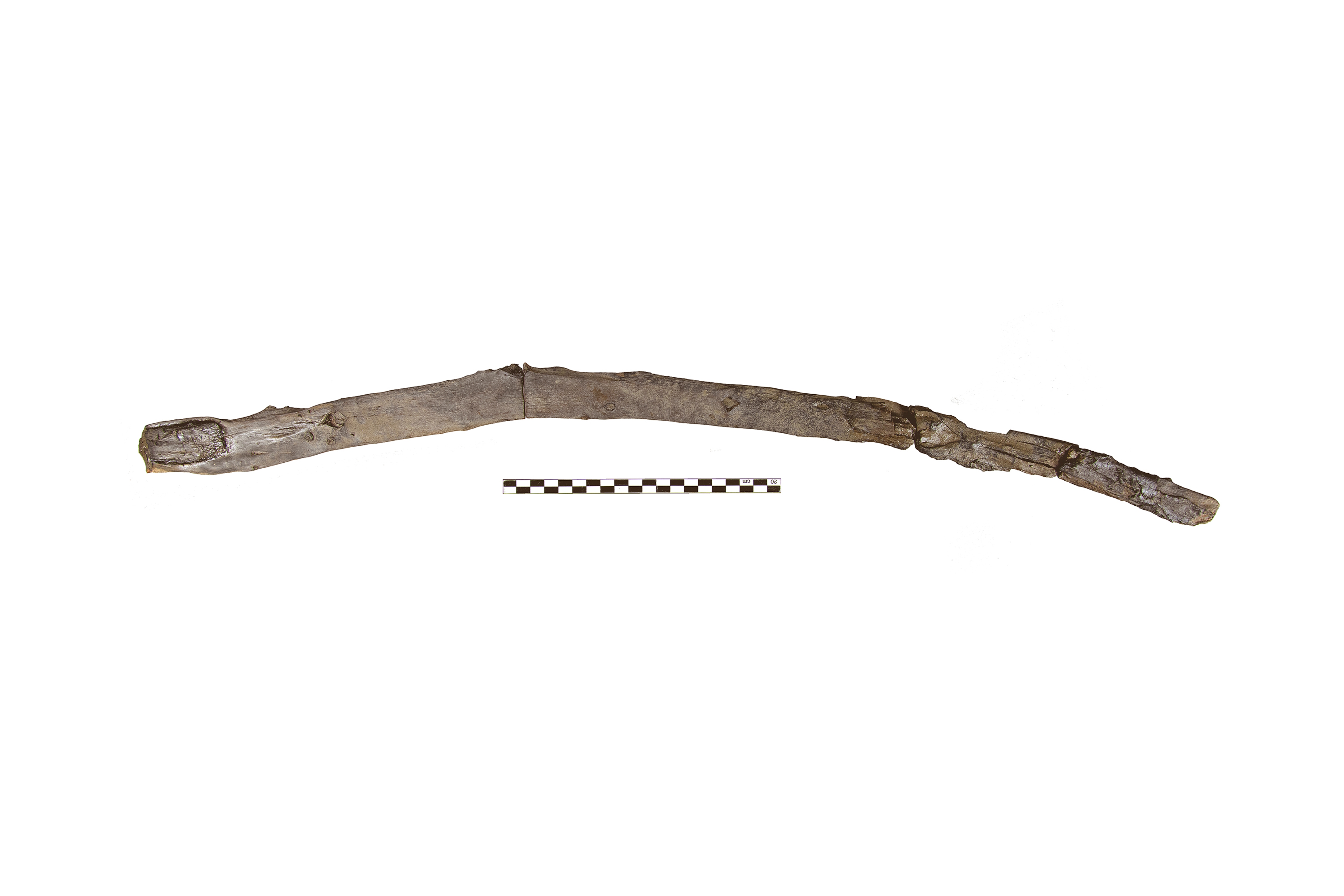
Scientists found very old tools made from wood and bone in Greece and England.
These tools are about 430,000 and 500,000 years old, which is much older than we thought people were making tools.
The wooden tools were found near an elephant skeleton, and the bone tool was used for making stone tools.
This shows that early humans were very smart and could make different kinds of tools from different materials.
The tools were found in places where there were mines long ago, and they help us understand how people lived a very long time ago.

430,000-year-old wooden tools and a 500,000-year-old elephant-bone hammer were discovered in Greece and England, respectively.
The tools were likely made by early Neanderthals or Homo heidelbergensis, not Homo sapiens.
The wooden tools include a digging stick and a carved twig, found at the Marathousa 1 site in Greece.
The elephant-bone hammer, found in England, was used for knapping stone tools.
These discoveries push back the timeline for toolmaking in Europe by hundreds of thousands of years.
- Who
- Early Neanderthals or Homo heidelbergensis
- What
- Discovery of 430,000-year-old wooden tools and a 500,000-year-old elephant-bone hammer
- Where
- Marathousa 1 site in Greece and Boxgrove site in England
- When
- Middle Pleistocene age (478,000 to 424,000 years ago)
- Why
- To provide insight into the prehistoric origins of human intelligence and technological skills
Key facts
- Age of Tools
- 430,000 years old
- Location
- Marathousa 1 site, Megalopolis basin, Greece
- Materials Used
- Alder, poplar, or willow wood
- Discoverers
- Katerina Harvati, Annemieke Milks
- Journal
- PNAS
- Other Artifacts Found
- Partial skeleton of a straight-tusked elephant, stone tools, remains of turtles, birds, rodents, and hippopotamuses
- Age of Elephant-Bone Hammer
- 500,000 years old
- Location of Elephant-Bone Hammer
- Boxgrove site, West Sussex, England
Quotes

Katerina Harvati
Paleoanthropologist at the University of Tübingen in Germany and lead author of the wooden-tool paper
“Organic artifacts, especially those derived from plants, are a lot more fragile and harder to find than those made from stone.”
 indianexpress.com
“I’ve never tried to cut up an elephant carcass, so I don’t know. I assume it’s not so easy, but I mean, I guess it’s possible.”
indianexpress.com
Silvia Bello
Paleoanthropologist at London’s Natural History Museum and author on the elephant-bone study
“The hammer has been struck against stone, repeatedly. The small pieces of flint found embedded in the bone confirm that it was used for this specialized purpose.”
indianexpress.com
Annemieke Milks
Archaeologist at the University of Reading in England and lead author of the study
“We found marks from chopping and carving on both objects, clear signs that humans had shaped them.”
indianexpress.com
Thomas Terberger
Expert in ancient artifact analysis at the Lower Saxony State Office for Cultural Heritage in Hannover, Germany
“Flint was more common, but bone and wood were probably more valuable for our ancient ancestors. Imagine how many tools you can make from a single large bone of an elephant.”
indianexpress.com
Sources
Related news

Francis Ford Coppola's Watch Sells for $10.8 Million

Francis Ford Coppola Auctions Watch After 'Megalopolis' Failure

New Films: Texas Chainsaw Massacre Doc, Megalopolis, Ye Documentary

Megadoc Trailer: Mike Figgis' Doc on Coppola's 'Megalopolis'
