

9 months ago
Justice Patel on PILs: Origin and Evolution
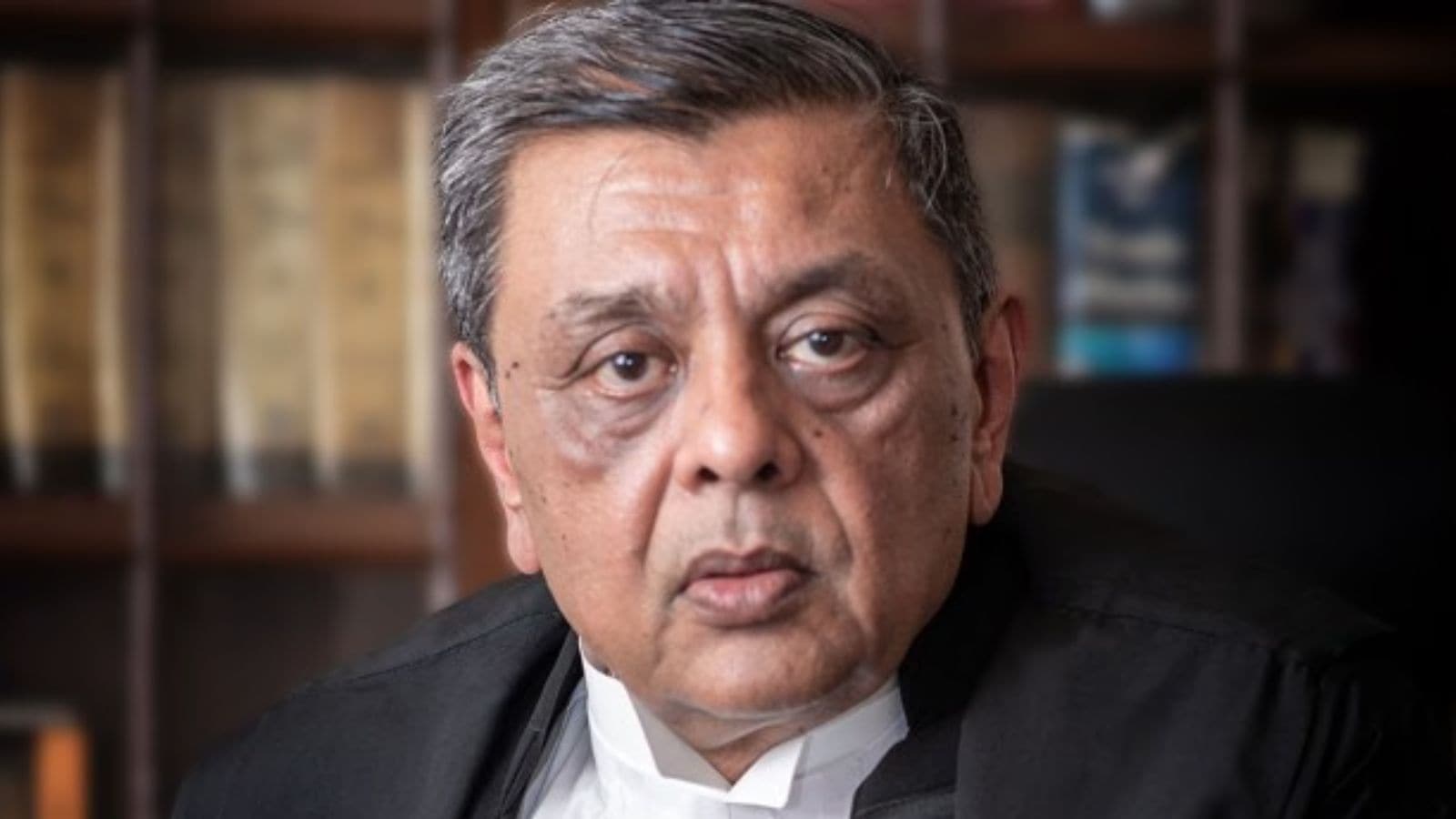
Justice G S Patel, a former judge, gave a talk about how Public Interest Litigations (PILs) started in India.
He said that after a difficult time called the Emergency, the courts wanted to regain people's trust.
They started allowing letters and postcards as petitions, making it easier for everyone to access justice.
This is called epistolary jurisdiction.
He also talked about how some judges, like Justice V R Krishna Iyer and Justice P N Bhagwati, helped make this possible.
PILs are special because they focus on big problems, not just personal issues.
Justice Patel also warned that sometimes PILs are misused for personal gain or to delay projects.
He discussed different views on whether courts should be so active in solving problems that the government and parliament should handle.

Justice G S Patel discussed the origin of PILs, tracing it back to the post-Emergency period when the judiciary sought to regain public trust.
PILs expanded the concept of 'locus standi', allowing petitions through letters and postcards, making justice more accessible.
Justice Patel acknowledged the roles of Justice V R Krishna Iyer and Justice P N Bhagwati in developing epistolary jurisdiction.
He cited the 1997 case of Vishaka vs State of Rajasthan as an example of the Supreme Court's role in shaping future legislation.
Justice Patel condemned the misuse of PILs for personal publicity, political rivalry, and other malicious purposes.
- Who
- Justice G S Patel, former judge of the Bombay High Court
- What
- Lecture on the origin and evolution of Public Interest Litigations (PILs)
- Where
- Gujarat National Law University (GNLU)
- When
- November 26, 2023
- Why
- To discuss the role and impact of PILs in Indian judiciary
Key facts
- Speaker
- Justice G S Patel
- Event
- Lecture at Gujarat National Law University (GNLU)
- Date
- November 26
- Topic
- Red PIL or Blue PIL
- Key Figures
- Justice B N Srikrishna, Justice Ruma Pal, Justice V R Krishna Iyer, Justice P N Bhagwati
- Notable Case
- Vishaka vs State of Rajasthan (1997)
Quotes
Justice G S Patel
Former judge of the Bombay High Court
“This form of litigation originated in India in late 1970s and 1980s… may be due to the Emergency when civil liberties were suspended, political dissent was suppressed and thousands were detained without trial. After the Emergency, the judiciary sought to regain public trust and to reaffirm its role as a guardian of constitutional rights. The Supreme Court realised that access to justice in India was limited to the educated, rich and powerful while the majority of citizens were rural and illiterate with no meaningful access to court. Certain judges expanded the concept of locus standi and allowed petitions in the form of letters, petitions and postcards and treated these as writ petitions, giving birth to the epistolary jurisdiction. The judiciary consciously adopted an activist approach to bring justice to prisoners, bonded labourers, women, slum dwellers, children, tribal population…”
 indianexpress.com
“The expansion of PIL jurisprudence, in which our courts thought it fit to step in, have been criticised for several decades as we have seen. Today, those criticisms are getting louder and sharper… are courts truly venturing into the exclusive reserves of the executive and the legislature, are they blurring the boundaries set?… are they actually disrupting the balance in the fabled doctrine of separation of powers?… Is the court supposed to sit idle when the other two organs fail to do what they are constitutionally bound to do?…”
indianexpress.com
Sources
Related news
Gujarat Student Leaders Seek Campus Elections and Academic Reforms

Daman District Panchayat Celebrates India’s 80th Independence Day

Army, Assam Rifles Conduct Joint Drill in Arunachal

Gujarat CM Appoints Over 1,500 Advocates as Notaries, Launches Digital Portal
