1 hr ago
Venkatraman Ramakrishnan’s Risky Path from Physics to Nobel
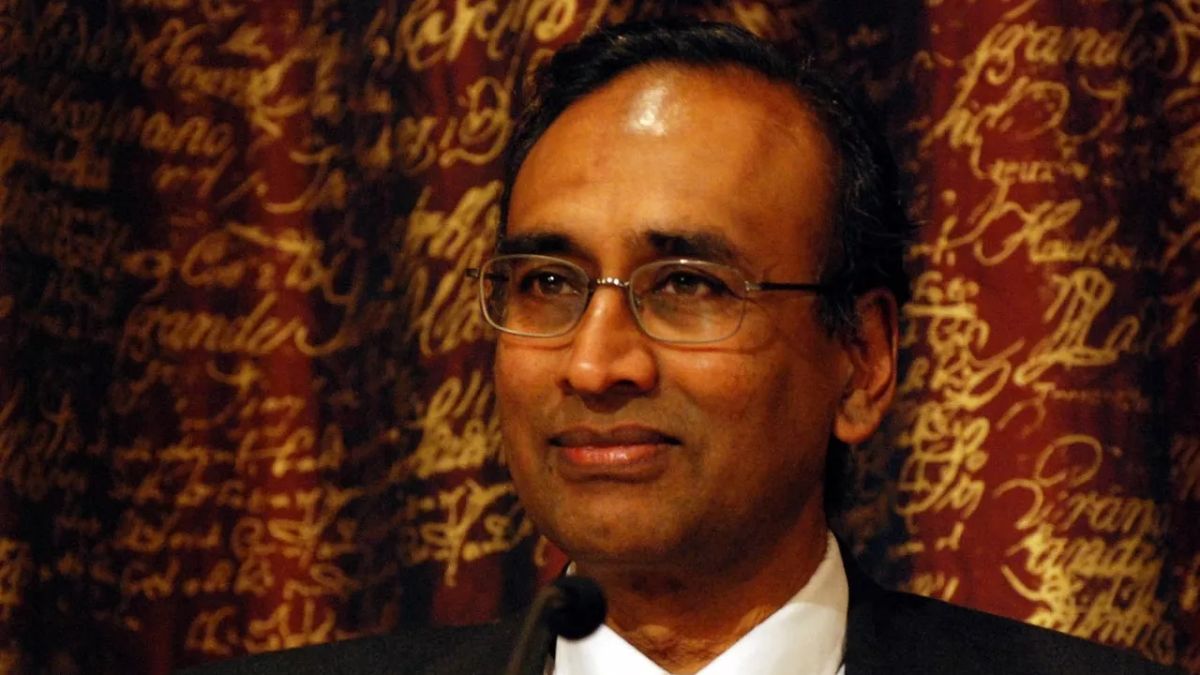
Venkatraman Ramakrishnan was born in India and moved between countries as a child.
He sometimes felt like an outsider and did not always succeed in school.
He failed to enter two institutions he hoped to attend, but won a scholarship to study physics.
During his doctoral work, he decided that biology interested him more than physics.
He began studying ribosomes, tiny machines inside cells that help make proteins.
In 1995, he moved to Cambridge and accepted a large pay cut to work on this difficult problem.
His team eventually helped reveal the ribosome’s structure and how some antibiotics attach to it.
In 2009, he shared the Nobel Prize in Chemistry for this work.
Later, he wrote about aging, death and the limits of promises made by the longevity industry.

Venkatraman Ramakrishnan overcame academic setbacks before becoming a leading ribosome researcher.
He shifted from physics toward biology after struggling with his doctoral work and studying ribosomes.
In 1995, he accepted a 40 percent pay cut to pursue ribosome research in Cambridge.
His team helped determine the atomic structure of the ribosome’s 30S subunit during a scientific race.
Ramakrishnan shared the 2009 Nobel Prize in Chemistry with Thomas Steitz and Ada Yonath.
- Who
- Venkatraman Ramakrishnan, along with Thomas Steitz and Ada Yonath, is the central scientific figure in the story.
- What
- Ramakrishnan’s career journey led to Nobel Prize-winning research on the structure and function of the ribosome.
- Where
- He was born in Chidambaram, India, and later conducted major ribosome research in Cambridge, England.
- When
- He moved to the MRC Laboratory of Molecular Biology in April 1999 and shared the Nobel Prize in Chemistry in 2009.
- Why
- He accepted a 40 percent pay cut to pursue a difficult ribosome project at an institution known for supporting long-term scientific research.
Scientific Competition
Scientific Collaboration
How Nobel-worthy research is viewed
Scientific Competition
Ramakrishnan acknowledged that scientists have ambitions and that major discoveries can emerge from intense competition among research teams.
Scientific Collaboration
He argued that modern science is highly collaborative and said turning research into a contest, as the Nobel system does, is a problematic way to view scientific work.
Prospects for extending human life
Scientific Competition
Ramakrishnan said no physical law rules out a human reaching 150 or even 200 years, although he expects major obstacles.
Scientific Collaboration
He warned that people are vulnerable to longevity claims and questioned whether living forever would actually be desirable.
Key facts
- Birth
- 1952 in Chidambaram, Tamil Nadu, India
- Scientific field
- Ribosome structure and molecular biology
- Major career move
- Moved to the MRC Laboratory of Molecular Biology in Cambridge in 1999
- Pay cut
- 40 percent
- Nobel Prize
- Shared the 2009 Nobel Prize in Chemistry with Thomas Steitz and Ada Yonath
- Indian honour
- Received the Padma Vibhushan in 2010
- Later book
- Published Why We Die: The New Science of Aging and the Quest for Immortality in 2024
Quotes

Venkatraman Ramakrishnan
Nobel Prize-winning structural biologist and former physicist
“I wanted to go to a place that had a reputation for tackling very, very hard problems that might take a long time to solve and that would not pull the rug out from under my feet when things were not going well. You get that here.”
 financialexpress.com
“People go into science out of curiosity, not to win an award. But scientists are human and have ambitions.”
financialexpress.com
Sources
Related news
Kanwal Rekhi’s Journey from $8 Immigrant to Silicon Valley Mentor
E.C.G. Sudarshan’s Physics Legacy Outshone by Nobel Recognition Gaps

KBC 18 Contestant Quits Rs 1 Crore Pythagoras Question

Renu Hans Clears Class 10 at 45 After 22 Years

Sachin Tendulkar Launches Fellowship Honouring Father, Supporting Young Doctors

Dev Tomar’s Journey From Netherlands Job to UPSC Success

Tamil Writer D Ravikumar's Dalit Struggles in 'An Ocean in a Well'
Nobel Laureate Discusses Science of Ageing

Mumbai LitFest 2025 Concludes with Godrej Awards

Literature Live! Mumbai LitFest 2025 Honors Founders, Features Diverse Voices