1 day ago
Two High-ROCE Stocks Trade at Deep Discounts
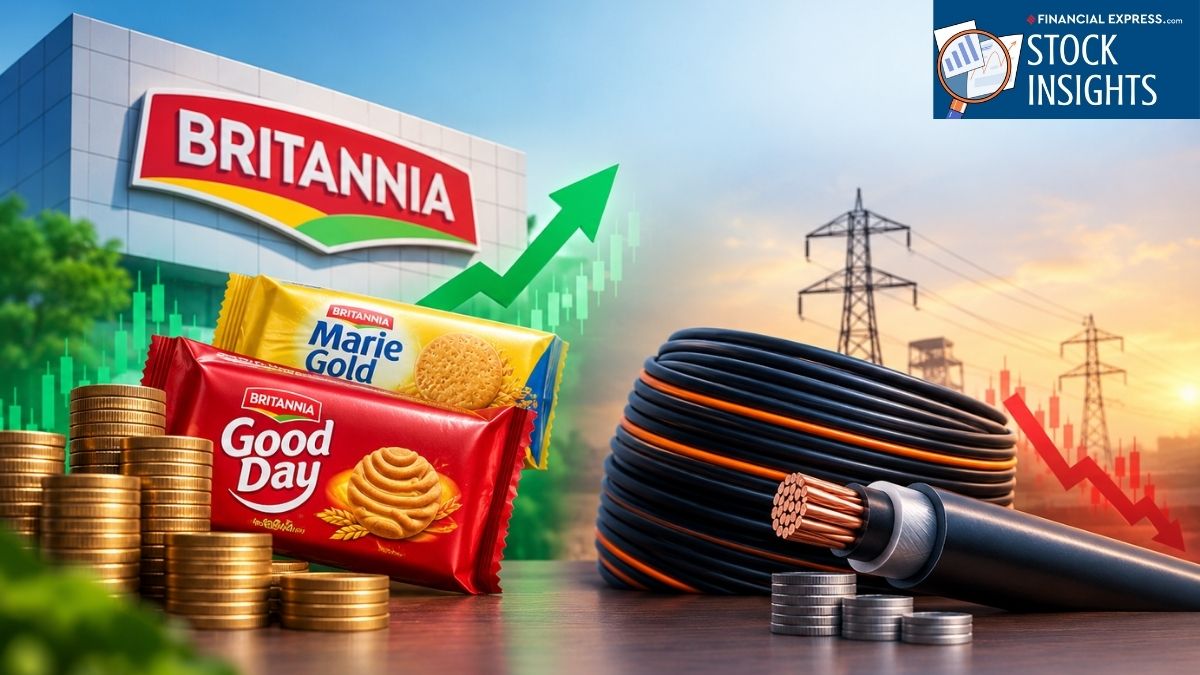
The article looks at two smaller Indian companies whose shares appear inexpensive compared with their profits.
Bombay Burmah owns much of Britannia, but that valuable shareholding is held inside a larger family-company structure and is not easy for investors to access.
The company also had losses connected to the collapse of airline Go First.
DDev Plastiks makes plastic-like materials used to protect electrical wires and cables.
Its business has grown, but it now takes longer for money to come back from customers and stock.
DDev is also planning a battery-storage business, but its first plant has been delayed.
The article says both companies have strengths as well as reasons investors may be cautious.
Their low share prices could remain low unless the businesses make progress or their situations change.

Bombay Burmah’s market value is about Rs 8,966 crore, while its indirect 50.55% holding in Britannia is valued at more than Rs 59,000 crore.
Bombay Burmah reports 33% ROCE and trades at about 7 times earnings, but its Britannia stake is locked within the group and the company has a history of Go First-related losses.
DDev Plastiks supplies polymer compounds to cable makers including KEI, Havells, Apar and KEC International; it reports 31% ROCE and trades at about 12 times earnings.
DDev’s June 2026-quarter revenue rose about 29% and net profit about 22%, while working-capital days increased to 78 and its battery-storage plant timeline moved to the first quarter of FY28.
The article says both stocks’ low valuations reflect risks: Bombay Burmah’s holding-company structure and DDev’s slower profit growth, working-capital needs and untested battery venture.
- Who
- Bombay Burmah Trading Corporation and DDev Plastiks Industries.
- What
- An article compares the companies’ high returns on capital and low price-to-earnings valuations, alongside their business risks.
- Where
- India; DDev’s new polymer-compounding plant is in Bhiwadi, Rajasthan.
- When
- The article cites results and filings through October 2026, including June 2026-quarter figures.
- Why
- The article examines whether each company’s low valuation is justified by its risks or could narrow if its business prospects improve.
Reasons the stocks may be undervalued
Reasons the discounts may persist
Bombay Burmah’s Britannia holding
Reasons the stocks may be undervalued
The article says the value of Bombay Burmah’s Britannia stake is far greater than Bombay Burmah’s own market capitalization; a Britannia recovery or simpler group structure could narrow the gap.
Reasons the discounts may persist
The stake is not for sale, so investors access its value mainly through dividends passed up the group. Holding-company discounts can persist, and Bombay Burmah’s past Go First losses and decision to skip a final FY26 dividend are cited as concerns.
DDev Plastiks’ growth prospects
Reasons the stocks may be undervalued
DDev supplies materials used in cables, reported strong June 2026-quarter growth, and began operating a new Bhiwadi plant for higher-voltage cable compounds in April 2026.
Reasons the discounts may persist
Profit growth slowed after FY24, working-capital days rose from 32 to 78, and the planned battery-storage plant was pushed back to the first quarter of FY28, with lower expected initial margins than its compounding business.
Key facts
- Bombay Burmah market capitalization
- About Rs 8,966 crore.
- Bombay Burmah holding in Britannia
- The promoter group held 50.55% of Britannia in the June 2026 quarter; almost all of that block was held through Bombay Burmah step-down subsidiaries.
- Britannia stake value
- More than Rs 59,000 crore at Britannia’s stated market value of about Rs 1,15,858 crore.
- Bombay Burmah valuation and returns
- About 7x PE, 33% ROCE and about 19% ROE, according to the article.
- DDev Plastiks market capitalization
- About Rs 2,564 crore.
- DDev Plastiks valuation and returns
- About 12x PE and 31% ROCE in FY26.
- DDev battery-storage project
- Phase 1 is planned as a 5 GWh plant, with completion now expected by the first quarter of FY28.
Sources
Related news

Bombay Burmah Shares Jump 9.5% After ₹249 Crore Block Deal

Tata Consumer, Rallis India Hit Lows Despite Profit Growth

Five Fundamentally Strong Stocks Trading Below Historical Valuations
Three Near-Low Stocks Show Strength, Risks, and Valuation Questions

Tech Mahindra and Swaraj Engines Offer Contrasting Dividend Stories

JSW Holdcos Offer Deep Discounts, But Value Unlocking Remains Uncertain

Eternal’s Nifty 50 Weight Surpasses TCS on Free Float

Nomura sees Nestle, Marico and Tata Consumer surprising in Q2

BNP Paribas Sets FMCG, Quick-Commerce Targets With Upside