1 hr ago
India-EU FTA Opens Door To Lower-Tariff Car Imports
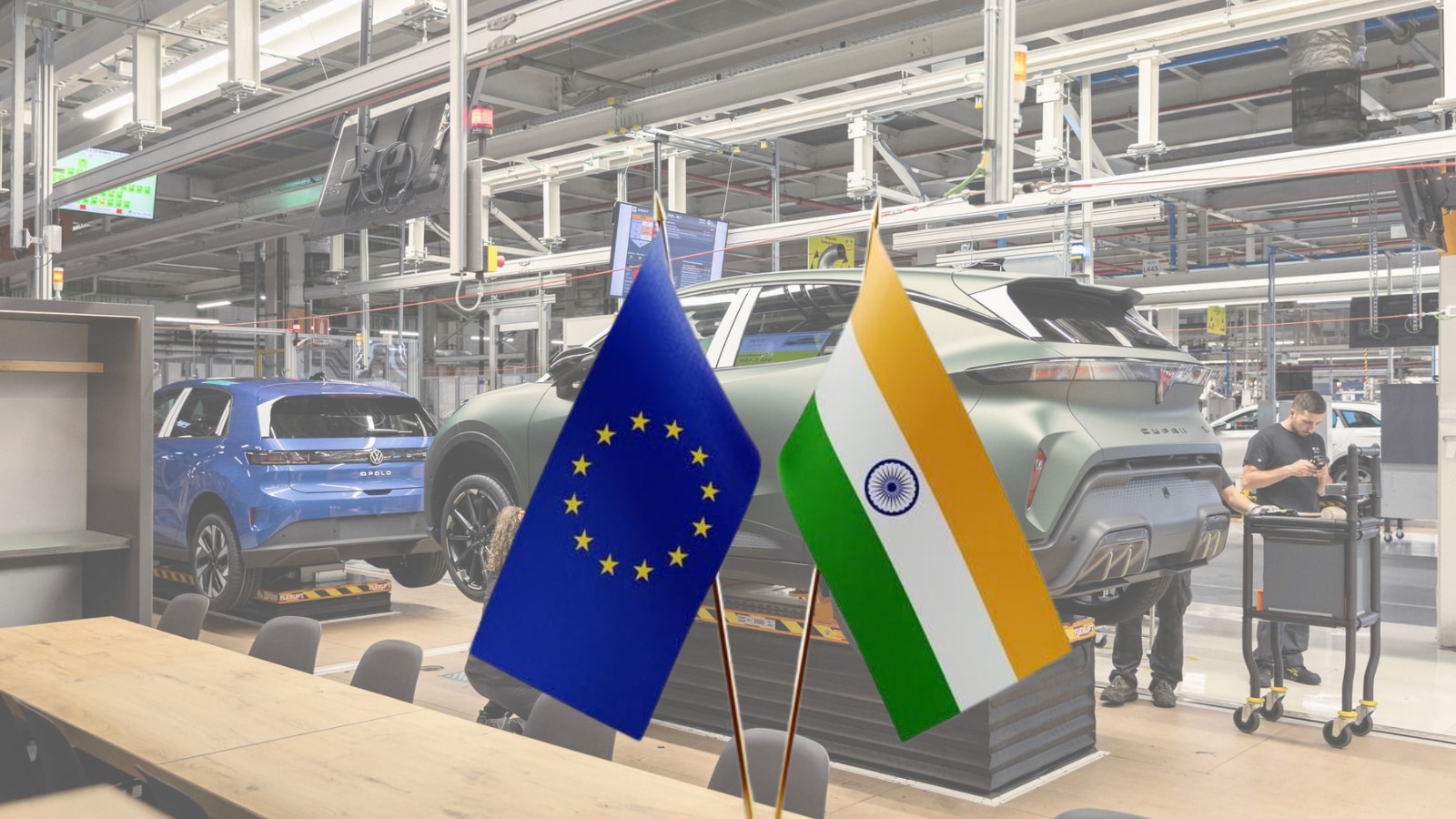
India and the European Union have agreed on proposed rules to make some European cars cheaper to import into India.
In the first year, up to 100,000 eligible cars could receive lower import taxes.
The number of cars allowed would eventually rise to 160,000 a year.
Cars costing less than €15,000 would not get this benefit.
More expensive cars would qualify for different lower-tax rates depending on their prices.
Cars imported outside the quota would still face higher duties, although those rates would gradually decrease.
Special rules for electric and plug-in hybrid cars would begin in the fifth year.
The agreement has not yet been signed or approved and could start in 2027.
Lower import duties could make it easier for European companies to bring niche and high-priced models to India.

The proposed India-EU Free Trade Agreement would allow 100,000 EU-built ICE and non-plug-in hybrid cars into India at concessional duties in its first year.
The car quota would rise gradually to 160,000 vehicles from the agreement’s 10th year.
Cars priced below €15,000 would receive no concession, while eligible higher-priced cars would face reduced in-quota duties.
Separate concessions for battery-electric, plug-in hybrid and other eligible vehicles would begin in the fifth year, subject to a €20,000 minimum price.
The agreement was finalised in January 2026 but remains unsigned and must complete internal approvals before potentially taking effect in 2027.
- Who
- The governments of India and the European Union, along with European automakers.
- What
- A proposed free trade agreement would reduce import duties and establish quotas for eligible EU-built passenger vehicles.
- Where
- The concessions would apply to European vehicles imported into India.
- When
- The agreement was finalised in January 2026, could be signed by the end of 2026, and could take effect in 2027 after approvals.
- Why
- The measures are part of the proposed India-EU Free Trade Agreement and are intended to provide preferential market access under specified price, origin and quantity limits.
Potential Benefits
Concerns And Limits
Access for European Automakers
Potential Benefits
Lower in-quota duties would make it easier for European manufacturers to import completely built-up vehicles, especially niche and high-priced models.
Concerns And Limits
Only vehicles meeting the agreement’s price, origin and quota conditions would receive concessions; cars outside the quota would continue to face higher duties.
Impact on Customers
Potential Benefits
Reduced import duties could expand the availability of eligible European vehicles in India.
Concerns And Limits
The articles describe lower import duties but do not establish that the full savings would be passed on to customers through lower retail prices.
Trade Policy Precedent
Potential Benefits
The agreement uses tariff-rate quotas and price-based concessions to open selected markets while retaining conditions on imports.
Concerns And Limits
GTRI founder Ajay Srivastava warned that other major trade partners, including Japan and South Korea, could seek similar preferential access and generous quotas.
Key facts
- First-year CBU quota
- 100,000 EU-built ICE and non-plug-in hybrid passenger vehicles
- Long-term quota
- 160,000 vehicles from the 10th year onward
- Minimum price for main concession
- €15,000; lower-priced cars receive no concession
- First-year duty for cars above €35,000
- 30%, compared with a 66% most-favoured-nation rate
- Electric vehicle concessions
- Begin in Year 5 for eligible vehicles priced at €20,000 or more
- Electric vehicle quota
- 20,000 units in Year 5, 50,000 in Year 10 and 90,000 from Year 14 onward
- Agreement status
- Finalised in January 2026 but not yet signed or approved
Quotes
Ajay Srivastava
Founder of the Global Trade Research Initiative think tank
“These commitments cover automobiles, wine and selected alcoholic products, pork, apples, kiwifruit, pears and peaches. Imports meeting the prescribed origin, price and quantity conditions will enter at lower duties, while most imports outside these limits will continue to face the normal tariff”
 NDTV
NDTV
“India imported only 17,191 cars from the EU in 2025. Yet the trade agreement gives European automakers a first-year tariff-rate quota of 100,000 completely built-up internal-combustion and non-plug-in hybrid cars -- almost six times current imports”
NDTV
Sources

Related news

India-EU Trade Deal Opens Car Market Through Lower Duties

India-EU Trade Deal Moves Toward Final Approval

India-EU Free Trade Agreement Moves Toward Formal Approval

India’s Textile Industry Prepares for Expected EU FTA Gains
India-EU Free Trade Agreement Clears Legal Scrubbing, Signing Expected

India-EU FTA Expected to Transform Trade and Engagement

Salman Khan’s Rise From Cab Driver to Asian Games Gold

Vedaant Madhavan Prepares for Asian Games and National Spotlight

Asian Games Hardware Standardisation Aims to Level Esports Field
Maruti Suzuki Leads India’s EV Export Boom With eVitara