1 week ago
Sundar Sarukkai Explores Sound’s Foundations in Indian Metaphysics
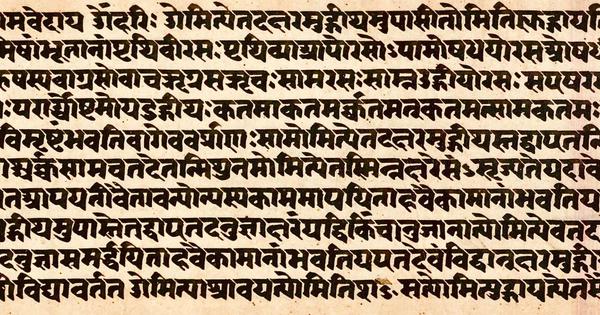
Sundar Sarukkai says that many Indian thinkers viewed sound as much more than ordinary noise.
They believed the universe and language were deeply connected to sound.
A sound begins inside the body and becomes clearer as it moves through the throat, mouth, and other speech organs.
The sound we hear is only the visible or audible part of a deeper sound.
Meaning is also partly “unheard” because we understand what words point to rather than hearing their meaning directly.
Music is described as a search for the deeper sound behind the notes we sing.
Bhartrihari explained speech as moving through stages from an unformed sound to a spoken sentence.
In Indian classical music, each singer chooses their own starting note, called “Sa.”

Sundar Sarukkai argues that sound is a foundation of Indian metaphysics and theories of language.
Indian traditions connect sound with the body, breath, meaning, music, and cosmic or divine dimensions.
These theories distinguish heard, manifested sound from subtler and unmanifested forms of sound.
Bhartrihari describes speech as developing from undifferentiated sound into meaningful utterance through three stages.
Indian classical music treats each singer’s “Sa” as individually chosen rather than fixed by an external frequency.
- Who
- Sundar Sarukkai, drawing on Indian philosophers and theories of language and music.
- What
- An argument that sound is a starting point and foundational concept in Indian metaphysics.
- Where
- Within Indian philosophical, linguistic, yogic, and musical traditions.
- When
- The ideas discussed span ancient Indian texts and philosophers through Abhinavagupta in the 10th century CE; the excerpt appears in Sarukkai’s new book.
- Why
- These traditions use sound to explain the relationship among the body, language, meaning, consciousness, the cosmos, and the divine.
Key facts
- Author
- Sundar Sarukkai
- Book
- Homo Philosophicus: Discovering the Spirit of Philosophy in Everyday Life
- Language texts
- Pāṇini’s Aṣṭādhyāyī and the Tamil Tolkāppiyam are cited as major works analyzing language.
- Speech stages
- Bhartrihari identifies pashyanti, madhyama, and vaikhari as stages in speech.
- Expanded model
- Abhinavagupta adds para as a first stage, creating a four-stage account.
- Sound theory
- Music texts distinguish very subtle, subtle, unmanifest, manifest, and artificial sound.
- Musical starting note
- In Indian classical music, each singer chooses their own Sa rather than using one externally fixed frequency.
Sources
Related news

How Bharat’s Ancient Practices Shaped Today’s Manifestation Conversation

Upanishadic Teachings Present Peace as Path to Divine Union

Sundar Sarukkai’s New Book Explains Logic for a Digital World

Dr. Ambar Pare Presents India’s Spiritual Approach to Health
Sitharaman Praises Bhyrappa, Urges Open Intellectual Debate