

1 day ago
Apple Accuses OpenAI of Destroying Evidence in Trade Secrets Case

Apple is suing OpenAI over claims involving its confidential business information.
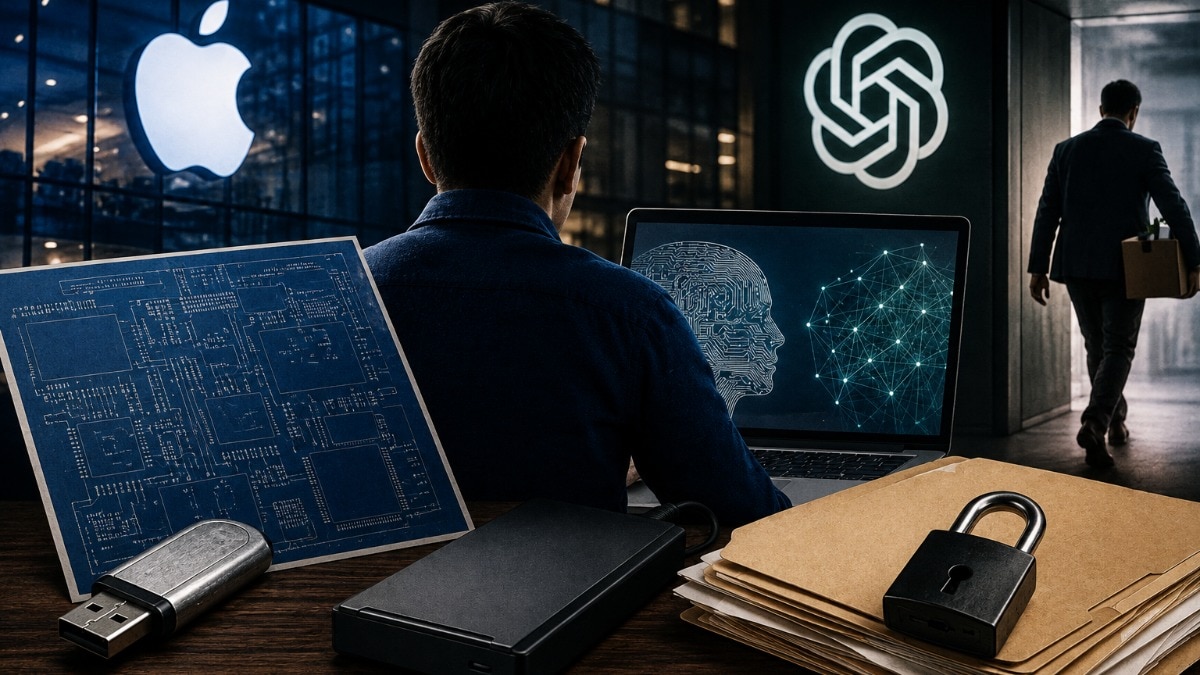
Apple says a former iPhone engineer, Chang Liu, kept access to Apple files after leaving the company.
Apple also says Liu asked an OpenAI colleague to help destroy evidence.
The company says a computer helped support these claims.
Apple further alleges Liu used a tool with the same name as an internal Apple application.
OpenAI says Apple has not proven that anyone stole confidential information.
OpenAI also says Apple’s rules about personal iCloud accounts make data difficult to separate.
A court in California is considering the arguments from both companies.

Apple alleges former engineer Chang Liu retained unauthorized access to its cloud storage after joining OpenAI in January.
Apple says forensic analysis of an OpenAI-provided MacBook showed Liu instructed colleague Yu-Ting Peng to destroy evidence.
The lawsuit also alleges Liu used a tool sharing the name of an internal Apple engineering application.
OpenAI denies the claims, saying Apple has not shown that former employees stole confidential information.
OpenAI argues Apple’s iCloud and employee-departure policies make it difficult to separate company data from personal information.
- Who
- Apple, OpenAI, former Apple engineer Chang Liu, and OpenAI colleague Yu-Ting Peng.
- What
- Apple alleges trade-secret theft and destruction of evidence; OpenAI denies the allegations.
- Where
- The dispute is being heard in U.S. District Court in San Jose, California.
- When
- Liu joined OpenAI in January, and the claims were addressed in a recent court hearing and filing.
- Why
- Apple says Liu retained unauthorized access to Apple information and that evidence was destroyed; OpenAI says Apple has not demonstrated that confidential information was stolen.
Apple’s allegations
OpenAI’s response
Trade-secret theft
Apple’s allegations
Apple alleges that former employees, including Chang Liu, used or carried Apple’s internal resources into OpenAI work and that its trade secrets are being used.
OpenAI’s response
OpenAI says Apple has failed to provide evidence that former employees stole or used confidential information.
Destruction of evidence
Apple’s allegations
Apple says forensic analysis of a MacBook showed Liu asked Yu-Ting Peng to help destroy evidence.
OpenAI’s response
OpenAI denies Apple’s allegations and characterizes the dispute as resulting from Apple’s own policies and actions.
Handling company data
Apple’s allegations
Apple says the MacBook evidence shows it is investigating specific suspected misuse rather than conducting a broad search.
OpenAI’s response
OpenAI argues that Apple permits employees to use personal iCloud accounts for work documents and quickly escorts departing employees out, making it difficult to preserve, transfer, and distinguish company data.
Key facts
- Dispute
- Apple’s trade-secrets lawsuit against OpenAI
- Former employee
- Chang Liu, a former Apple iPhone engineer who joined OpenAI in January
- Employees involved
- Apple says more than 400 former Apple employees now work at OpenAI
- Evidence cited
- Forensic analysis of an Apple-issued MacBook provided by OpenAI
- Apple’s allegation
- Liu maintained unauthorized access to Apple cloud storage and asked Yu-Ting Peng to destroy evidence
- OpenAI’s response
- OpenAI denies the allegations and says Apple has not shown that confidential information was stolen
- Data-management dispute
- OpenAI says Apple’s personal iCloud and employee-departure policies complicate separating personal and company data
Quotes
OpenAI
Artificial-intelligence company and defendant in the lawsuit
“The MacBook represents the very limited information Defendants provided so far (and only after weeks of delay), and shows Apple is not conducting ‘fishing expeditions’ but that its trade secrets are being used and evidence is being destroyed”
 businesstoday.in
“This dispute is a mess of Apple's own making, and it is trying to blame everyone else”
businesstoday.in
Sources
Related news
OpenAI Denies Apple's Trade-Secret Claims, Blames Its Procedures

Apple Alleges OpenAI Employee Used Secret Circuit Design
OpenAI Refutes Apple's Trade Secrets Suit, Releases Chats and Emails

Apple Defends Trade Secrets Lawsuit Against OpenAI Dismissal Bid
Apple alleges 11 ex-employees leaked trade secrets to OpenAI
Judge Blocks Trump Deportations Over Pro-Palestinian Speech

India and Costa Rica Seek Deeper Bilateral Cooperation

Aisha Wahab Wins California House Special Election Seat