3 weeks ago
Fewer State Schools Can Still Deliver Better Learning Outcomes

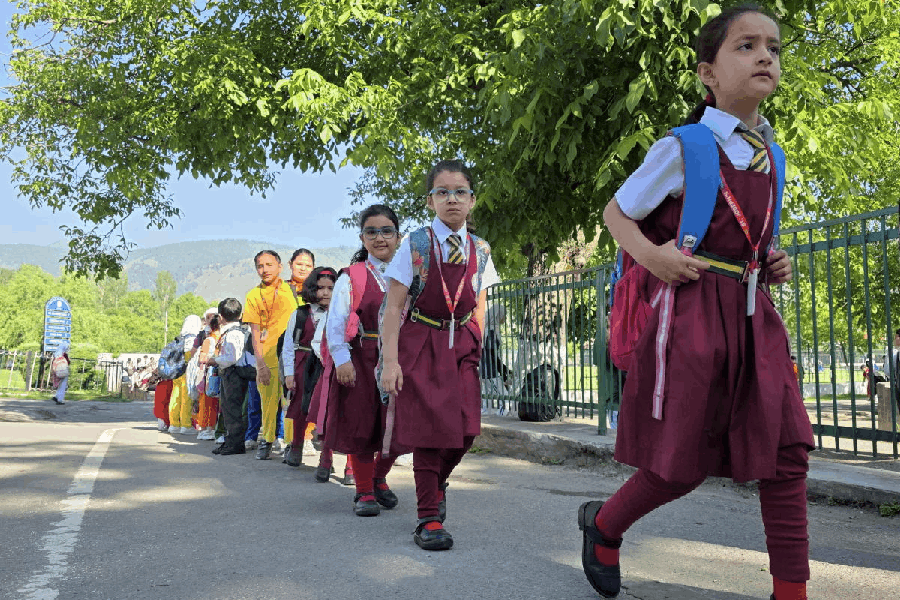
Sometimes two government schools are very close to each other.
They may both have only a small number of students.
Running two tiny schools may not work as well as running one larger school.
In that case, one school may be closed.
The children can move to the nearby school.
Usually, their teachers move there too.
The remaining school still teaches the same children.
So, having fewer school buildings does not always mean children are being neglected; what matters is whether they continue learning well.

Two small government schools may operate within walking distance of each other.
Such schools may be located in the same habitation or in adjoining ones.
Each school may be too small to be run optimally.
After one school closes, its children and usually its teachers move to the other school.
The remaining school continues serving the same children as before, so fewer schools do not necessarily mean less education.
- Who
- Children and usually teachers from two small government schools.
- What
- One of two nearby, undersized schools may be closed and its children and teachers moved to the other.
- Where
- In the same habitation or in adjoining habitations, with the schools within walking distance.
- When
- Not specified.
- Why
- Because each school may be too small to be run optimally.
Key facts
- Schools involved
- Two small government schools
- Distance
- Within walking distance of each other
- Location
- The same habitation or adjoining habitations
- Reason for closure
- Each school is too small to be run optimally
- Student movement
- Children from the closed school move to the other school
- Teacher movement
- Teachers usually move to the remaining school
- Continuity
- The remaining school continues serving the same children as before
Sources
Related news
West Bengal Shuts 933 Zero-Enrolment Schools, Audits Assets

State Weighs Public Uses for 933 Empty Schools
West Bengal Considers PPP Model for 4,133 Empty State Schools

Education Bus Yatra Demands Major Telangana School Reforms
Students Walk One Kilometre Daily for Mid-Day Meals