1 week ago
New nonprofit seeks reusable gene therapies for ultrarare diseases
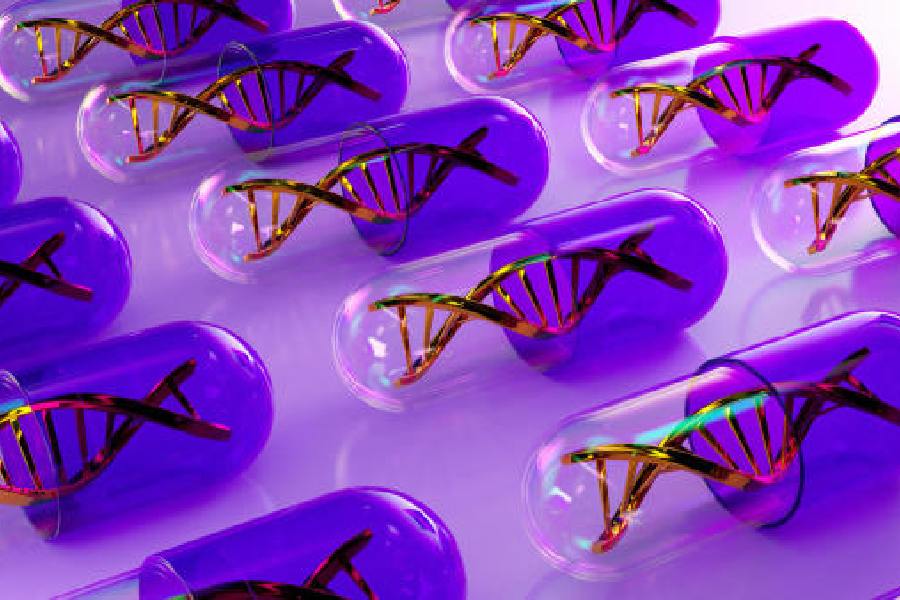
Some children are born with very rare diseases caused by mistakes in their genes.
Scientists can sometimes fix these mistakes, but making a separate treatment for every disease is very expensive and slow.
A new nonprofit called the Center for Therapeutic Genetics wants to create tools that can be reused for many diseases.
Its first projects will study two brain disorders that can cause seizures.
The scientists hope to send gene-editing instructions into brain cells using a specially changed virus.
The virus would travel through the blood and cross the brain’s protective barrier.
The treatment is being tested first in the most severely affected children, so not every child will receive it immediately.
The researchers hope their work will help many families and give other doctors useful methods.

The Center for Therapeutic Genetics will develop gene therapies adaptable across multiple rare genetic diseases.
The project has received a $34.5 million contract from the Advanced Research Projects Agency for Health.
Researchers will initially target alternating hemiplegia of childhood and Dravet syndrome, neurological disorders involving seizures.
A new delivery method could carry gene-editing instructions through the blood-brain barrier into brain cells.
The center plans to share its methods publicly so other researchers can apply them to additional diseases.
- Who
- David Liu, Wendy Chung and colleagues at the Broad Institute, Boston Children’s Hospital and the Jackson Laboratory, with support from the Advanced Research Projects Agency for Health.
- What
- They launched the Center for Therapeutic Genetics to develop reusable gene-editing treatments for rare genetic diseases.
- Where
- The project involves research institutions in the United States, including the Broad Institute in Cambridge, Massachusetts.
- When
- The center was recently announced; the article does not provide a specific date for the announcement.
- Why
- Existing rare-disease treatments can take years and hundreds of millions of dollars to develop, while reusable editing methods could make treatment more feasible.
Key facts
- Project
- Center for Therapeutic Genetics
- Initial funding
- $34.5 million contract from the Advanced Research Projects Agency for Health
- Initial focus
- Neurological disorders that can cause seizures
- First conditions
- Alternating hemiplegia of childhood and Dravet syndrome
- Alternating hemiplegia prevalence
- About 400 children in the United States are affected
- Dravet syndrome prevalence
- About one in 15,700 births
- Rare-disease burden
- About 400 million people worldwide and 25 million to 30 million people in the United States have a rare disease
Quotes
Wendy Chung
Geneticist at Boston Children’s Hospital and collaborator on the nonprofit center
“We did not simply bring David a disease and ask him to solve it. We brought him a developed scientific opportunity.”
 telegraphindia.com
“My patients don’t have time to wait. We will lose a generation.”
telegraphindia.com
Sources
Related news

Indian Startup Uses Generative AI to Design Gene Editors

China's OneGenome AI Tool Helps Screen DNA for Rare Diseases
Baby Rishwanth’s SMA Battle Spurs Race for Gene Therapy

Single-Shot Gene Editing Treatment Targets Cholesterol Through PCSK9

Kerala girl seizure-free two years after AIIMS robotic brain surgery

SAATH Trust Supports Children with Thalassaemia and Their Families