10 months ago
GBL, ICT Mumbai Pilot Plant Converts CO2 to Clean Fuel Alternative

Imagine we have a lot of extra carbon dioxide, which isn't good for our planet.
A company called GBL and a school called ICT Mumbai have built a small factory, like a test kitchen, to turn this carbon dioxide into a new kind of clean fuel.
This fuel is called DME and can be used instead of cooking gas or diesel without changing our stoves or trucks.
This special process is the first of its kind in the world, taking carbon dioxide and mixing it with hydrogen to make DME all in one go.
The factory will run for a few months to see how well it works.
This could help us use up the extra carbon dioxide and make cleaner energy, helping our planet stay healthy.
The companies are hoping this new way of making fuel will be ready to be used more widely in a couple of years.

GBL and ICT Mumbai have launched a pilot plant in Maharashtra to convert CO2 into Dimethyl Ether (DME).
This is the world's first one-step process to produce DME directly from CO2 and hydrogen.
The pilot plant will operate for three months, processing 10 litres of DME per day to optimize the technology.
DME can be used as a 100% substitute for LPG and diesel without requiring engine modifications.
The project aims to support India's energy security and climate goals by utilizing CO2 emissions from ethanol production.
- Who
- Godavari Biorefineries Limited (GBL) in partnership with the Institute of Chemical Technology Mumbai (ICT Mumbai)
- What
- Launched a pilot plant to convert CO2 into Dimethyl Ether (DME), a clean fuel alternative.
- Where
- Sakarwadi, Maharashtra, India
- When
- Pilot plant inaugurated on or before November 10, 2025; pilot phase lasts three months.
- Why
- To test a technology that converts CO2 into a fuel alternative, enhance India's energy security, support climate mitigation goals, and explore commercial applications for carbon utilization.
GBL & ICT Mumbai
Potential Economic Hurdles
Environmental Impact & Net-Zero Potential
GBL & ICT Mumbai
The technology offers a net-zero carbon cycle, utilizing CO2 emitted from bio-ethanol production, which is absorbed by sugarcane. It aims to contribute significantly to reducing global CO2 emissions.
Potential Economic Hurdles
While the process is described as net-zero, the overall economic feasibility hinges on factors like CO2 compression costs and the price of carbon credits, which are currently uncertain.
Commercial Viability & Scalability
GBL & ICT Mumbai
The pilot plant is designed to gather data for commercial application, with plans to market the technology globally within two years and is not restricted to GBL.
Potential Economic Hurdles
The commercial viability is acknowledged to depend on multiple factors including CO2 compression costs, hydrogen availability, and carbon credit markets, with current economics being unknown.
Key facts
- Location
- Sakarwadi, Maharashtra, India
- Technology
- One-step process to convert CO2 and hydrogen into Dimethyl Ether (DME)
- Partners
- Godavari Biorefineries Limited (GBL) and Institute of Chemical Technology Mumbai (ICT Mumbai)
- Pilot Plant Output
- 10 litres of DME per day
- Pilot Phase Duration
- Three months
- Projected Market Entry
- Within two years
- Award Received
- K.V. Mariwagen Award for Effective Chemical Industry-Academia Partnership (September 20, 2025)
Quotes
Samir Somaiya
Chairman and Managing Director of Godavari Biorefineries Limited
“Carbon dioxide can come from any source. In our case, it is generated during bio-ethanol manufacturing. But since the CO 2 emitted is the same carbon that was originally absorbed by sugarcane during cultivation, the cycle effectively balances itself, that’s why we describe our process as net zero.”
 thehindubusinessline.com
“This year, 17 billion litres were offered which means that for petrol, if you had a flex fuel fleet out there, you could almost do a 35 per cent blend, that is incredible.”
thehindubusinessline.com
Prof GD Yadav
Former Vice-Chancellor of ICT Mumbai and the project’s lead researcher
“We currently emit around 40 billion tonnes of carbon dioxide into the atmosphere every year. To achieve net zero and limit global temperature rise to 1.5°C by the end of this century, emissions must fall below 10 billion tonnes. In other words, we need to remove nearly 30 billion tonnes of CO 2 from the atmosphere.”
thehindubusinessline.com
“This is not the only solution but one of the many possibilities.”
thehindubusinessline.com
Sources
Related news
Chennithala Questions Maharashtra Voter-List Changes and Security
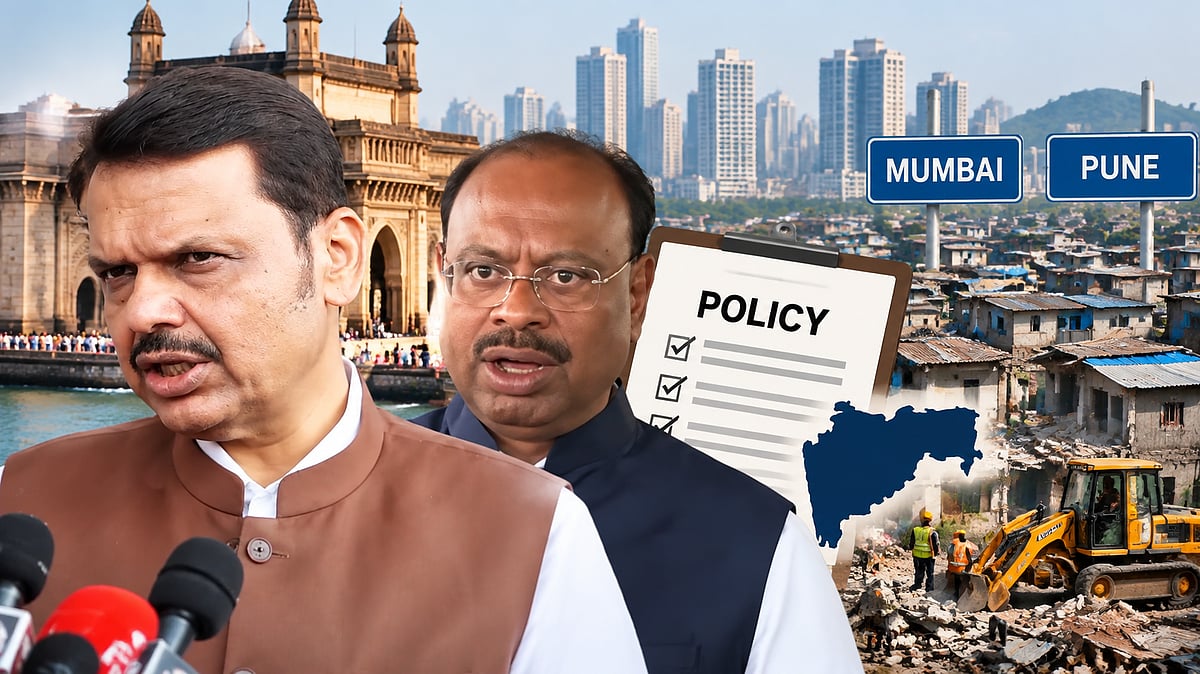
Maharashtra Panel To Frame Policy For Pre-2011 Encroachments

TNCC Chief Demands CEC Gyanesh Kumar’s Resignation and Arrest
Rahul Gandhi Alleges Election Rigging, Targets Election Commission
BJP Assigns Shivprakash Andhra Pradesh and Four States