1 hr ago
AMD Expects AI Demand to Grow as Businesses Seek Productivity
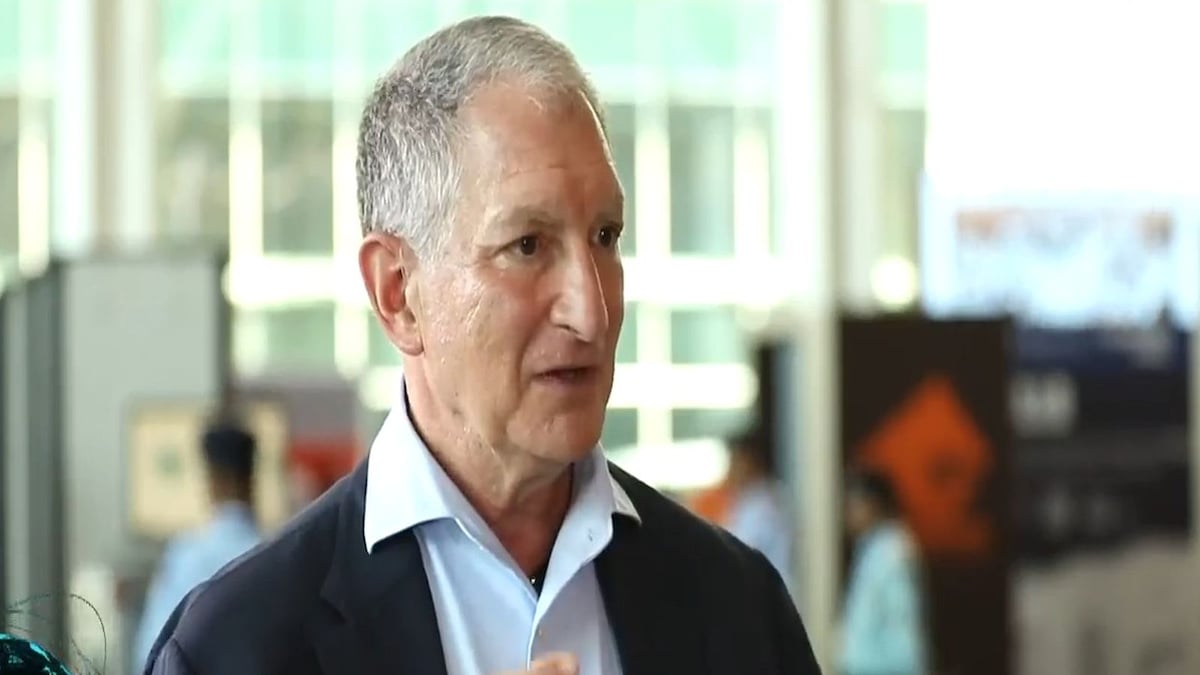
AMD says businesses are still buying technology to run artificial intelligence.
Companies may be careful about costs, but AMD does not think interest in AI is slowing down.
The company says agentic AI can handle many connected steps in a workflow instead of just one task.
This could help workers and businesses become more productive.
AI systems will need CPUs, GPUs and networking equipment working together.
Some AI tasks may run in the cloud, while others may move to company data centers or AI-enabled computers.
AMD is also working to make computers more efficient and to combine chips, software and other parts into complete systems.
In India, AMD has invested $245 million and added almost 4,000 roles during the first two years of a planned expansion.
AMD plans to introduce AI rack-level systems toward the end of this year.

AMD CTO Mark Papermaster said demand for AI infrastructure remains strong as businesses adopt the technology for productivity gains.
Papermaster said companies may use AI more selectively to control costs, but he does not see this as a broader slowdown in adoption.
He expects agentic AI, which connects tasks across entire workflows, to produce larger productivity gains than task-specific applications.
AMD anticipates growing demand for CPUs, GPUs and networking as AI workloads shift toward inference and become more distributed.
AMD said its India investment is ahead of schedule, with $245 million invested and nearly 4,000 roles added in two years.
- Who
- AMD and its CTO and Executive Vice President of Technology and Engineering, Mark Papermaster.
- What
- AMD expects strong AI-computing demand and is expanding from individual chips into software, networking and complete computing solutions.
- Where
- The developments involve AMD’s global business and innovation ecosystem, including expanded operations and data-center activity in India.
- When
- AMD plans to roll out AI rack-level integration toward the end of this year; TCS HyperVault is expected to begin ramping up in 2027.
- Why
- Businesses are adopting AI to improve productivity, while AMD is responding to growing demand for inference, efficiency and integrated computing systems.
Key facts
- India investment commitment
- AMD committed $400 million to expand its India operations over five years.
- India investment to date
- AMD invested $245 million during the first two years.
- India hiring
- AMD added nearly 4,000 roles, exceeding its original commitment of 3,000 hires.
- AI workload balance
- Papermaster said some workloads could move toward a CPU-to-GPU ratio closer to one-to-one, compared with an earlier model of one CPU for every eight GPUs.
- Efficiency improvement
- Papermaster said silicon-level efficiency could improve by around 30% per generation.
- India data centers
- AMD is working with NASA on a data center and has an agreement with TCS HyperVault.
- Planned product expansion
- AMD plans to roll out AI rack-level integration toward the end of this year.
Quotes

Mark Papermaster
AMD chief technology officer and executive vice president for technology and engineering
“AI is speeding up everything in the industry. We are actually having to use AI to accelerate our product development. We will continue to grow, and we'll continue to adopt AI at a very fast pace.”
 CNBC TV 18
“So, you are taking workflows, not point tasks, but entire workflows, and you are bringing a smart and an efficient productivity to it with agentic workflows. It's absolutely game-changing.”
CNBC TV 18
Sources
Related news
Piper Sandler Sees AI Compute Crunch Benefiting Two Stocks

AM Intelligence Orders 9,000 NVIDIA Rubin GPUs for Hyderabad
AM Intelligence Orders 9,000 Nvidia AI Systems for Hyderabad
Dell Unveils AI-Focused Commercial Portfolio for Indian Enterprises

AWS and Nvidia Plan Two Million More AI GPUs

Microsoft Says India Has Moved From AI Pilots Into Production
Science Quiz Covers Moon Basins, Space Weapons and Quantum Concepts
India Weighs Lunar Ambitions Amid Rising Space Competition
NASA Finds Broad, Shallow Pits During Curiosity’s Mars Traverse

Joi Barua Joins NASA-Aligned Cosmic Rhapsody Musical Project