1 hr ago
Iran War Tensions Rise as Airlines Face Worldwide Shutdown

The United States and Iran are still in a dangerous conflict, and other countries in the region are involved too.
Iran says its military is ready to respond strongly if the United States or Israel attacks again.
Yemen’s government says it attacked Houthi fighters and their supply routes.
Airlines are avoiding Iran because the fighting makes travel riskier.
Turkish Airlines reportedly stopped flights to Iran until at least March 2027.
The United States also denied visas to some people traveling with Iran’s president to the United Nations.
American officials are considering a fund to help repair Gulf energy facilities damaged by the war.
These actions show both growing pressure and continuing efforts to manage the wider crisis.

The United States is moving to shut down Iranian airlines worldwide on September 23, according to Treasury Secretary Scott Bessent.
Turkish Airlines reportedly suspended flights to Iran until at least March 2027, although it has issued no official statement.
Iran’s Revolutionary Guards warned of a “decisive and devastating” response to any new US or Israeli attack.
Yemeni government forces said they struck Houthi fighters and supply lines near Bab al-Mandeb and in al-Bayda.
Washington denied visas to several members of Iran’s UN delegation while proposing a reported $5 billion Gulf energy-reconstruction fund.
- Who
- The United States, Iran, Israel, Yemen’s government, the Houthis, regional governments, and airlines are involved; Treasury Secretary Scott Bessent and Iranian President Masoud Pezeshkian are also identified.
- What
- The conflict has produced military strikes, threats of retaliation, airline suspensions, visa denials, and proposed energy-reconstruction assistance.
- Where
- The developments involve Iran, Yemen, the Strait of Hormuz, the Bab al-Mandeb strait, Gaza, the Gulf region, and the United Nations in New York.
- When
- The live updates were published on September 22, 2026; the reported worldwide shutdown of Iranian airlines was set for September 23.
- Why
- The measures and warnings are linked to the ongoing US-Israel-Iran war and broader regional tensions.
De-escalation and diplomacy
Military pressure and deterrence
Ending the war
De-escalation and diplomacy
Two Republican US Senate candidates, Mike Rogers and Ashley Hinson, called for a swift end to the Iran war, citing concerns including higher fuel prices.
Military pressure and deterrence
President Donald Trump’s administration continued pressure through airline restrictions, visa denials, and military and regional security measures.
Iran’s response to threats
De-escalation and diplomacy
Iranian officials indicated that Tehran had conditions under which it might end its standoff with Washington, suggesting a possible diplomatic off-ramp.
Military pressure and deterrence
Iran’s army commander and the Iranian Revolutionary Guard Corps said the country was on high alert and prepared to respond forcefully to any renewed US or Israeli action.
Regional security policy
De-escalation and diplomacy
The proposed US fund to rebuild Gulf energy sites is intended to reduce reliance on the Strait of Hormuz and support regional recovery.
Military pressure and deterrence
The United Kingdom agreed to provide Saudi Arabia with defensive air-to-air refuelling for a limited period, while maritime authorities maintained a severe threat rating around Hormuz.
Key facts
- Reported airline action
- The United States is moving to ground Iranian airlines worldwide on September 23, according to Scott Bessent.
- Turkish Airlines
- Iran International reported that Turkish Airlines suspended flights to Iran until at least March 2027; no official airline statement was issued.
- Iranian military warning
- The Iranian Revolutionary Guard Corps said its forces were ready to deliver a “decisive and devastating” response to US or Israeli aggression.
- Visa denials
- Iranian state media reported that the United States denied visas to several members of President Masoud Pezeshkian’s UN delegation.
- Gulf reconstruction proposal
- The Wall Street Journal reported that the Trump administration proposed a $5 billion fund to rebuild Gulf energy infrastructure; Reuters said it could not immediately verify the report.
- Hormuz security
- A UK maritime agency kept the Strait of Hormuz threat level at “severe” after a tanker attack wounded two crew members.
Quotes

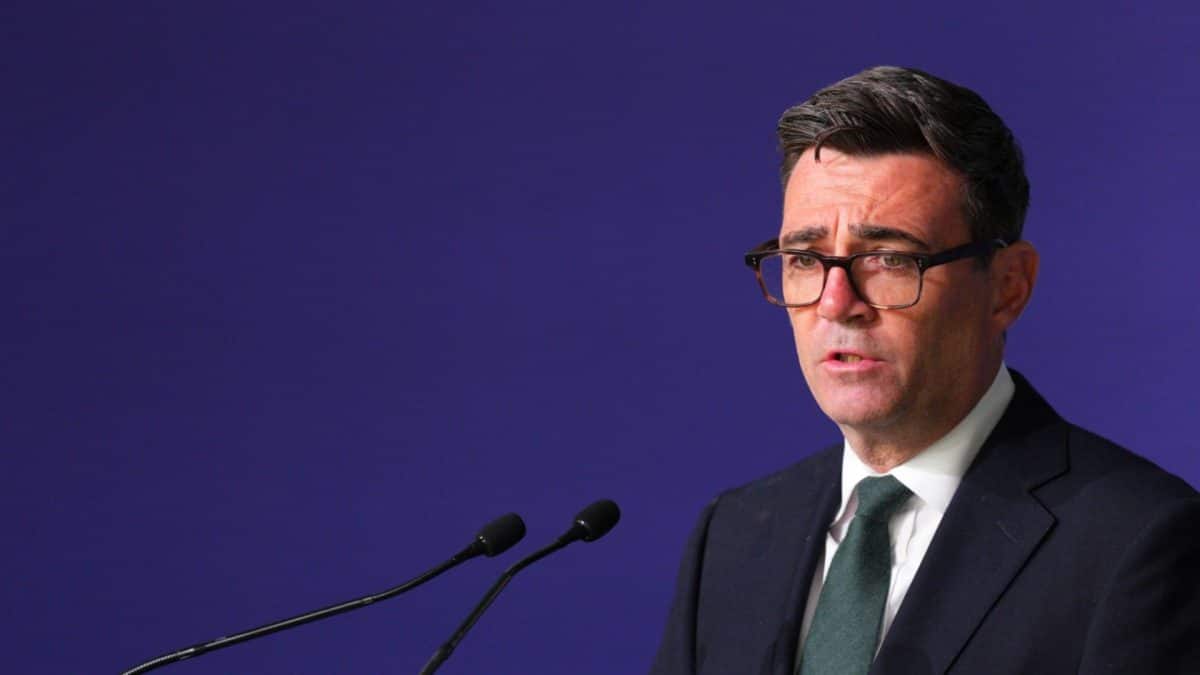
Andy Burnham
UK prime minister discussing defensive air-to-air refuelling support for Saudi Arabia
“Because of course Saudi Arabia has been experiencing attacks … and we need to keep those pathways open, and hence our agreement to the request”
 indianexpress.com
Sources
Related news

US Threatens Iranian Airlines as Middle East Shipping Tensions Rise

US Warns Americans to Leave Iran as Regional Tensions Escalate

US Escalates Iran Economic Pressure as Hormuz Crisis Deepens
Trump Signals Decisive Iran Action Amid Regional Escalation
Trump Rejects Iran Talks as Regional Attacks Raise Escalation Risks

US Warns Iranian Airlines Face Worldwide Shutdown on September 23

Saudi Arabia Turns to Sohar Transfers Amid Hormuz Constraints
UK Approves Time-Limited Refuelling Support for Saudi Arabia

Trump’s Iran Threat Raises Fears of Wider Middle East Conflict