3 weeks ago
Pollution and climate change threaten World Heritage Sites worldwide
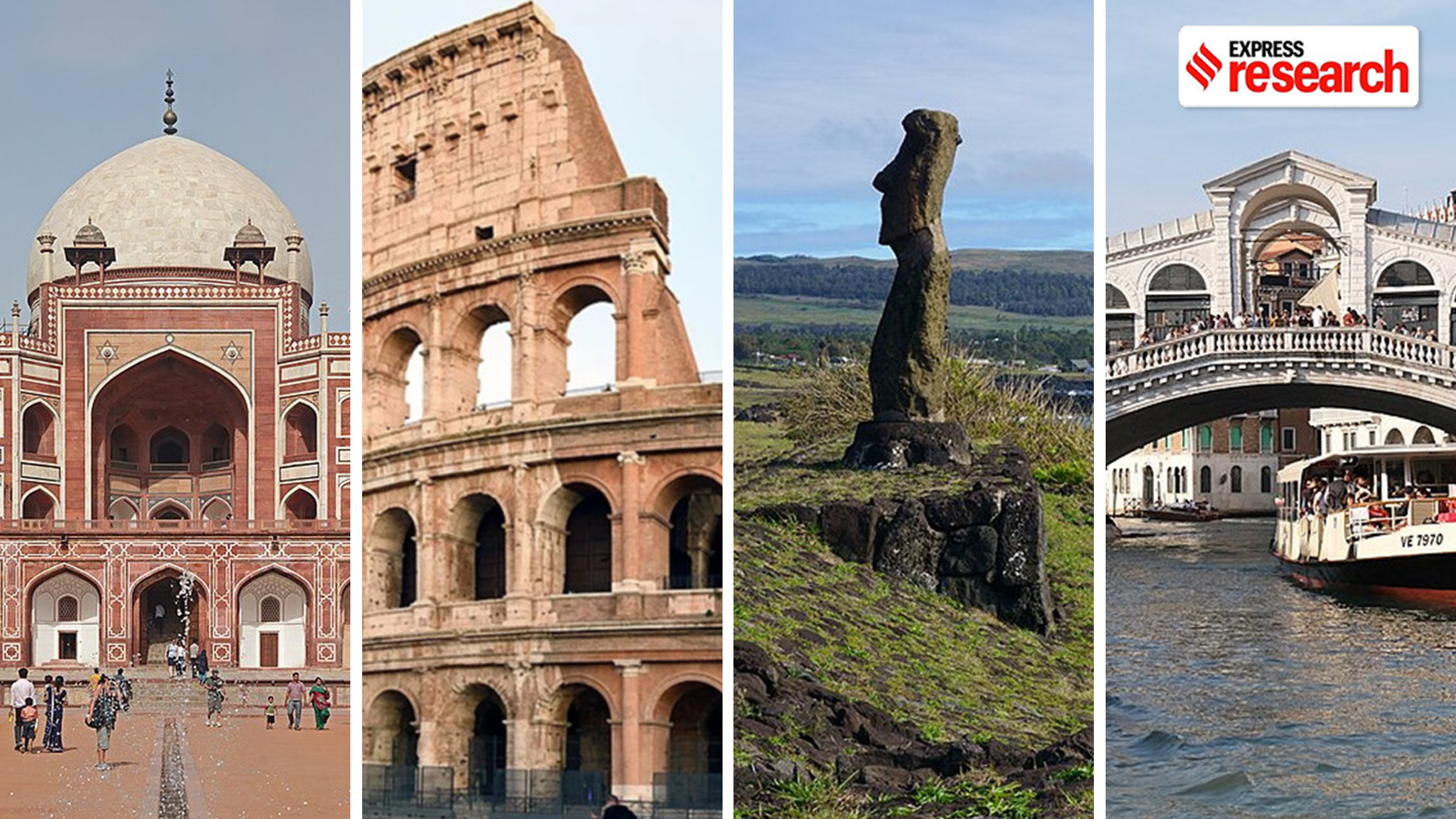
Some of the world's most famous old monuments are in trouble.
Dirty air is hurting them, and so is climate change.
In Delhi, pollution is making dark crusts on the stone of Humayun's Tomb.
In Athens, Greece, the ancient Acropolis is being damaged by air pollution too.
The big Colosseum in Rome is wearing down from heat, car fumes, and too many visitors.
The city of Venice is slowly sinking while the sea is rising, so floods happen more often.
Italy built special flood gates, called MOSE, to try to protect Venice.
On Easter Island, waves from storms are threatening the big stone statues called moai.
Scientists say we need to watch these places carefully and protect them as the environment changes.

A 2026 study by researchers from IIT Kanpur and IIT Roorkee found air pollution is accelerating deterioration of Humayun's Tomb through pollutant-rich black crusts on its sandstone surfaces.
Sulphur dioxide from vehicle and industrial emissions reacts with marble to form gypsum, creating black crusts that accelerate surface erosion of the Acropolis of Athens' monuments.
The nearly 2,000-year-old Colosseum in Rome faces rising temperatures, vehicle emissions, urban pollution, and mass tourism that affect its travertine and tuff stone.
Venice is threatened by rising sea levels, frequent high-tide flooding, and subsidence of about 23 cm over the past century, prompting Italy's MOSE project of more than 75 mobile flood barriers.
Rising seas and stronger storm surges are destabilising the volcanic coastline and ahu platforms of Rapa Nui National Park in Chile, home to nearly 900 moai statues.
- Who
- Researchers from IIT Kanpur and IIT Roorkee conducted the Humayun's Tomb study; restoration efforts are led by Greece's Acropolis Restoration Service (YSMA) and Italy's Parco archeologico del Colosseo.
- What
- Air pollution and climate change are accelerating the deterioration of World Heritage Sites, including Humayun's Tomb, the Acropolis of Athens, the Colosseum, Venice, and Rapa Nui National Park.
- Where
- Delhi; Athens; Rome; Venice; and Rapa Nui (Easter Island), Chile.
- When
- The study was published in 2026; Acropolis restoration has been underway since 1975, and the Colosseum monitoring programme began in 2018.
- Why
- Pollutants such as sulphur dioxide corrode stone surfaces, while rising sea levels, floods, storm surges, and changing rainfall patterns damage historic structures.
Key facts
- Study
- An Analytical Approach to Characterize the Black Crust to Assess the Air Pollution Impact on Humayun's Tomb (2026)
- Journal
- International Journal of Architectural Heritage
- Acropolis restoration
- Ongoing since 1975, led by the Acropolis Restoration Service (YSMA)
- Colosseum monitoring
- SyPEAH digital platform, developed with the Italian Space Agency, launched in 2018
- Venice subsidence
- About 23 cm over the past century
- MOSE flood barriers
- More than 75 mobile barriers
- Rapa Nui moai statues
- Nearly 900 monumental statues and ceremonial ahu platforms
- UNESCO designation
- Acropolis of Athens and Venice (1987); Colosseum (1980)
Quotes
Carlo Campostrini et al.
Edited volume on Venice environmental challenges
“"Black crusts, mainly composed of gypsum with embedded soot and fly ash, form on the parts of monuments where rainwater cannot wash away the particles of pollutants deposited there."”
 indianexpress.com
“"Time may be running out for Venice."”
indianexpress.com
Sources
Related news

Delhi Master Plan Calls for Stronger Heritage Conservation
Supreme Court Rebukes MCD, ASI Over Delhi Heritage Neglect
Buckets placed at Ajanta Caves after rainwater seepage; paintings safe
Why Lascaux Cave, France's UNESCO Site, Remains Permanently Closed
Thousands of Coins Damage Ireland’s Giant’s Causeway
Centre Delists 18 Monuments From Protected Sites Since 2021
Possible ancient Roman firefighters' barracks found near Colosseum
Romanian Worker Dies After Medieval Tower Collapses in Rome

The Colosseum Hosts 'Curated Corridors' Luxury Event in Hyderabad