

1 week ago
Supreme Court Seeks Safeguards Against Private EPFO, ITR Data Misuse

The Supreme Court discussed how private companies may access sensitive government-held information.
The information included provident-fund and income-tax records.
Piyush Sharma said that entering his PAN and UAN details into a private verification system showed his employment history.
He said the system did not ask for an OTP or clear permission.
He did not accuse government agencies of leaking the data.
Instead, he warned that private companies might use government-collected information without enough protection.
The court called this private access “worrisome.”
It said the government should consider safeguards with help from experts, while declining to hear the PIL because the matter mainly involves policy.

The Supreme Court called private access to EPFO and ITR data “worrisome.”
The bench asked the Centre to consider safeguards against misuse by private enterprises.
The court declined to entertain Piyush Sharma’s PIL, saying the issue falls within the policy domain.
Sharma said entering PAN and UAN details revealed his complete employment history without an OTP or explicit consent.
The PIL cited risks involving employment verification, moonlighting detection, dual-employment screening, labour-market profiling and employment decisions.
- Who
- The Supreme Court bench led by Chief Justice Surya Kant, petitioner Piyush Sharma and the Centre.
- What
- The court raised concerns about private access to EPFO and ITR data and asked the Centre to consider safeguards against misuse.
- Where
- New Delhi.
- When
- Monday, August 25.
- Why
- The petitioner alleged that private verification systems could retrieve employment information using PAN and UAN details without an OTP, explicit consent or visible authorisation.
Petitioner’s concerns
Court and policy response
Access to sensitive records
Petitioner’s concerns
Piyush Sharma said a private verification workflow retrieved his complete employment history from PAN and UAN details without an OTP, explicit consent or visible authorisation.
Court and policy response
The court acknowledged that private access to sovereign data and personal information was worrisome, but said the issue primarily falls within the policy domain.
Commercial exploitation risks
Petitioner’s concerns
The PIL warned that private employment-verification systems could use statutory employment and financial records for screening, profiling and employment-related decisions.
Court and policy response
The court suggested that the Centre develop safeguards and take necessary measures to prevent private enterprises from misusing individual data.
Source of the data concern
Petitioner’s concerns
The petitioner focused on the possibility that information submitted to government authorities could later be accessed by private entities without adequate safeguards.
Court and policy response
The petition did not allege a government data leak, and the court made no finding that government agencies had leaked information.
Key facts
- Court bench
- Chief Justice Surya Kant and Justices Joymalya Bagchi and V. Mohana.
- Petitioner
- Piyush Sharma filed the PIL.
- Data involved
- Employees’ provident-fund and income-tax records.
- Identifiers mentioned
- Permanent Account Number (PAN) and Universal Account Number (UAN).
- Court’s assessment
- Private access to sovereign data and personal information was described as “worrisome.”
- Proposed response
- The Centre was asked to consider an effective mechanism and necessary safeguards with assistance from domain experts.
- Potential uses cited
- Employment verification, moonlighting detection, dual-employment screening, labour-market profiling and employment decisions.
Quotes
Piyush Sharma
Petitioner who filed the public interest litigation concerning private access to statutory employment and financial data
“Despite the statutory architecture governing EPFO and I-T data, there appears to be an emerging and concerning pattern wherein private employment verification ecosystems rely upon data corresponding to statutory employment and financial records for purposes such as employment verification, moonlighting detection, dual employment screening, labour market profiling and employment decision-making.”
 telegraphindia.com
 theprint.in
 deccanchronicle.com
Sources
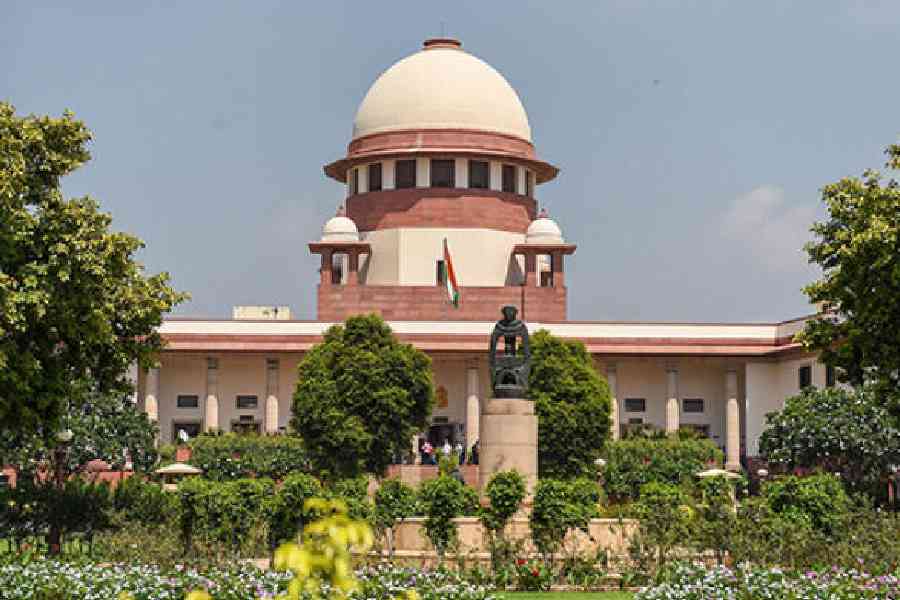
Supreme Court asks Centre to devise safeguards to prevent misuse of EPFO, ITR data - Telegraph India

SC asks Centre to consider devising safeguards to ensure no misuse of EPFO, ITR data

SC Asks Centre to Consider Devising Safeguards to Ensure No Misuse of EPFO, ITR Data
Supreme Court Flags Private Access To EPFO, ITR Data, Asks Centre To Strengthen Safeguards
Related news
Supreme Court Orders Probe Into Alleged ITR, EPFO Data Misuse

EPFO warns members against fake weblinks and phishing scams

Census 2027 privacy concerns over Aadhaar, mobile data collection
TCS Denies Customer Data Breach After Employee Data Leak Claims

Samagra Portal Breach Puts Madhya Pradesh Citizens’ Data At Risk
Census 2027 Privacy Concerns Threaten Accuracy and Public Trust

EPFO Identifies PF Trusts Eligible for Amnesty Scheme 2026
EPFO Opens One-Time Amnesty for PF Trust Exemption Irregularities

EPS Pension 2026: Final Five Years Can Shape Retirement Benefits

EPFO Credits August Pensions Early to Kerala Beneficiaries

How to Keep Retirement Income Steady While Investing
