

2 days ago
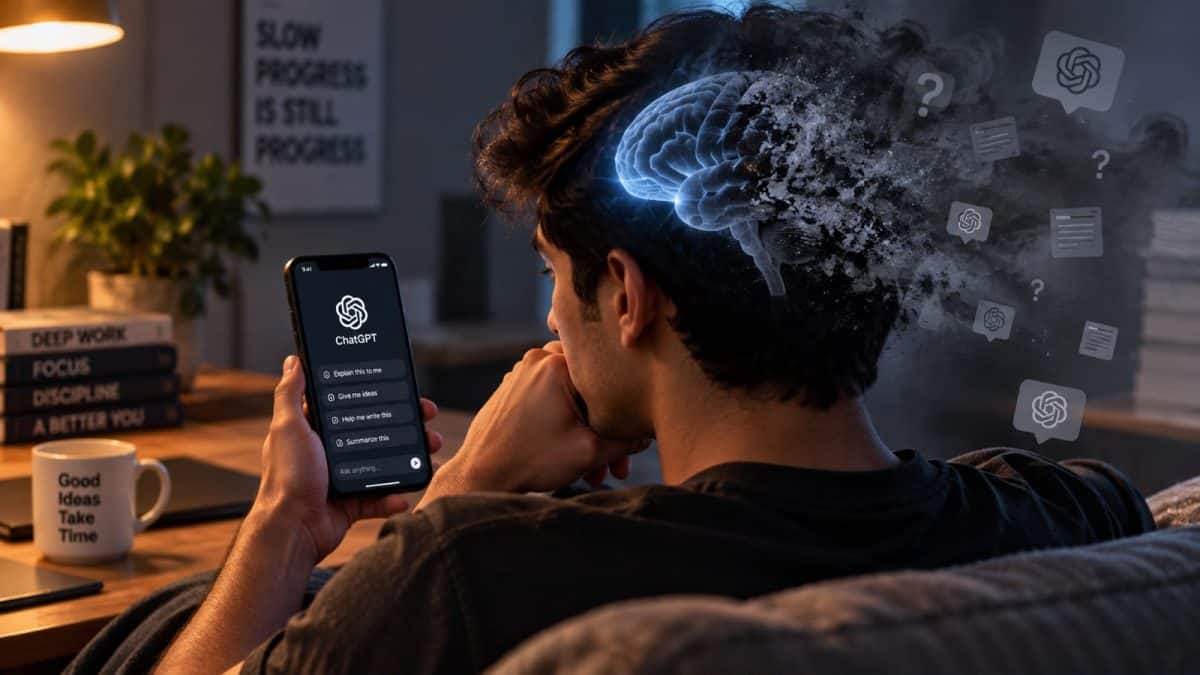
Why Frictionless AI May Weaken Independent Thinking Habits

Brains learn when they have to work through challenges.
These challenges are like exercise for thinking.
But people also naturally like shortcuts.
Many online tools are designed to make tasks feel effortless.
Because of this, people may stop thinking carefully about some problems.
For example, they may accept the first answer provided by AI instead of looking further.
Over time, this could make independent thinking feel less familiar.
The same concern may apply to work, relationships, and understanding emotions.

The human brain needs challenges, or “friction,” to learn and build skills.
Brains also seek shortcuts that make tasks easier to complete.
Frictionless online experiences can reduce the need for deliberate thinking.
People may increasingly accept AI’s first answer instead of checking or exploring information.
This could weaken people’s habit and ability to think independently in work, relationships, and emotional processing.
- Who
- People using online tools and AI; Rai is quoted discussing the issue.
- What
- The article argues that overly convenient technology may reduce mental effort and weaken independent thinking.
- Where
- The frictionless online world, including apps and Wikipedia searches.
- When
- Why
- The human brain needs challenges to learn, while convenient tools encourage shortcuts and immediate answers.
Key facts
- Core idea
- Mental friction helps people learn and develop skills.
- Competing tendency
- The brain is wired to seek shortcuts.
- Technology concern
- Frictionless online tools may reduce the need to think deeply.
- Example given
- People may accept the first information AI provides when searching.
- Potential effect
- People may lose the habit and ability to think for themselves.
- Areas affected
- Work, relationships, and processing personal emotions.
Quotes
Rai
Commentator quoted discussing the effects of frictionless digital technology
“How many people now open Wikipedia? They just make do with the first information that AI gives when searching for something. It’s not that we have suddenly stopped thinking; we are slowly losing the habit and, in the process, the ability to think for ourselves—whether it’s related to work, relationships or just processing our own emotions.”
 livemint.com
“In today’s frictionless online world, we move from one app to another without blinking an eye. The whole thing has been designed in a way that we don’t even have to use our brains.”
livemint.com
Sources
Related news
MIT Study Links ChatGPT Essay Use to Cognitive Debt

Why All-Day AI Use Can Cause Mental Exhaustion
Editorial Warns AI Convenience Could Erode Human Reasoning

Nithin Kamath Raises Concerns About AI and Student Skills

Rajasthan HC Seeks Foolproof Exams, Warns Against AI Reliance
AI Crawling Threatens Web Traffic and Information Quality
WikiConference India 2026 In Kochi Explores Inclusive Tech

AI Crawlers Threaten Web Quality as Traffic and Trust Collapse

Pug Jinny Lu Wins World's Ugliest Dog 2026 Contest
