

1 month ago
India Opposes WTO Plurilateral Agreements Amid Global Pressure
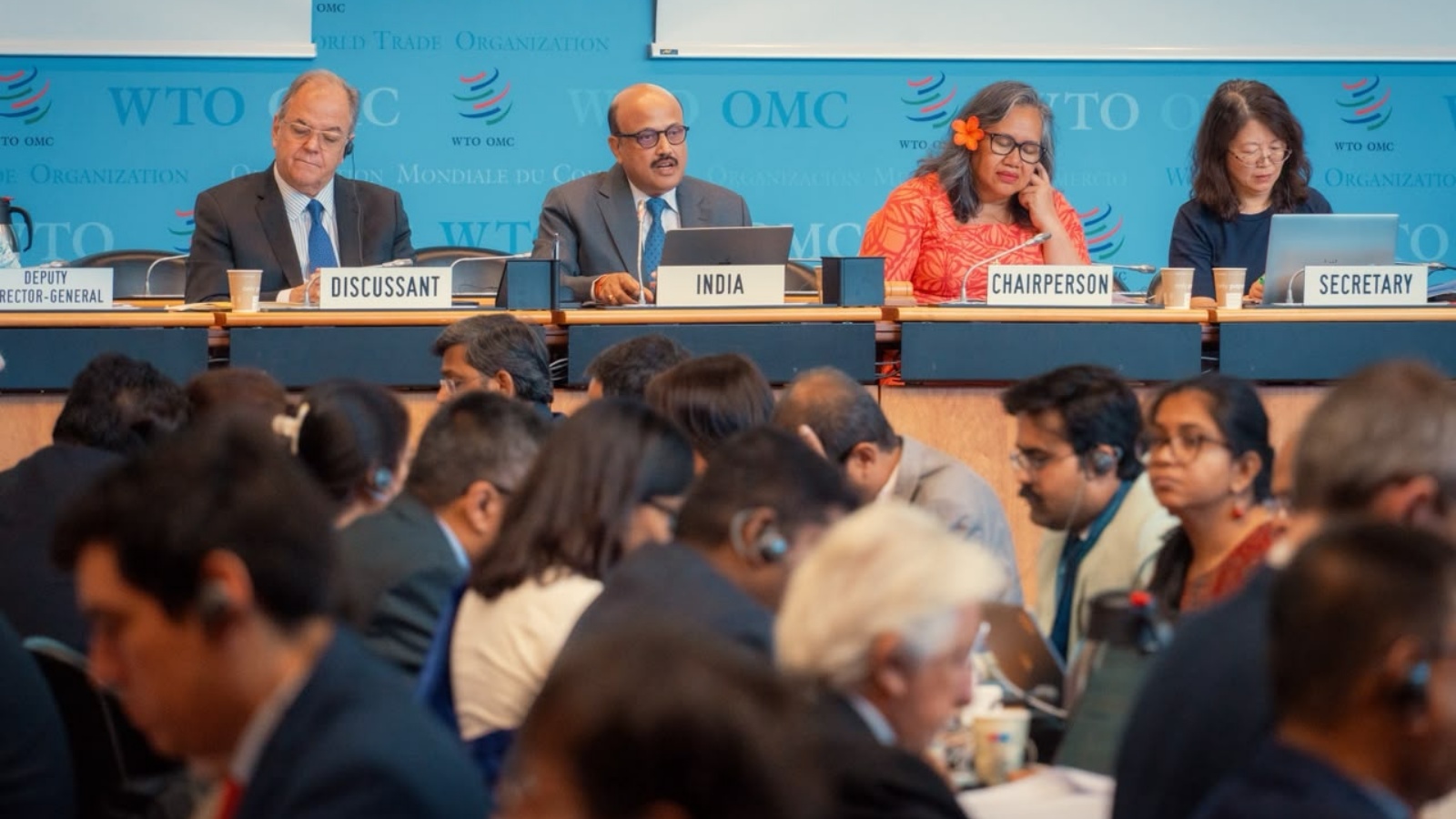
India is one of the few large countries opposing plurilateral agreements on e-commerce and investments within the World Trade Organization (WTO).
These agreements are supported by major trading powers like the US, EU, and China, who see them as a way to modernize the WTO.
India, however, argues that these agreements violate the WTO's core principle of consensus-based decision-making.
During a recent trade policy review, countries like the EU, Canada, UK, Cambodia, and Gambia questioned India's approach, alleging that it is holding up the WTO reform process.
India maintains that plurilateral agreements pose systemic risks and are not core trade issues.
Despite global pressure, India remains firm in its opposition, citing the need to uphold the foundational principles of the WTO.

India opposes plurilateral agreements on e-commerce and investments within the WTO.
Major trading powers like the US, EU, and China support plurilateral agreements for WTO modernization.
Countries like the EU, Canada, UK, Cambodia, and Gambia question India's approach, alleging it is holding up WTO reforms.
India argues that plurilateral agreements violate the WTO's consensus-based decision-making principle.
India remains the primary holdout against the Investment Facilitation for Development (IFD) agreement, supported by 129 WTO members.
- Who
- India and major WTO members including the US, EU, and China
- What
- Disagreement over plurilateral agreements on e-commerce and investments
- Where
- World Trade Organization (WTO)
- When
- During India's trade policy review and WTO reform discussions
- Why
- India opposes plurilateral agreements, citing violation of core WTO principles, while other members support them for modernization
India's Opposition to Plurilateral Agreements
Global Support for Plurilateral Agreements
Core WTO Principle
India's Opposition to Plurilateral Agreements
India argues that plurilateral agreements violate the WTO's consensus-based decision-making principle.
Global Support for Plurilateral Agreements
Major trading powers like the US, EU, and China support plurilateral negotiations, seeing them as a way to modernize the WTO.
Investment Facilitation for Development (IFD)
India's Opposition to Plurilateral Agreements
India opposes the IFD agreement, citing systemic risks and stating that investment is not a core trade issue.
Global Support for Plurilateral Agreements
129 WTO members support the IFD agreement, and countries like Gambia and Costa Rica urge India to withdraw its opposition.
E-Commerce Agreement
India's Opposition to Plurilateral Agreements
India challenges the legal basis of interim arrangements for the E-Commerce Agreement, questioning the role of the WTO DG as the depository.
Global Support for Plurilateral Agreements
66 WTO members, covering 70% of global trade, have adopted interim arrangements for the E-Commerce Agreement.
Key facts
- WTO Members Supporting IFD
- 129
- WTO Members Supporting E-Commerce Agreement
- 66
- India's Trade Policy Review Frequency
- Once every five years
- India's Stand on Plurilateral Agreements
- Opposes, citing violation of core WTO principles
- Major Trading Powers Supporting Plurilateral Agreements
- US, EU, China
- Countries Questioning India's Approach
- EU, Canada, UK, Cambodia, Gambia
- India's Commerce Secretary
- Rajesh Agrawal
- WTO DG
- Ngozi Okonjo-Iweala
Quotes
EU representative
EU diplomatic representative
“The EU encourages India to rethink its approach to plurilateral agreements and to consider them as an opportunity to shape the agenda of the WTO and to modernise the organisation rather than as a threat to multilateralism – which they are not, if we build them properly”
 indianexpress.com
Sources
Related news

St Peter's Engineering College launches Robotics Centre of Excellence

Kshatriya College Placement Drive Selects 51 Students for Jobs

Four KIIT Students Win Medals for India at Glasgow Games

KITS Warangal, CyberWallNet Partner to Strengthen Cybersecurity Talent

Ten Kautilya Students Secure Top Management Admissions Through IPMAT

144 Refugees Dead or Missing in Mauritania Maritime Incidents

Rohingya Await UN Court Ruling on Myanmar Genocide Case
Spain opposes EU asylum centres outside bloc
Myanmar Denies Rohingya Genocide in ICJ Hearing