11 months ago
7,000-Year-Old Sahara Mummies Reveal Unknown Ancestry
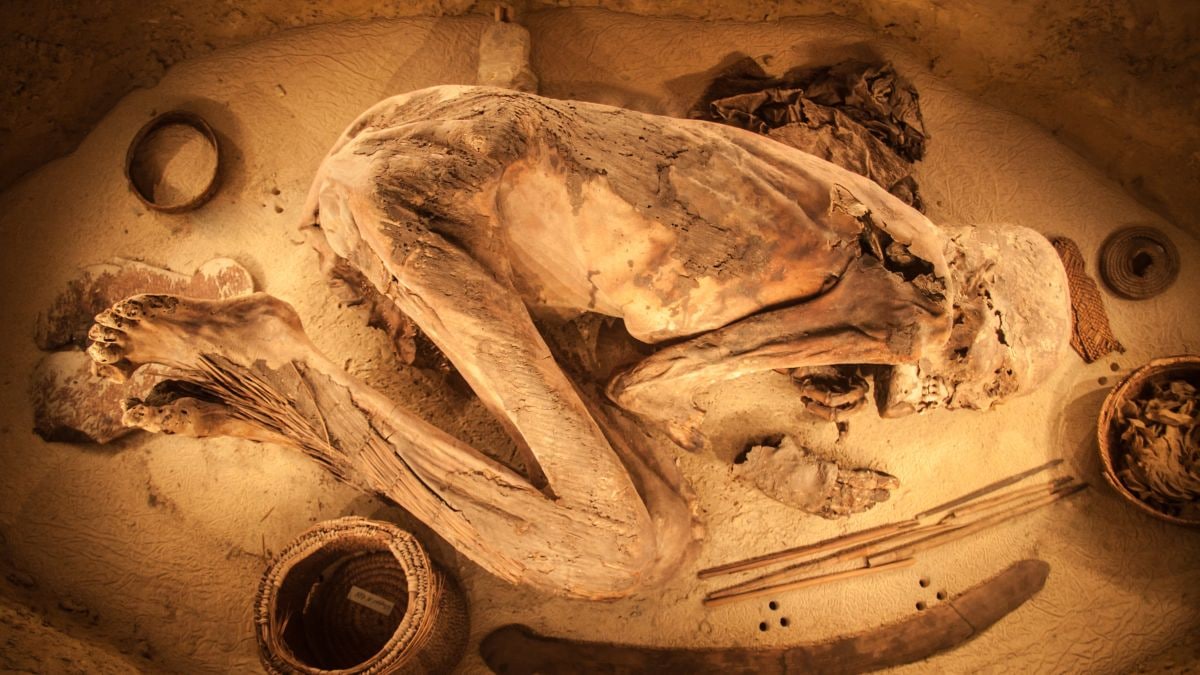
Scientists found two mummies from 7,000 years ago in the Sahara desert, when it was green and full of life.
Surprisingly, these mummies didn't have the same DNA as people from sub-Saharan Africa today.
Their DNA was closer to ancient people from Morocco.
These findings suggest that the Sahara was home to a group of people with a previously unknown background.
This group lived during a time when the Sahara was lush and green, unlike the desert we know now.
The discovery gives new insights into how people lived in the region thousands of years ago.

Scientists discovered 7,000-year-old mummies in the Sahara.
The mummies' DNA doesn't match modern humans.
The mummies' ancestry is linked to a North African genetic lineage.
They shared genetic ties with 15,000-year-old foragers from Morocco.
The discovery sheds light on the diverse populations of the Green Sahara.
- Who
- Scientists from the Max Planck Institute
- What
- Discovered mummies with unique ancestry in the Sahara
- Where
- Sahara Desert (present-day Libya)
- When
- 7,000 years ago
- Why
- To understand ancient human populations
Key facts
- Discovery
- Two 7,000-year-old mummies
- Location
- Takarkori rock shelter, Libya
- Ancestry
- Previously unknown North African lineage
- Period
- African Humid Period (Green Sahara)
- Genetic Ties
- Closely related to 15,000-year-old Taforalt foragers
- Study Published In
- Nature
Quotes
Scientists
Scientists from the Max Planck Institute for Evolutionary Anthropology
“The majority of Takarkori individuals’ ancestry stems from a previously unknown North African genetic lineage that diverged from sub-Saharan African lineages around the same time as present-day humans outside Africa and remained isolated throughout most of its existence”
 financialexpress.com