

7 months ago
ISI Council Divided Over Governance Overhaul Bill
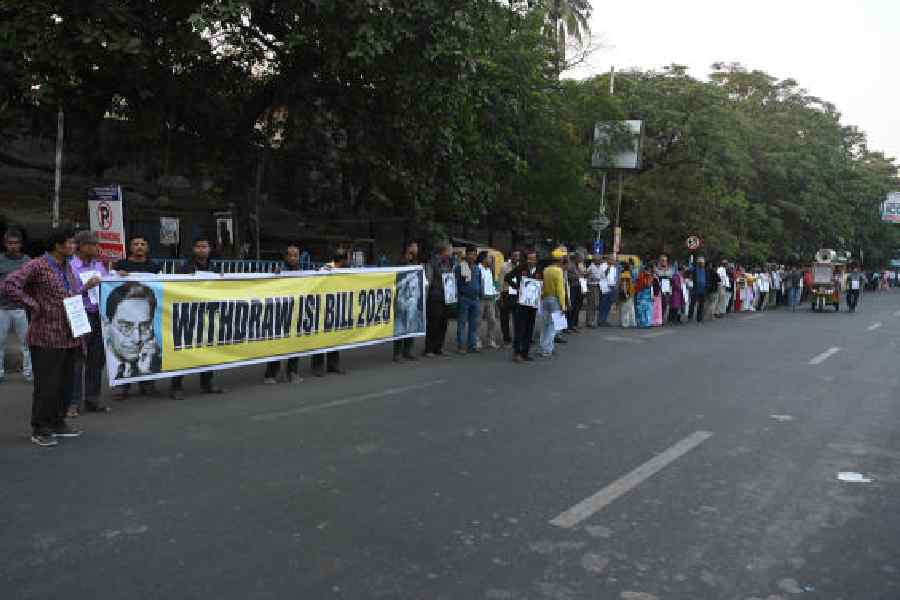
The Indian Statistical Institute (ISI) is having a big discussion about a new law that the government wants to pass.
This law would change how ISI is run.
Some people from ISI in Calcutta don't like the idea because they think the current way of running the institute is good and works well, just like in famous places like Oxford and Cambridge.
They also say that the government hasn't given a good reason for the change.
But other people from different parts of ISI think the new law could make decisions easier and faster.
The government says the current system is too slow and hard to change.
The meeting was held on Saturday, and not everyone agrees on what should happen.

ISI Calcutta representatives oppose a proposed Bill to overhaul the institute's governance structure, while other ISI centres support the changes.
The Bill aims to replace the current society-based structure with a board of governors proposed by the Narendra Modi government.
Opponents argue that the current structure is effective and internationally recognized, citing examples like the Max Planck Institute and Oxford and Cambridge.
Supporters of the Bill argue that the current council is not a statutory body and that a board of governors would streamline decision-making.
The ministry claims the current governance model has 'limited potential for institutional reforms and growth' and that the large council size hinders decision-making.
- Who
- Indian Statistical Institute (ISI) council members, Narendra Modi government, Union Ministry of Statistics and Programme Implementation
- What
- A proposed Bill to overhaul ISI's governance structure
- Where
- The meeting was held at ISI, with some participants attending online
- When
- The council met on Saturday to discuss the Bill (specific date not mentioned)
- Why
- The government aims to replace the current society-based structure with a board of governors for more efficient decision-making, while opponents argue the current structure is effective and internationally recognized
Key facts
- Institute
- Indian Statistical Institute (ISI)
- Bill Proposed By
- Narendra Modi government
- Current Governance Structure
- Society-based, registered under West Bengal Society’s Registration Act
- Proposed Governance Structure
- Board of Governors with members handpicked by the ministry
- Meeting Date
- Saturday (specific date not mentioned)
- Ministry Involved
- Union Ministry of Statistics and Programme Implementation
- Key Opponents
- ISI Calcutta representatives
- Key Supporters
- Representatives from other ISI centres
Quotes
A council member
A member of the ISI council
“We said that such a society-based structure runs at the Max Planck Institute in Germany, which has produced Nobel Laureates. The same structure prevails at Oxford and Cambridge. So we asked the representatives from the Union ministry of statistics and programme implementation about the rationale for disturbing our structure.”
 telegraphindia.com
“It is in this context that they justified the creation of a board of governors, which would be a statutory body.”
telegraphindia.com
An ISI Calcutta professor
A professor at the Indian Statistical Institute, Calcutta
“First, they didn’t bother to consult the council or explain what necessitated a Bill that vests unbridled powers in a board of governors loaded with members handpicked by the ministry. The council is being abandoned. The academic council is being weakened, with the board armed with powers to introduce or discontinue courses.”
telegraphindia.com
“If internationally acclaimed institutes can run with the society-based structure, what is the justification for scrapping it and replacing it with a body corporate model?”
telegraphindia.com

The ministry
The Union ministry of statistics and programme implementation
“The current governance model had limited potential for institutional reforms and growth.”
telegraphindia.com
“The size and composition of the existing ISI council impede effective decision-making. The large council size, excessive internal representation and large number of elected members hinders decision-making, as even a small group of dissenters can effectively block important decisions.”
telegraphindia.com
Sources
Related news

NSV Productions Grandly Launches Telugu Film Village Stars

Odisha Medical Exam Paper Leak Sparks Congress Critique of Modi

Ceuta Migration Crisis Warns India of Border Challenges

Tharoor Criticizes Modi Govt Over NEET Protest Handling
Protesters Return to Jantar Mantar Despite Injuries
