1 year ago
Zimbabwe Uses GPS to Track Elephants to Reduce Conflicts
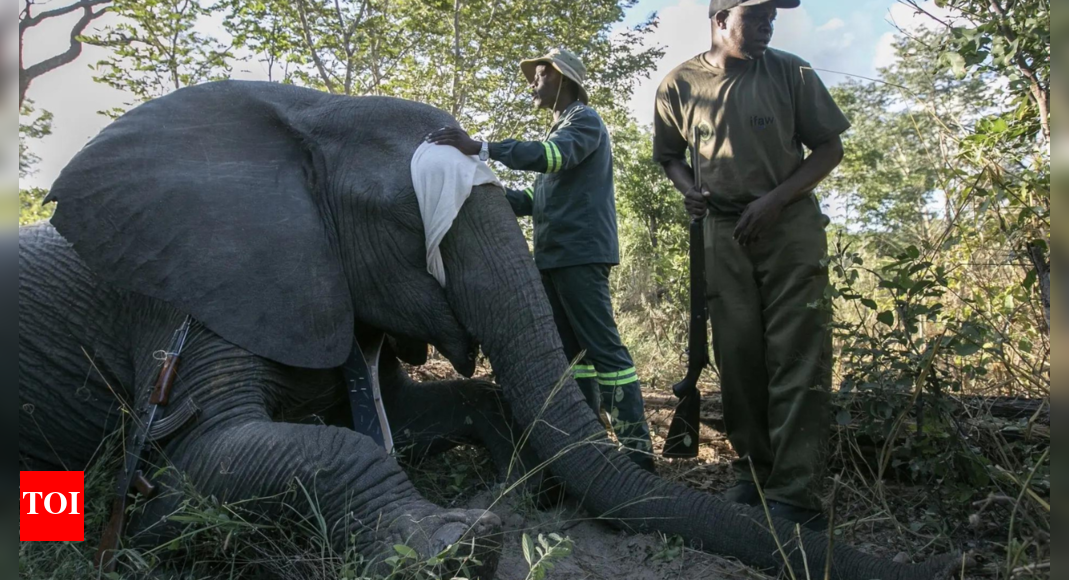
In Zimbabwe, where there are lots of elephants, people are trying to live safely alongside them.
They're using GPS collars on some elephants to track where they go.
When elephants get close to villages, locals are warned using WhatsApp and by word of mouth.
The tracking helps rangers react faster and give help when needed.
It also helps the authorities understand how elephants and people interact.
Some villagers still want to cull the elephants because they eat crops and damage property.
The project is helping, but there's still a big problem because there are too many elephants for the land.

GPS collars are used to track elephants near Hwange National Park in Zimbabwe.
Local volunteers warn villagers of approaching elephants via WhatsApp and word of mouth.
The tracking system helps rangers to react more quickly to potential conflicts.
Villagers have expressed frustration due to crop damage and infrastructure damage caused by elephants.
The elephant population in Zimbabwe is estimated at around 100,000.
- Who
- The Zimbabwe Parks and Wildlife Management Authority and the International Fund for Animal Welfare are working together with local volunteers and villagers.
- What
- A new system uses GPS collars to track elephants and warn villagers of potential conflicts, aiming to protect both people and wildlife.
- Where
- Near Hwange National Park in Zimbabwe.
- When
- The tracking system was launched last year.
- Why
- To prevent dangerous encounters between people and elephants, which are more frequent due to climate change, and to monitor the interactions between wildlife and humans.
Key facts
- Estimated Elephant Population in Zimbabwe
- Around 100,000
- Number of Elephants Collared
- 16
- Approximate value of one elephant or trophy hunting revenue
- Between $10,000 and $80,000
- Zimbabwe's hunting quota
- 500 per year
- Battery life of the GPS collars
- Between 2 and 4 years