8 months ago
India's Air Crisis: Inhalable Microplastics Discovered
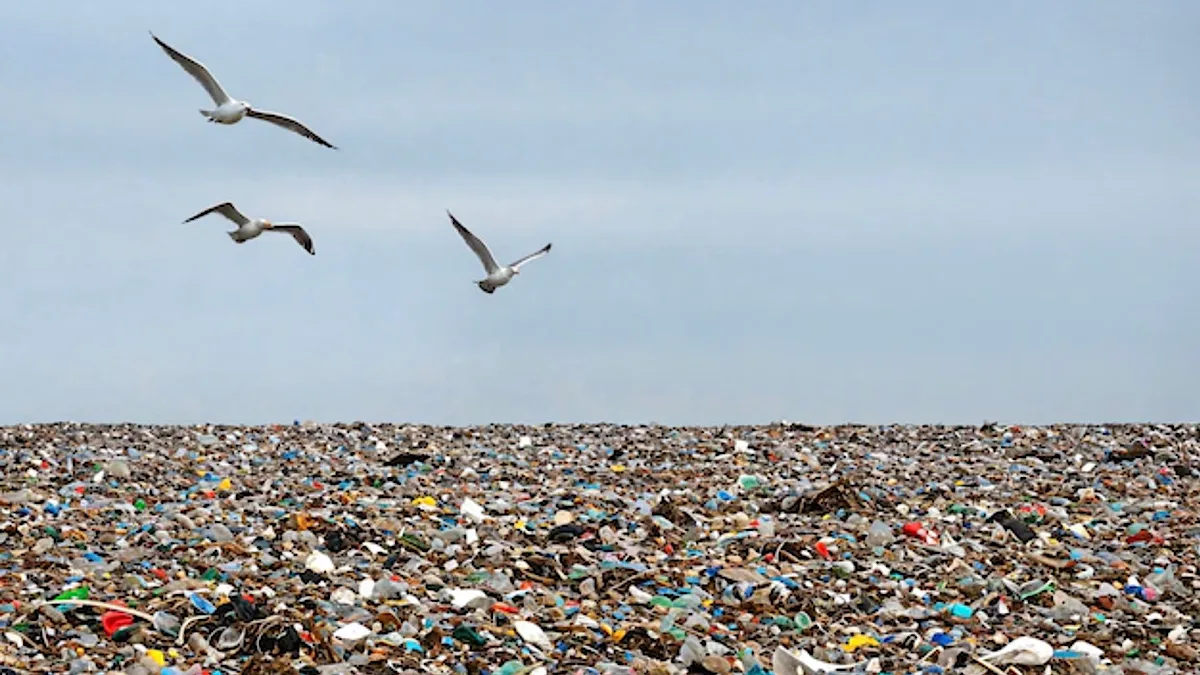
Scientists in India have found tiny plastic pieces, called microplastics, in the air we breathe.
These microplastics are so small that they can get into our lungs and even our blood.
The study looked at four big cities: Delhi, Kolkata, Mumbai, and Chennai.
Kolkata had the most microplastics, followed by Delhi.
These tiny plastics can carry harmful things like bacteria and chemicals.
Breathing them in can make us sick.
The scientists say we should use less plastic and choose cotton clothes instead of synthetic ones to help reduce these tiny plastic pieces in the air.

A new study reveals inhalable microplastics (iMPs) in urban air across Delhi, Kolkata, Mumbai, and Chennai.
Kolkata has the highest average concentration of iMPs at 14.23 µg/m³, followed by Delhi at 14.18 µg/m³.
Microplastics account for up to 5% of PM 10 and PM 2.5 in metropolitan markets, sourced from daily life items like clothing and packaging.
iMPs can carry pathogens and toxic chemicals, posing serious health risks including respiratory issues, endocrine disruption, and potential disease transmission.
Researchers urge policymakers to recognize iMPs as a new category of respirable pollutant and recommend lifestyle changes to reduce exposure.
- Who
- Researchers from IISc Kolkata, IMSc Chennai, and AIIMS Kalyani
- What
- Discovered inhalable microplastics (iMPs) in urban air
- Where
- Delhi, Kolkata, Mumbai, Chennai
- When
- Recently published study
- Why
- To understand the impact of microplastics on air quality and health
Key facts
- Study Title
- The Dawn of a New Air Pollutant: Inhalable Microplastics as Emerging Vectors of Hazardous Contaminants and Their Implications for Human Health
- Journal
- Environment International
- Cities Studied
- Delhi, Kolkata, Mumbai, Chennai
- Highest iMP Concentration
- Kolkata (14.23 µg/m³)
- Lowest iMP Concentration
- Mumbai (2.65 µg/m³)
- Lifetime Inhalation Estimate
- 2.9 grams of microplastics
- Percentage of PM 10 and PM 2.5
- Up to 5%
- Detected Toxic Chemicals
- Diethyl phthalate (DEP), Lead
Quotes
Prof. Drabha
Professor and researcher involved in the study
“Winter months and evening hours showed the highest iMP levels, times when people throng to markets wearing synthetic clothing and the air is stagnant due to temperature inversion.”
 thestatesman.com
“Delhi and Kolkata are geographically landlocked. Kolkata, as a city, is far from the sea. This geographical difference, along with local waste management practices and emissions, likely contributes to the higher concentrations in the landlocked cities. In these areas, pollutants struggle to disperse.”
thestatesman.com
Prof. Gopala Krishna Darbha
Corresponding author of the study
“We have found that these plastics can act as vectors to transport pathogens that may affect the immune system. These plastics can be potential carriers of infection. This amplifies the risk of disease transmission in densely populated urban environments.”
thestatesman.com