7 months ago
Australian Scholar Bridges Worlds Through Bengali Literature
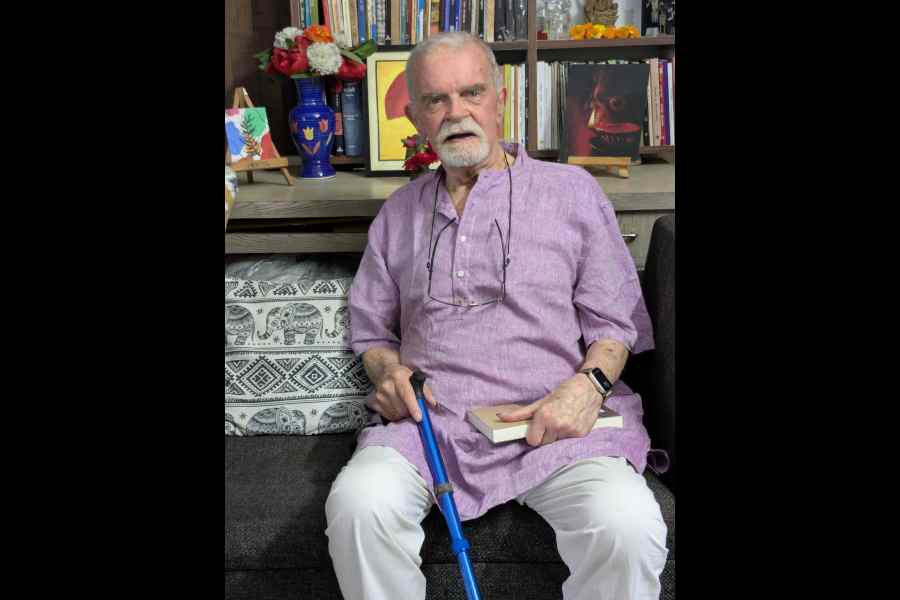
John William Hood is an Australian scholar who loves Bengali literature.
He has spent many years studying and translating important Bengali books.
He even wrote books about famous Bengali filmmakers like Satyajit Ray and Mrinal Sen.
Recently, he was honored in Calcutta for his work.
He has translated a very long book called Keyapatar Nouko, which is even longer than Tolstoy's War and Peace.
Hood finds Bengali literature and films very special and has dedicated his life to sharing them with the world.

John William Hood, an 81-year-old Australian scholar, is renowned for his English translation of Niharranjan Ray’s Bangalir Itihas, titled History of the Bengali People.
Hood has a deep love for Bengali literature and films, and has translated works by various Bengali authors and filmmakers.
He recently attended a gathering in Calcutta where he was honored for his contributions to Bengali literature.
Hood has translated a long novel, Keyapatar Nouko by Prafulla Roy, which is longer than Tolstoy’s War and Peace but slimmer than Seth’s A Suitable Boy.
He has also written books about the films of Satyajit Ray and Mrinal Sen, showcasing his extensive research in Bengali cinema.
- Who
- John William Hood, an Australian scholar and translator
- What
- A gathering in Calcutta celebrating Hood's contributions to Bengali literature
- Where
- Calcutta, India
- When
- Recent event, specific date not mentioned
- Why
- To honor Hood's work in translating and promoting Bengali literature
Key facts
- Name
- John William Hood
- Age
- 81
- Occupation
- Linguist and Translator
- Notable Work
- History of the Bengali People (Translation of Niharranjan Ray’s Bangalir Itihas)
- Education
- Major in Bengali Literature, University of Melbourne
- Residence
- Australia
- Recent Translation
- Keyapatar Nouko by Prafulla Roy
Quotes
John William Hood
An 81-year-old Australian linguist and translator of Bengali literature.
“I am more comfortable in written and literary Bengali. Since I don’t have the habit of speaking it regularly in Australia, forgive me if I speak in English.”
 telegraphindia.com
“What surprised me was that it sold most in Calcutta and Bengal. I wonder why Bengalis would buy my book when they have access to the original one.”
telegraphindia.com
Sources
Related news
India Replaces Sri Lanka as 2027 Women’s Champions Trophy Host

Mitsubishi Revives Pajero With 201PS Fifth-Generation SUV

IIM-Born CEO Says Australia’s Everyday Life Runs on Trust

UN Report Says 1.5°C Overshoot, Return Remains Possible

Uday Kotak Warns Global Bond Markets Face Roller-Coaster Volatility