9 months ago
Stone Quarries Boom in Western Ghats After Sand Mining Ban
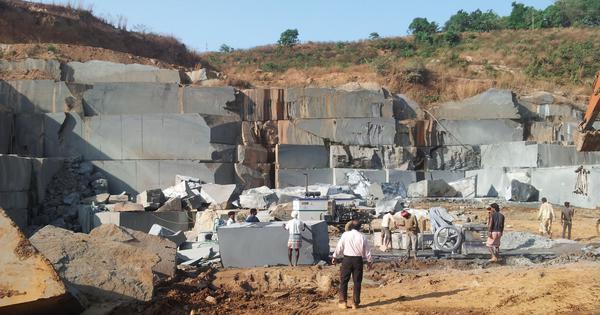
In Kerala, India, a ban on river sand mining to protect the environment has led to a big increase in stone quarries in the Western Ghats.
The ban was put in place to stop the harmful effects of sand mining, like lowering groundwater levels and disrupting streams.
But instead of using river sand, people started using manufactured sand (M-sand) made from crushing rocks.
This has led to more quarrying in the Western Ghats, which is a very important and biodiverse area.
The study found that many quarries have grown a lot, especially near protected areas.
This growth is causing problems like loud noises, dust, and vibrations that harm wildlife and people living nearby.
Experts say that the rules for quarrying need to be stricter, especially in sensitive areas, to protect the environment.

The ban on river sand mining in Kerala led to a boom in stone quarrying in the Western Ghats for manufactured sand (M-sand).
A study found 355 operational quarries, with 72 near protected areas, expanding significantly from 2011 to 2021.
Quarrying activities produce loud noises, dust, and vibrations, harming wildlife and local communities.
Experts call for stricter regulations and better enforcement to protect ecologically sensitive zones.
Alternatives to sand, like offshore sand deposits and industrial by-products, are suggested to reduce quarrying.
- Who
- Researchers from the National Institute of Technology, Kozhikode, and local residents near protected areas
- What
- A study on the impact of stone quarrying in the Western Ghats after the ban on river sand mining
- Where
- Western Ghats, Kerala, India
- When
- The study analyzed data from 2011 to 2021, with significant expansion noted in 2016
- Why
- The ban on river sand mining led to an increase in stone quarrying for manufactured sand (M-sand) used in construction
Key facts
- Location
- Western Ghats, Kerala, India
- Study Conducted By
- National Institute of Technology, Kozhikode
- Number of Operational Quarries
- 355
- Quarries in Protected Areas Buffer Zone
- 72
- Expansion Period
- 2011-2021
- Noise Levels During Blasting
- 98 dB at 50 m, 70 dB Leq at 50 m
- Total Expansion of Quarries
- 250 hectares
- Year of Significant Expansion
- 2016
Quotes
George K Varghese
An associate professor in the NIT department of civil engineering and one of the authors of the study.
“Using Google Earth tools and GIS, we analysed the expansion in the area of these quarries for 10 years, from 2011 to 2021. We noticed a more-than-normal increase in the year 2016”
 scroll.in
“The majority considered stone quarrying as the most important threat”
scroll.in
The Extractive Industries and Society
A journal that published the study on the impact of river sand mining ban and the subsequent boom in stone quarrying.
“This is especially true when the quarries supplying stones for the manufacture of artificial sand are located near ecologically sensitive areas”
scroll.in

Madhav Gadgil
An eminent ecologist who has studied the Western Ghats for decades.
“We need the rule of law”
scroll.in
Raghunathan Pillai
A former director of the Geological Survey of India (GSI).
“Use of stones for basement construction is minimal now with the practice of making pillars even for small houses; but sand is an essential material for construction. Rather than depending too much on M-sand, river sand can be brought from neighbouring states, and shipped from Gujarat. Another option is recovery of sand resources off Kerala coast after clearing environmental concerns. Use of suitable boards and wood in construction also can reduce consumption of sand”
scroll.in