1 hr ago
AI in Courtrooms: Balancing Efficiency With Judicial Safeguards
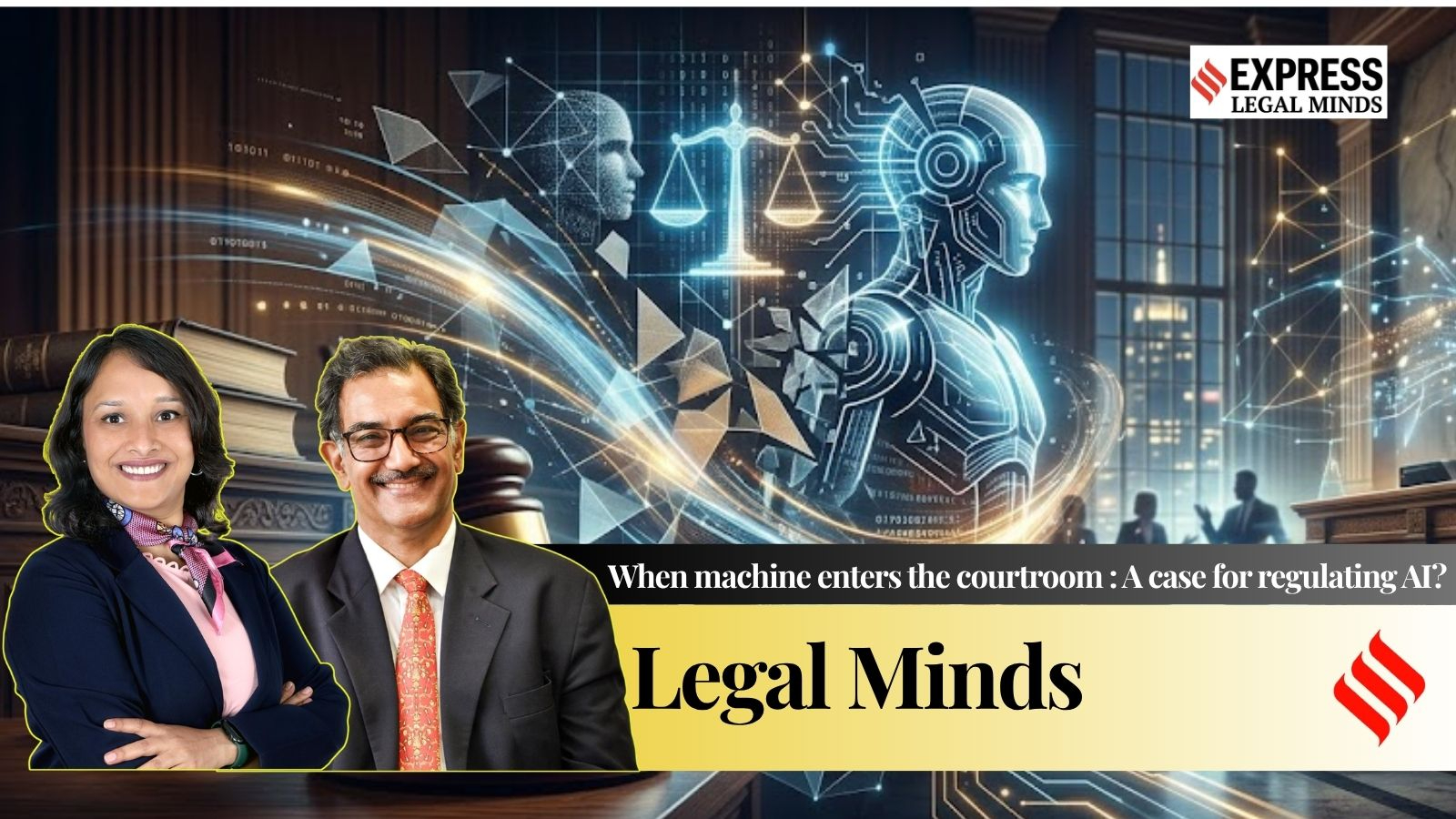
Artificial intelligence can help people in courts with tasks like searching, writing, and organizing information.
This may save time and help courts handle many cases.
But AI can also make mistakes or treat people unfairly because of the information it learned from.
It may even invent legal cases that sound real.
The authors say people must check AI’s work, especially when someone’s rights are at stake.
India’s Supreme Court has proposed rules that would keep important decisions in human hands.
The authors also want lawyers and courts to be trained and held responsible for how they use AI.
Their main message is that AI can assist courts, but it should not replace human judgment.

AI is already used or being tested for legal research, drafting, case management, transcription, and other assistive court tasks.
Examples cited include faster case management in Hangzhou, Estonia’s automated transcription and redaction system, and AI trials in Indian district courts.
The authors warn that biased training data, fabricated legal citations, and opaque systems can threaten fairness, privacy, and due process.
India’s Supreme Court has proposed draft rules centered on human primacy, transparency, accountability, data protection, and judicial autonomy, with AI limited to assistance.
The authors call for human verification, stronger safeguards, professional training, and updated conduct rules as AI use expands.
- Who
- The authors, Amit Kapur and Arya Tripathy, discuss AI use in courts and legal work.
- What
- They argue for regulating courtroom AI, limiting it to assistive functions, and establishing safeguards and accountability.
- Where
- The discussion focuses on India and also cites examples from other countries.
- When
- The article refers to a draft Supreme Court consultation released a month before July 2, 2026, and a Supreme Court ruling dated July 2, 2026.
- Why
- AI may improve efficiency, but bias, fabricated outputs, and a lack of transparency can threaten due process and judicial fairness.
Potential Benefits
Risks and Safeguards
Efficiency and court workloads
Potential Benefits
AI could help process legal materials and streamline tasks, potentially saving time and easing court backlogs.
Risks and Safeguards
Efficiency gains do not justify unfettered use; AI outputs require checks suited to the stakes and type of dispute.
AI in judicial work
Potential Benefits
Assistive tools can support research, drafting, transcription, and case management.
Risks and Safeguards
The proposed Indian framework would prohibit AI in judicial decision-making and confine it to assistance.
Reliability and fairness
Potential Benefits
The authors say AI may help address human limits such as fatigue and unconscious bias.
Risks and Safeguards
Biased data, hallucinated citations, and opaque systems can produce unfair outcomes and undermine due process.
Key facts
- Authors
- Amit Kapur and Arya Tripathy
- Potential court uses
- Research, drafting, filing and case management, transcription, summarisation, and risk flagging
- Indian case cited
- Pooja Ramesh Singh vs Jammu and Kashmir Bank Ltd. and Anr.
- Supreme Court ruling date cited
- July 2, 2026
- Proposed Indian principles
- Human primacy, transparency, accountability, data protection, and judicial autonomy
- Proposed limit
- AI use in courts would be limited to assistive functions, with judicial decision-making excluded.
- Case pendency cited
- More than 60 million cases in India
- Hallucination range cited
- A 2024 Stanford and Yale study reported 17% to 34% hallucination margins for legal-specific AI tools.
Sources
Related news
Justice Anjaria Says AI Must Aid, Not Decide Justice
CJI Kant Says AI Can Aid Courts, Not Replace Judges

India and Uzbekistan Discuss Judicial Cooperation, AI and Digital Technology
India’s Chief Justice Urges AI, Digitalisation in Courts

New Mexico Court Fines Lawyer Over ChatGPT’s Fabricated Testimony
AI Governance Needs Laws, Not Voluntary Slowdown Promises
DAVV Researchers Named Among World’s Top Two Percent Scientists

Trump Administration Probes Nine Universities Over J-1 Visa Use

NIT Durgapur Professor Named Among Top Scientists Again
Vance Visa Crackdown Sparks Backlash Over Foreign Talent