1 hr ago
Mosquito Toilet Uses Insect Waste to Detect Local Viruses
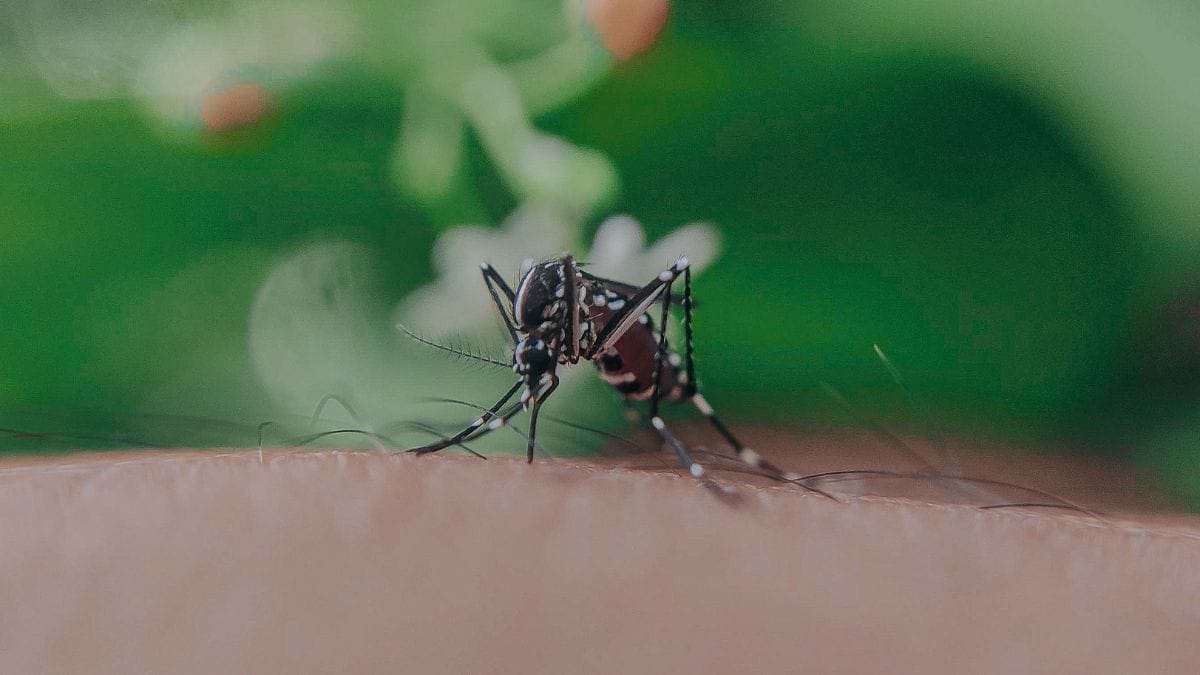
Scientists made a small device that works like a toilet for mosquitoes.
It collects tiny droplets of waste after mosquitoes drink sugar water.
Researchers studied the waste using genetic sequencing.
They found signs of West Nile virus and several other viruses.
Some of those viruses have not yet been documented in the Americas.
The waste also helped identify mosquito species and parasites.
This method may be easier than collecting and grinding thousands of mosquitoes.
The researchers are still testing the idea and hope to use it outdoors someday.

Researchers created a 3D-printed device to collect mosquito waste.
Genetic sequencing found West Nile virus and other viral traces.
The waste also revealed mosquito species and several parasites.
Researchers said waste testing may be easier than grinding mosquitoes.
The team is developing a field-ready version for earlier surveillance.
- Who
- Dana Price and colleagues at Rutgers—New Brunswick’s School of Environment and Biological Sciences.
- What
- They built a mosquito-waste collection device and used genetic sequencing to search for viruses, parasites, and mosquito species.
- Where
- The researchers tested wild Culex mosquitoes in containers over the device in a laboratory setting.
- When
- The findings were reported in a recent study published in Microbiology Spectrum; the exact date was not provided.
- Why
- To develop an easier surveillance method that could provide early warnings of pathogens before human cases begin.
Key facts
- Device
- A 3D-printed funnel coated with a water-repelling material and connected to a collection tube.
- Mosquitoes tested
- Two groups of wild Culex mosquitoes.
- Collection method
- Mosquitoes were fed sugar solution while their waste was collected below the funnel.
- Detected pathogen evidence
- West Nile virus, a Hedwig-like virus, and several other viruses.
- Additional findings
- The waste revealed mosquito species and parasites.
- Study publication
- Microbiology Spectrum.
- Development stage
- The method remains in its early stages, with a field-ready trap under development.
Quotes
Dana Price
Rutgers–New Brunswick entomologist and study leader
“The pie-in-the-sky idea is a device that we place in a forest somewhere, and it’s constantly just beaming back data to us”
 theprint.in
“What we did, colloquially, was build a mosquito toilet”
theprint.in