2 hrs ago
A Quarter of Indian Workers Are in AI-Exposed Jobs
A new report says about one in four workers in India has a job that could be affected by artificial intelligence.
In cities, the share is close to one in two.
Being exposed to AI does not automatically mean someone will lose their job.
AI may help some workers, such as doctors or teachers, do their work.
But many people also do routine tasks that machines may learn to do.
Younger workers are especially likely to have these kinds of jobs.
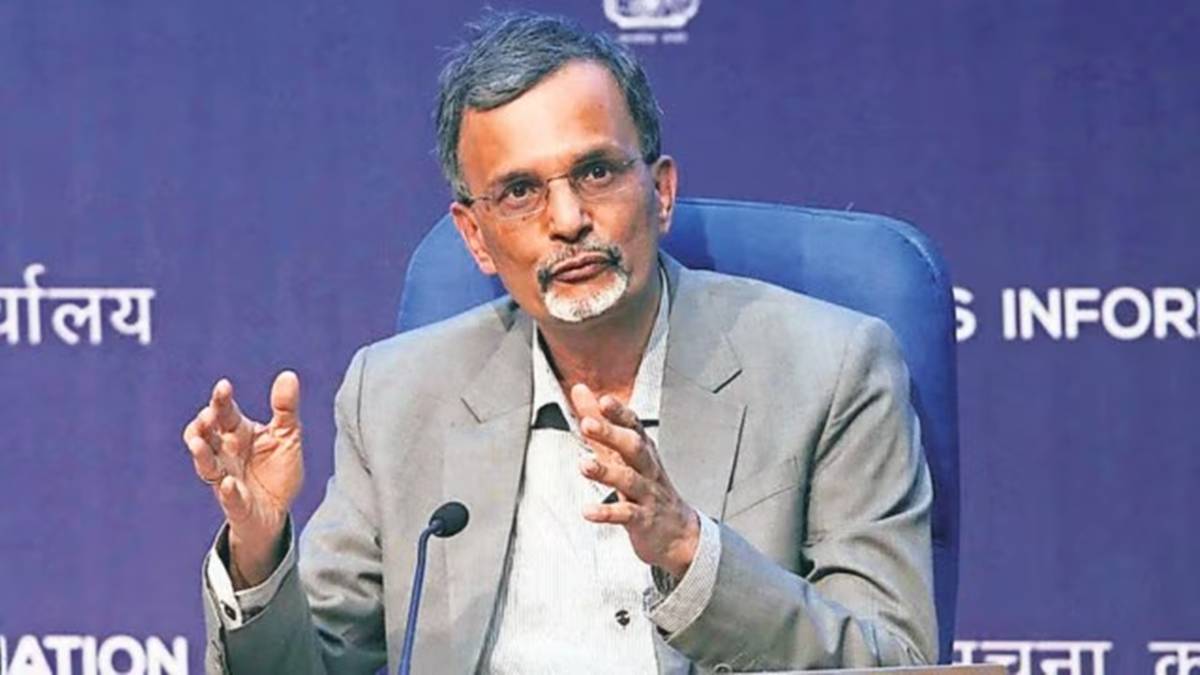
The Chief Economic Adviser says workers should be trained before changes cause job losses.
He also warns that new workers need chances to learn from experienced people.
He says India can become stronger by helping workers build useful skills.

Chief Economic Adviser V Anantha Nageswaran said about a quarter of India’s workforce is in occupations exposed to AI, up from about one-fifth in 2012.
The share of jobs exposed to AI is close to half in urban India, but Nageswaran stressed that exposure does not necessarily mean job losses.
About 46 million workers, including doctors, teachers, engineers and managers, are in jobs where AI can complement their work.
Workers in highly routine jobs rose from under 28% in 2012 to over 32% in 2025, with nearly 200 million people affected; workers under 25 face particular exposure.
Nageswaran called for retraining and warned that AI could reduce junior employees’ opportunities to learn from experienced colleagues.
- Who
- Chief Economic Adviser V Anantha Nageswaran and the authors of the Great Lakes Centre for Finance & Economic Research report.
- What
- A report and address examined AI exposure in Indian occupations, routine work, and the need to train workers.
- Where
- At the launch of the white paper in Chennai; the findings concern India.
- When
- Nageswaran delivered the address on Sunday; the report compares data from 2012 and 2025.
- Why
- To discuss how AI and automation could affect workers and why retraining and workplace learning matter.
Potential benefits and opportunity
Risks and disruption
AI’s effect on work
Potential benefits and opportunity
AI can complement workers and increase what they are able to do; exposure does not necessarily mean job loss.
Risks and disruption
AI agents may perform routine tasks cheaply, making some jobs vulnerable, particularly those involving tasks machines can readily learn.
Shift into routine occupations
Potential benefits and opportunity
Nageswaran said some of the rise in routine work reflects workers moving out of low-productivity farm work, which he described as positive.
Risks and disruption
The shift has also placed many workers in occupations with tasks susceptible to AI or conventional automation, and current relative wages may not protect those jobs indefinitely.
Training and early-career work
Potential benefits and opportunity
Workers can become a source of strength if they are trained well, and experienced employees can use judgement to check AI outputs.
Risks and disruption
If firms rely on AI for routine tasks, they may see training junior employees as a cost, limiting the workplace learning needed to become experienced professionals.
Key facts
- Workforce exposed to AI
- About 25%, up from about 20% in 2012.
- Urban employment exposure
- Close to half of jobs in urban India.
- AI-complementary occupations
- About 46 million Indians, including doctors, teachers, engineers and managers.
- Highly routine jobs
- Rose from under 28% of workers in 2012 to over 32% in 2025.
- People in highly routine jobs
- Nearly 200 million.
- Workers under 25 in high-routine jobs
- 39.4%, the highest share among age groups.
- White paper
- AI, Automation and India’s Workforce, launched by the Great Lakes Centre for Finance & Economic Research.
- Report authors
- Vidya Mahambare, Vivek Jadhav and Vishnu Venugopalan.
Quotes

V Anantha Nageswaran
India’s Chief Economic Adviser
“If we treat workers as a cost to be cut, we waste that one resource which we hold in abundance. If we train them well, it becomes a source of strength that others will see.”
 financialexpress.com
“Exposure is not the same as job loss. In some jobs, of course, AI is likely to raise what a worker can do”
financialexpress.com
Sources
Related news

Kerala Leads Indian States in AI-Complementary Employment
India's AI Optimism May Mask Job Losses and Uncertainty

AI May Reshape Indian Jobs, Incomes and Retirement Planning

AI Reshapes India’s GCC Hiring as Up to 30,000 Roles Go

World Bank Says Most Indian Firms Still Avoid Artificial Intelligence

AI Skills and Experienced Professionals Drive Selective September Hiring

CEA urges review of overdue-loan rules for MSMEs

CEA Urges MSME-Specific Review of NPA Classification Norms

Geopolitics, China and AI Test India’s 2047 Ambitions
Supreme Court Cancels One Nation, One Election Committee Meeting