3 hrs ago
TERI Study Finds CNG Outperforms EVs Across India’s Vehicles
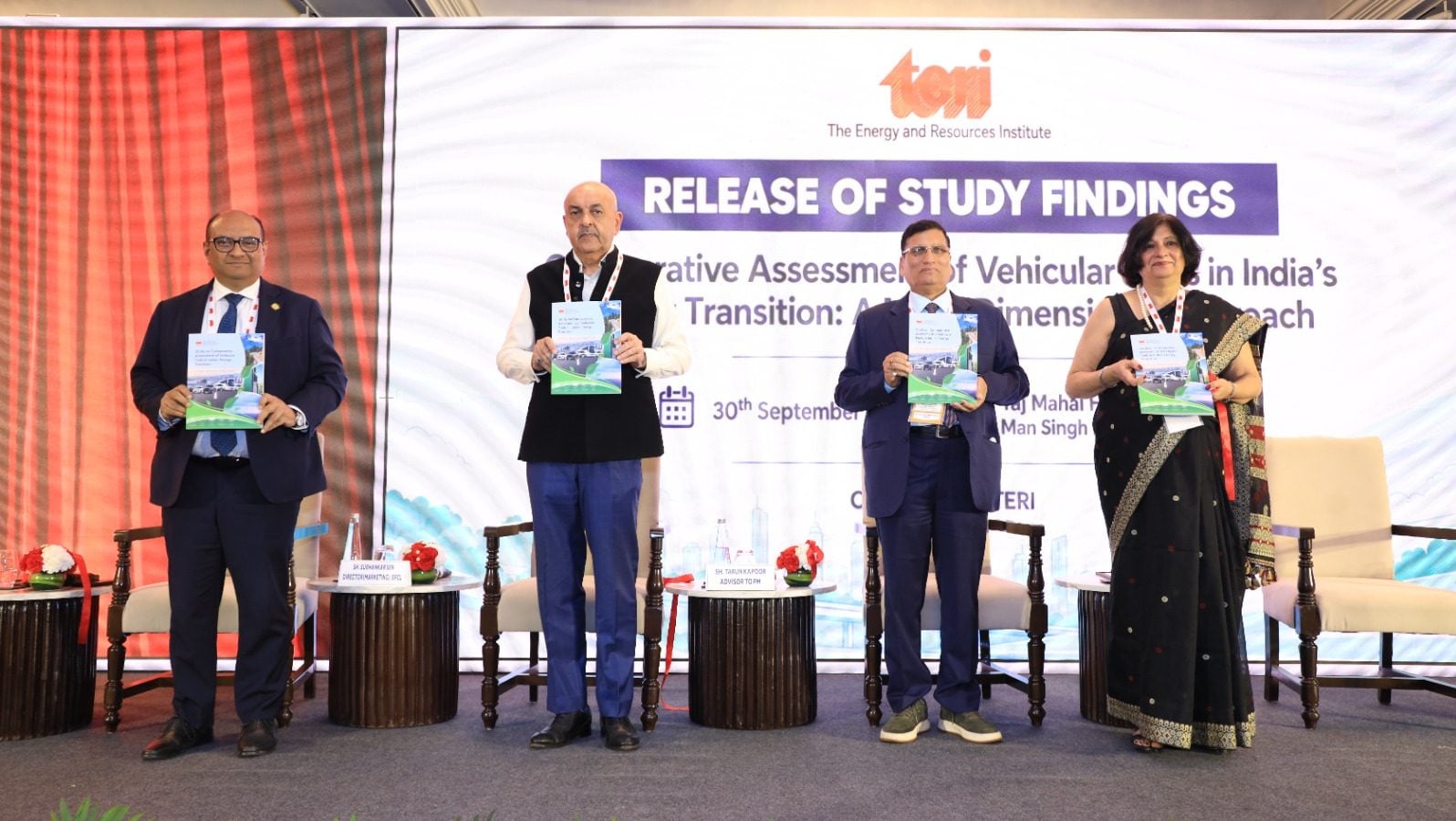
Researchers compared five fuels used by vehicles in India.
They looked at cars, buses, two-wheelers, three-wheelers, and other vehicle types in 10 regions.
CNG performed best in many categories.
It was often cheaper and had a lower total environmental impact than other fuels.
The study said CNG can currently produce fewer greenhouse-gas emissions than electric vehicles because much of India’s electricity comes from coal.
Electric vehicles were still considered best for many urban two-wheelers and three-wheelers.
The researchers said India should not choose one fuel for every vehicle.
Instead, fuel policies should change gradually as technology and infrastructure improve.

A TERI study compared petrol, diesel, CNG, LNG, and electricity across six vehicle types and 10 regions.
CNG had the lowest life-cycle environmental burden in most vehicle categories, partly because India’s electricity mix remains coal-dependent.
Electric vehicles were preferred for urban two- and three-wheelers because of affordability, high use, and existing charging infrastructure.
CNG was the most favourable option for cars, taxis, buses, and goods vehicles on cost, performance, affordability, and environmental factors.
The study recommended a sequenced transition with fuel choices, infrastructure, investment, and policy support tailored to different vehicle fleets.
- Who
- The Energy and Resources Institute (TERI), with the Petroleum and Natural Gas Regulatory Board (PNGRB), conducted and launched the study; Ritu Mathur presented its findings.
- What
- A comparative study assessed petrol, diesel, CNG, LNG, and electricity across vehicle types and regions in India.
- Where
- The study was formally launched at the Taj Mahal Hotel in New Delhi and examined 10 regions in India.
- When
- The study was presented at a press release on 30 September; the article does not specify the year.
- Why
- Researchers sought to identify fuel choices that could support India’s energy transition while considering cost, technology, infrastructure, environmental effects, and geopolitics.
Key facts
- Study title
- Comparative Assessment of Vehicular Fuels in India’s Energy Transition: A Multi-Dimensional Approach
- Fuels compared
- Petrol, diesel, compressed natural gas, liquefied natural gas, and electricity
- Scope
- Six vehicle types and 10 regions
- Environmental finding
- CNG had the lowest life-cycle environmental burden in most vehicle categories
- Electric-vehicle finding
- EVs were preferred for urban two-wheelers and three-wheelers
- CNG application
- CNG was the most favourable option for cars, taxis, buses, and goods vehicles
- Policy approach
- The study recommended a sequenced transition rather than replacing all fuels with one technology
Quotes
Ritu Mathur
Senior Fellow and Director at The Energy and Resources Institute.
“One main finding of this study is that India’s ideal fuel mix is segmented for each vehicle type and scenario, rather than one fuel for all use cases. Even with EV incentives, CNG is still economically competitive, and environmentally friendly too.”
 theprint.in
“In terms of greenhouse gas emissions, CNG is actually better than EVs, given India’s current electricity mix. Until we figure out a way to decarbonise the electricity sector, we can’t say that EVs are environmentally the best option currently.”
theprint.in
Sources
Related news
Study urges India’s multi-fuel strategy for diverse transport needs

Study Boosts EV Case, But Indian Buyers Need Practical Benefits

India's Car Buyers Shift From Petrol Toward Cleaner Fuel Options

CNG, Hybrid and Electric Cars Surpass Petrol Sales in India
Alternative-Fuel Vehicles Overtake Petrol in India’s Passenger Car Sales
Why India Needs Electric Transport to Cut Crude Dependence
New PNG Scheme Targets Three-Year Payback for Household Connections

Dilip Buildcon to Sell Power Stake for Rs 2,914 Crore

Dilip Buildcon Shares Rally After ₹1,800 Crore LPG Pipeline Order