2 hrs ago
Why Gandhi Never Received the Nobel Peace Prize Despite Nominations
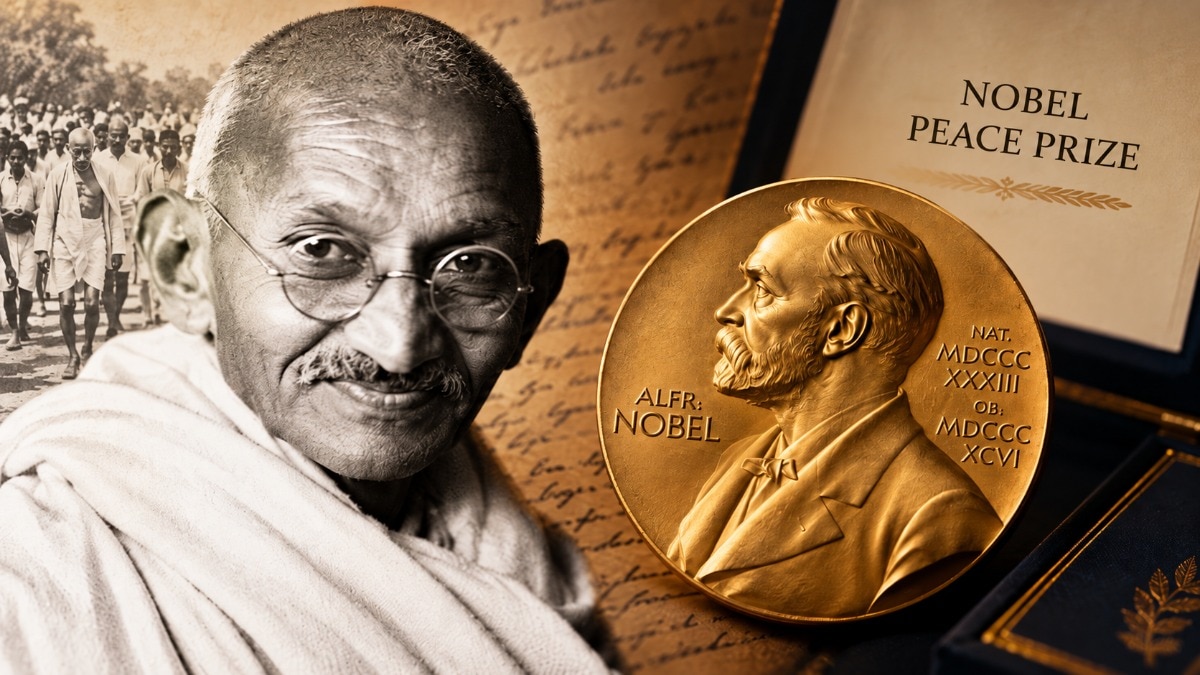
Mahatma Gandhi was suggested for the Nobel Peace Prize in five different years.
He received 12 individual nominations and was shortlisted three times.
The Nobel committee admired him as a moral leader.
However, some members wondered whether his political campaigns were always peaceful because violence sometimes followed them.
In 1947, they also examined his views about the conflict between India and Pakistan.
Gandhi was killed in New Delhi on January 30, 1948.
The committee considered whether it could give the prize to someone who had died.
It decided not to award him the prize and said there was no suitable living candidate.
Records do not show that fear of upsetting Britain caused the decision.

Mahatma Gandhi received nominations in five separate years, not just five individual nominations.
He was shortlisted by the Norwegian Nobel Committee in 1937, 1947 and 1948.
The committee questioned whether his political campaigns were fully pacifist because some were followed by violence.
In 1947, members also considered Gandhi’s position on the India-Pakistan conflict difficult to reconcile with his non-violence advocacy.
After Gandhi’s assassination in 1948, the committee considered but rejected a posthumous award and cited having no suitable living candidate.
- Who
- Mahatma Gandhi, the Norwegian Nobel Committee and the individuals and organisations that nominated him.
- What
- Gandhi was nominated for the Nobel Peace Prize in five separate years but never received it.
- Where
- The nominations were considered by the Norwegian Nobel Committee, while the relevant political issues involved India and Pakistan; Gandhi was assassinated in New Delhi.
- When
- He was nominated from 1937 through 1939, again in 1947 and finally in 1948; he was assassinated on January 30, 1948.
- Why
- The committee questioned the relationship between Gandhi’s political campaigns and violence, examined his position on the India-Pakistan conflict, and ultimately decided against a posthumous award.
Popular Theory
Archival Findings
Britain’s alleged influence
Popular Theory
A popular theory claims Gandhi was denied the prize because the committee did not want to anger Britain.
Archival Findings
Nobel Foundation archival research found no indication that concern about provoking Britain influenced the decision.
Gandhi’s commitment to non-violence
Popular Theory
Supporters viewed Gandhi as a moral leader whose movements were based on Ahinsa, or non-violence, and Satyagraha.
Archival Findings
Committee adviser Professor Jacob Worm-Müller questioned whether Gandhi’s political campaigns could always be considered completely pacifist because some were followed by outbreaks of violence.
The 1948 award decision
Popular Theory
Gandhi’s supporters could argue that his assassination should not have prevented recognition of his peace work.
Archival Findings
The committee considered the possibility of a posthumous award, sought legal advice and ultimately decided not to give the prize after his death.
Key facts
- Nomination years
- 1937, 1938, 1939, 1947 and 1948
- Individual nominations
- 12
- Shortlisted
- 1937, 1947 and 1948
- First nominator
- Norwegian politician Ole Colbjørnsen nominated Gandhi in 1937.
- 1947 nominees
- Balasaheb Gangadhar Kher, Ganesh Vasudev Mavalankar and Govind Ballabh Pant
- Date of death
- January 30, 1948
- 1948 committee decision
- The Norwegian Nobel Committee did not award the Peace Prize, formally citing no suitable living candidate.