1 year ago
Study Finds Poor Air Quality in Community Kitchens
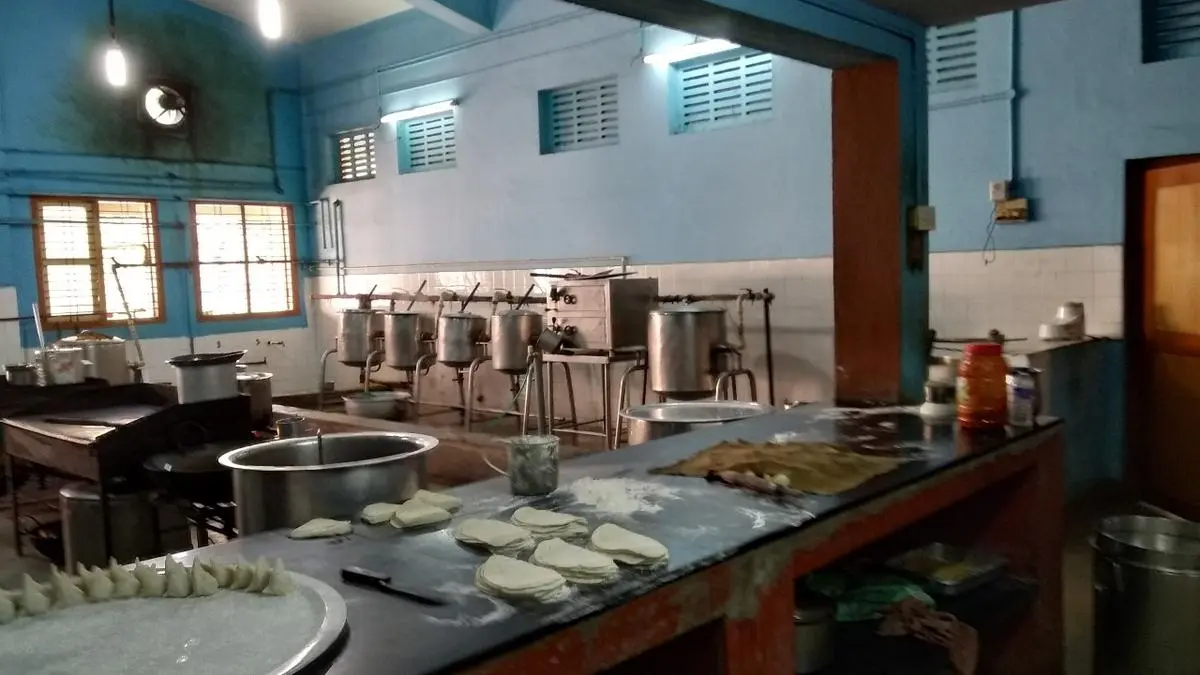
Scientists studied the air in community kitchens in Dakshina Kannada and found it wasn't very clean.
They measured tiny particles in the air, like dust, that can get into your lungs.
These particles were often too high, more than what's considered safe.
People who work in these kitchens, like cooks, could get sick from breathing in this polluted air.
The study suggests that kitchens need better ways to clean the air.
This helps make sure the air is safe for everyone.

A study found that community kitchen air quality in Dakshina Kannada exceeds safety standards.
The study measured PM 1, PM 2.5, and PM 10 particles, which penetrate deep into lungs.
PM concentrations, especially during cooking, exceeded air quality standards.
Kitchen workers face elevated health risks due to poor air quality.
The study recommends guidelines to improve air quality in community kitchens.
- Who
- Researchers from Mangalore University, IIT Bombay, and University of Miami conducted the study.
- What
- A study found that air quality in community kitchens exceeded safety standards.
- Where
- Dakshina Kannada district, India
- When
- The study was published on June 19, 2025.
- Why
- To assess health risks due to particulate matter in community kitchens and recommend improvements.
Concerned Stakeholders
Government/Community
Health Risks
Concerned Stakeholders
Kitchen workers face elevated health risks.
Government/Community
Officials need to address air quality issues.
Key facts
- Study Title
- Assessment of health risks due to the inhalation of respiratory particulate matter generated in the community kitchens
- PM1 Range
- 40-286 µg m-3
- PM2.5 Range
- 58-418 µg m-3
- PM10 Range
- 62-434 µg m-3
- WHO Indoor Air Standards (PM2.5)
- 5 µg m-3
- WHO Indoor Air Standards (PM10)
- 15 µg m-3
- Study Location
- 15 community kitchens in Dakshina Kannada